

Experience the best benefits of muscle trigger point injections. This complete guide explains how to heal sore muscles and improve mobility.
Trigger point injections are a top choice for treating myofascial pain syndrome. They offer a minimally invasive solution for those with musculoskeletal pain.
These injections target trigger points with local anesthetics or corticosteroids. They bring significant pain relief and better function. Studies show that trigger point injection therapy cuts pain scores down more than medical treatment alone.
GoldCity Center is dedicated to using the latest academic protocols and treatments. It’s a great place for those looking to ease chronic muscle pain.
Belangrijkste opmerkingen
Trigger point injections are a minimally invasive therapeutic modality designed to treat myofascial trigger points.
These injections significantly reduce pain scores and improve patient satisfaction levels.
Local anesthetics or corticosteroids are administered directly into specific trigger points.
The procedure is backed by clinical evidence showing reduced pain scores and enhanced patient satisfaction.
Understanding how to perform trigger point injections is key for healthcare professionals.
Understanding Muscle Trigger Point Injections

It’s important to know about myofascial trigger points for pain relief. These are tight spots in muscles that cause pain, stiffness, and limit movement.
Wat zijn myofasciale triggerpoints?
Myofascial trigger points are tight muscle spots that send pain elsewhere. They’re linked to myofascial pain syndrome, a long-term muscle and bone issue.
They can come from too much muscle use, injury, or bad posture. The pain from these spots can really hurt and lower your quality of life.
Clinical Evidence and Efficacy
Many studies show that trigger point injections work well for myofascial pain. These injections use local anesthetics like lidocaine to ease pain and relax muscles.
Journal of Pain Research
Research shows that these injections cut down pain and help with movement in patients.
Indications and Contraindications
These injections are for those with myofascial pain who haven’t gotten better with other treatments. But, there are things you can’t do, like if you have bleeding problems or allergies to certain medicines.
It’s key to check a patient’s health before the injections. This makes sure the treatment is safe and works well.
Belangrijke overwegingen zijn onder andere:
Presence of bleeding disorders
Allergies to local anesthetics
Patient’s overall health status
Preparation and Materials for Trigger Point Injections
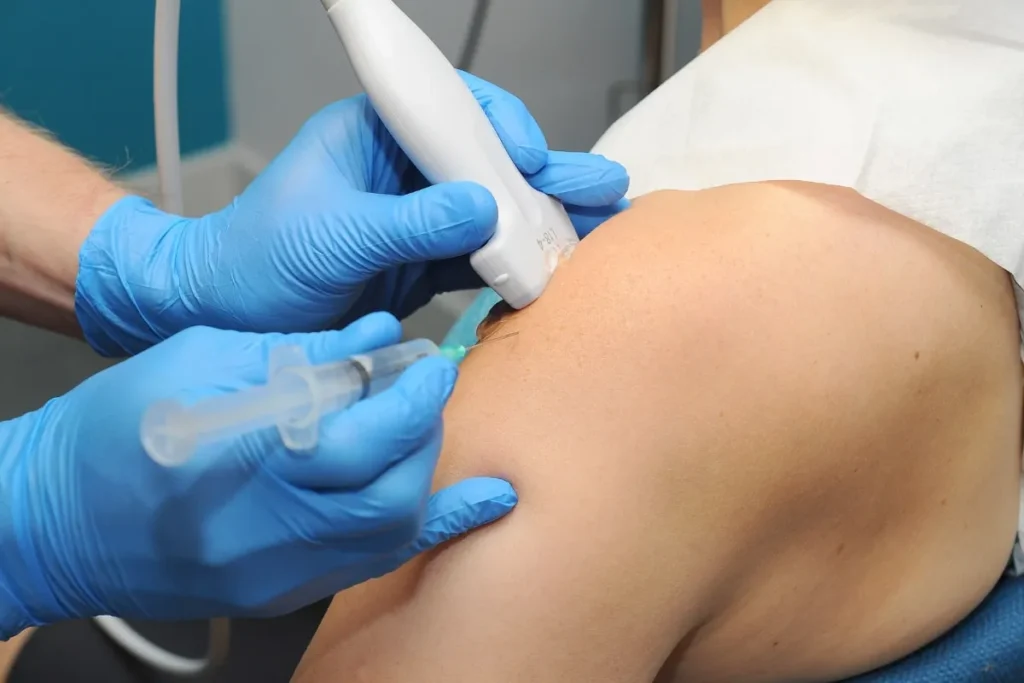
Getting ready for trigger point injections is important. It includes picking the right tools and medicines. This step is key for a successful procedure and the patient’s comfort and safety.
Required Equipment and Injection Solutions
To do trigger point injections, you need a syringe, needle, and the solution. The needle size and type depend on where and how deep the trigger point is. For example, a trapezius trigger point injection might need a different needle than others.
The solution often has lidocaine, a local anesthetic that helps with pain right away. A study on NCBI shows lidocaine is often used because it works well and is safe.
Lidocaine and Corticosteroid Formulations
Whether to use lidocaine alone or with corticosteroids depends on the situation and the patient. Corticosteroids can help by reducing inflammation. They are useful in some cases to offer long-term benefits.
Beoordeling en positionering van de patiënt
Assessing the patient properly is essential. It helps find the right trigger points and makes sure the patient is comfortable and safe. For a trapezius trigger point injection, the patient is positioned to easily reach the trapezius muscle.
Step-by-Step Muscle Trigger Point Injection Technique
Learning the muscle trigger point injection technique is key for managing pain well. This method involves careful steps that healthcare experts must take. It ensures the treatment is safe and works well.
Identifying and Palpating Trigger Points
The first step is identifying and palpating trigger points. A detailed physical check is done to find muscle tension spots. Doctors use their fingers to feel the muscle, looking for tight bands and sore areas.
It’s important to listen to the patient during this step. Their feedback helps pinpoint the exact trigger point. Getting it right is key for the injection’s success.
Proper Injection Procedure
After finding the trigger point, the next step is the proper injection procedure. The area is cleaned with an antiseptic solution. Then, the needle is carefully placed into the trigger point.
The needle moves in a fan-like way in the muscle to spread the medicine well. The medicine often includes a local anesthetic like lidocaine to ease pain. Sometimes, corticosteroids are used to lessen swelling.
Common Injection Sites
Common injection sites are the trapezius, levator scapulae, and lumbar muscles. These muscles often get trigger points from too much use or strain.
The site chosen depends on where the pain is and what symptoms the patient has. Using ultrasound can help target these areas more accurately.
Ultrasound-Guided vs. Blind Injection Techniques
The choice between ultrasound-guided and blind injection techniques is debated. Ultrasound guidance lets doctors see the needle and the area in real-time. This might make the injection more accurate.
Blind injections use landmarks and feeling to guide them. But ultrasound-guided injections might be safer and more effective, mainly in tricky spots.
Conclusie
Trigger point injections are a helpful treatment for myofascial pain syndrome. They can greatly reduce pain and improve life quality for patients. The choice of medication, like steroids, depends on the specific case, such as treating shoulder pain.
For those who haven’t found relief with other treatments, injections can be a good option. The process involves injecting a local anesthetic, like lidocaine, alone or with a steroid. Research shows these injections can help with shoulder pain and other conditions.
For more details on managing trigger point pain, check out the American Academy of Family Physicians website.
Healthcare professionals can offer a minimally invasive, effective solution for myofascial pain by mastering trigger point injections. It’s important to know the indications, contraindications, and risks. Also, choosing the right medication, like the steroid used, is key.
FAQ
Waar worden triggerpointinjecties voor gebruikt?
Trigger point injections treat myofascial pain syndrome. They target muscle tension with local anesthetics or corticosteroids. This provides pain relief and improves function.
What medications are commonly used in trigger point injections?
Lidocaine is a common local anesthetic used for immediate pain relief. Corticosteroids may also be used alone or with lidocaine. They help reduce inflammation for longer-term benefits.
How are trigger points identified for injection?
Trigger points are found through muscle palpation. This locates areas of tension and tenderness. Healthcare professionals must be skilled in identifying these areas.
What is the difference between blind and ultrasound-guided trigger point injections?
Blind injections use anatomical landmarks. Ultrasound-guided injections offer real-time visualization. The choice depends on the clinical scenario and patient factors.
Wat zijn veelvoorkomende plaatsen voor triggerpointinjecties?
Common sites include the trapezius, levator scapulae, and lumbar muscles. These depend on the patient’s symptoms and muscle tension.
Zijn er contra-indicaties voor triggerpoint-injecties?
Yes, contraindications include bleeding disorders and allergic reactions to medications. A thorough patient assessment is needed to identify these.
How do trigger point injections provide pain relief?
They provide pain relief by injecting local anesthetics or corticosteroids into the trigger point. This relieves pain and reduces muscle tension.
Can trigger point injections be used in combination with other treatments?
Yes, they can be used with physical therapy. This enhances their effectiveness and provides complete care for myofascial pain syndrome.
What is the role of corticosteroids in trigger point injections?
Corticosteroids reduce inflammation and provide long-term pain relief. They may be used alone or with local anesthetics like lidocaine.
How should patients be prepared for trigger point injections?
Patients should be prepared with a thorough assessment. This includes reviewing their medical history and identifying the correct trigger points. Proper positioning and comfort during the procedure are also key.
Referenties
Nationaal Centrum voor Biotechnologie-informatie. Evidence-Based Medisch Inzicht. Opgehaald van https://pmc.ncbi.nlm.nih.gov/articles/PMC10497070/





