
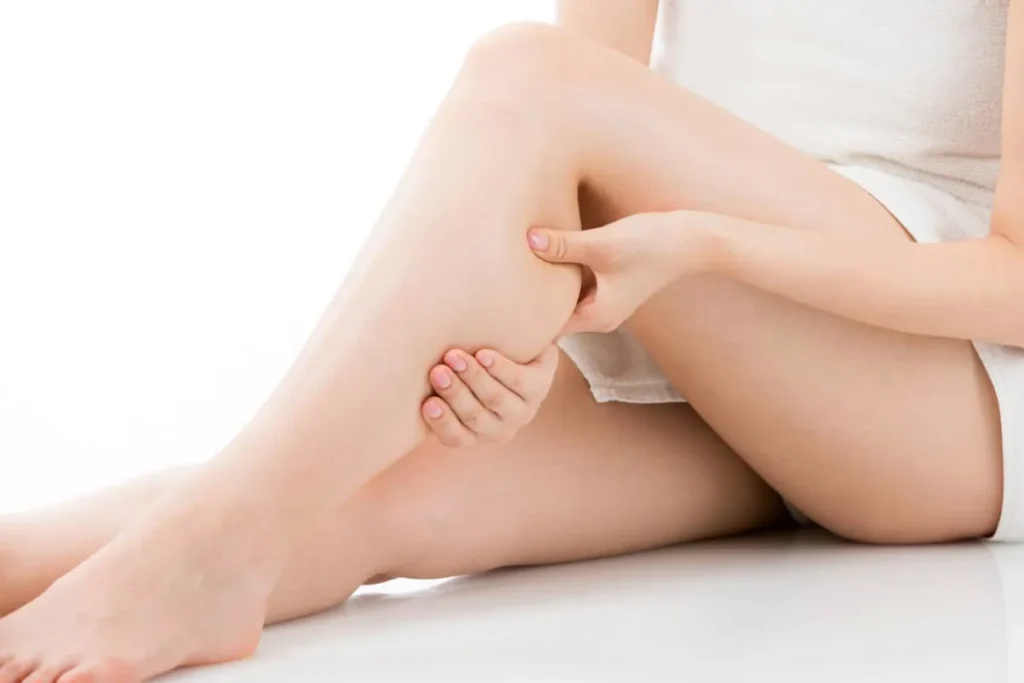
Losse en verslapte huid op de benen kan frustrerend zijn. Maar moderne niet-chirurgische behandelingen maken het mogelijk om stevigere, jeugdiger uitziende benen te krijgen. Je hebt geen invasieve procedures of veel downtime nodig.
Technologieën zoals ultrasoundtherapie, radiofrequentie en RF microneedling stimuleren het collageen in je lichaam. Hierdoor wordt je huid strakker. Bij GoldCity Center richten ze zich op jou en zorgen ze voor topkwaliteit zorg voor huidverstrakking. Hierdoor voel je je zeker over je stralende, jeugdige huid.
Leer hoe je de huid op je benen strakker kunt maken met behulp van verbazingwekkende geheimen. Ontdek krachtige, niet-chirurgische manieren om een ongelooflijke en stevige look te krijgen.
Belangrijkste opmerkingen
Niet-chirurgische behandelingen zoals Thermage en Venus Freeze maken gebruik van geavanceerde technologieën om de collageenproductie te stimuleren.
Deze behandelingen zijn effectief voor milde tot matig verslapte huid, waarbij huidproblemen van verslapte benen worden opgelost.
Ze vereisen minimale downtime en geen invasieve procedures, waardoor ze aantrekkelijk zijn.
Het toevoegen van de juiste huidverzorging en zonbescherming kan de resultaten verbeteren en langer laten duren.
Een persoonlijke benadering bij GoldCity Center garandeert zorg op maat voor individuele huidverstrakking.
Losse huid op de benen begrijpen
Het is belangrijk om te weten waarom benen losse huid krijgen. Dit gebeurt wanneer de huid zijn strakheid verliest en begint te verslappen.
Veelvoorkomende oorzaken van huidverslapping in de benen
Veel dingen kunnen ervoor zorgen dat benen er los uitzien. Veroudering is een belangrijke oorzaak omdat het collageen verlaagt. Collageen houdt de huid strak. Huidverstevigende behandelingen kunnen dit tegengaan.
Andere grote factoren zijn aanzienlijk gewichtsverlies en genetica. Veel afvallen kan de huid verslappen. Blootstelling aan de zon en roken schaden ook de strakheid van de huid na verloop van tijd.
De wetenschap van collageenverlies
Het collageenniveau daalt na 30 jaar met ongeveer 1% per jaar. Daarom begint de huid te verslappen. Als het collageen daalt, kan de huid minder goed terugbreken.
Kennis over collageenverlies helpt bij de behandeling van losse huid. Behandelingen die collageen stimuleren kunnen de huid strakker en elastischer maken.
Inzicht in losse huid en collageenverlies helpt mensen de juiste behandelingen te kiezen. Deze kennis is de eerste stap naar een strakkere, gladdere huid.
Huid op benen strakker maken zonder operatie
Een strakkere beenhuid krijgen is nu makkelijker dan ooit. Dankzij nieuwe, niet-chirurgische behandelingen kun je dit zonder operatie bereiken. Deze methoden stimuleren collageen, verbeteren de elasticiteit van de huid en geven je een strakker uiterlijk.
Behandelingen met ultrageluidtherapie
Thermage is de beste keuze om de huid van de benen strakker te maken zonder operatie. Het maakt gebruik van ultrasone energie om de diepere lagen van de huid te verwarmen. Deze actie stimuleert collageen en maakt je huid strakker en gladder.
Voordelen: Het is niet-invasief, stimuleert collageen en geeft langdurige resultaten.
Radiofrequentie-energiebehandelingen
Venus Freeze is een andere geweldige optie om de huid van de benen strakker te maken. Het maakt gebruik van radiofrequentie-energie om de diepere lagen van de huid te verwarmen. Dit proces stimuleert de collageenproductie en maakt de huid strakker.
RF Microneedling voor verbeterde resultaten
RF microneedling combineert microneedling met radiofrequentie-energie. Het creëert kleine wondjes in de huid, waardoor een genezingsreactie op gang komt. Dit stimuleert de collageenproductie en maakt de huid strakker.
Resultaten: Het verbetert de huidtextuur, vermindert rimpels en maakt de huid strakker.
Aanvullende methoden voor thuis
Thuismethoden kunnen ook helpen om je huid strakker te maken. Het gebruik van verstevigende crèmes en apparaten kan ervoor zorgen dat je huid er goed blijft uitzien. Deze methoden kunnen de effecten van professionele behandelingen versterken.
Verstevigende crèmes met retinol en peptiden
Thuisapparaten zoals radiofrequentie en microstroom
Conclusie
Niet-chirurgische methoden zijn een geweldige manier om losse huid op je benen strakker te maken. Ze bieden een reis naar een stralende, zelfverzekerde huid. Met behulp van geavanceerde technologieën zoals ultrageluid en radiofrequentie kun je verslapte huid aanpakken en de elasticiteit verbeteren.
Deze behandelingen maken de huid niet alleen strakker, maar stimuleren ook het collageen. Dit leidt tot een jongere uitstraling. Zeg vaarwel tegen een slappe huid en hallo tegen gladdere, stralende benen met huidverstevigende behandelingen.
Wil je je zelfvertrouwen een boost geven of lekkerder in je vel zitten? Niet-chirurgische methoden om de huid op de benen strakker te maken zijn een veelbelovende oplossing. Ze kunnen deel uitmaken van een complete huidverzorgingsroutine, inclusief behandelingen om de hals strakker te maken.
Door deze innovatieve oplossingen te gebruiken, kun je je innerlijke gloed ontsluiten. Geniet van een stralender en jeugdiger uiterlijk dat je innerlijke zelfvertrouwen laat zien.
FAQ
Is er een manier om losse huid op benen te verminderen zonder operatie?
Ja, er zijn niet-chirurgische manieren om de huid op de benen strakker te maken. Deze omvatten ultrasoundtherapie, radiofrequentie-energiebehandelingen en RF microneedling. Ze helpen zonder operatie.
Wat veroorzaakt losse huid op de benen?
Losse huid op de benen is het gevolg van veroudering, gewichtsverlies en levensstijl. Deze factoren leiden tot collageenverlies en minder huidelasticiteit.
Hoe beïnvloedt collageenverlies de elasticiteit van de huid?
Het verlies van collageen maakt de huid minder elastisch. Hierdoor verslapt de huid en verliest ze stevigheid, vooral op de benen.
Wat is ultrageluidtherapie en hoe helpt het om de huid strakker te maken?
Ultrageluidtherapie gebruikt geluidsgolven om collageen te stimuleren en de huid strakker te maken. Het verbetert de huidelasticiteit op de benen.
Zijn er thuismethoden als aanvulling op professionele behandelingen om de huid van de benen strakker te maken?
Ja, je kunt thuis crèmes met retinol, vitamine C en hyaluronzuur gebruiken. Regelmatige lichaamsbeweging en een gezond gewicht helpen ook om de huid strakker te maken.
Hoe effectief zijn radiofrequentie-energiebehandelingen voor het strakker maken van de huid op de benen?
Radiofrequentiebehandelingen zijn zeer effectief. Ze verwarmen de huid diep, stimuleren het collageen en maken de huid op de benen strakker.
Kan RF microneedling helpen bij verslapte benen?
Ja, RF microneedling is zeer effectief. Het combineert microneedling met radiofrequentie om losse huid op de benen strakker te maken.
Zijn niet-chirurgische huidverstrakkingbehandelingen geschikt voor iedereen?
Niet-chirurgische behandelingen zijn over het algemeen veilig, maar niet voor iedereen. Mensen met bepaalde gezondheidsproblemen of huidtypes moeten eerst overleggen met een professional.
Hoe lang duren de resultaten van niet-chirurgische huidverstrakking?
De resultaten verschillen per behandeling, huid en levensstijl. Maar een gezonde levensstijl en vervolgbehandelingen kunnen helpen om de resultaten te behouden.
Referenties
Nationaal Centrum voor Biotechnologie-informatie. Evidence-Based Medisch Inzicht. Opgehaald van https://pmc.ncbi.nlm.nih.gov/articles/PMC4695420/





