
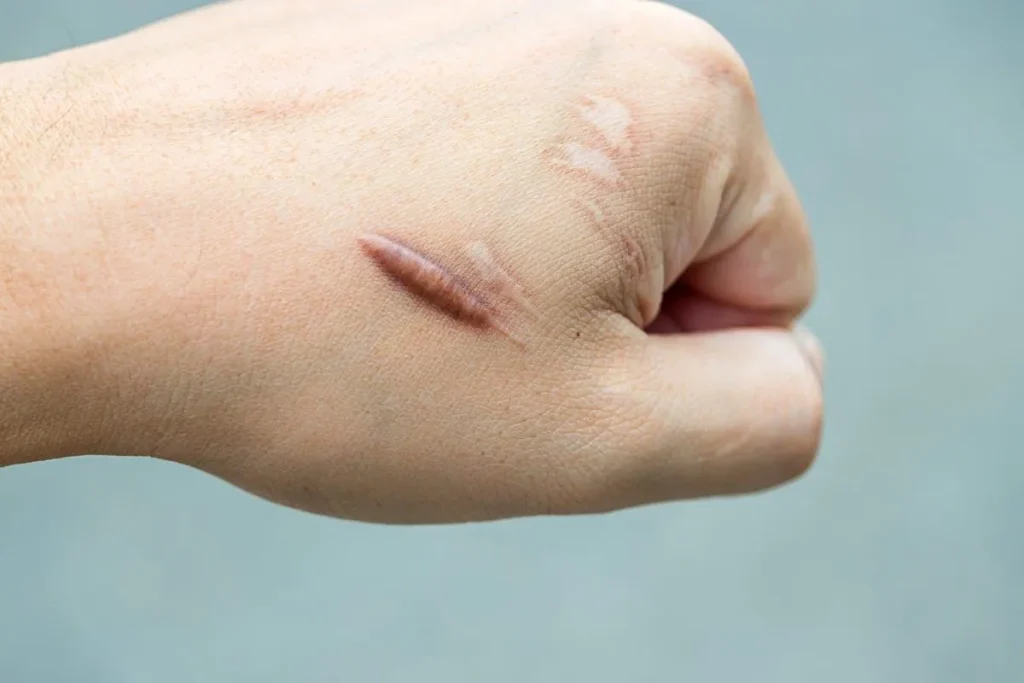
Seeing a purple color on your scar might worry you, but it’s a common part of healing. The purple color comes from more blood flow and swelling at the wound. This is how your body starts to fix itself.
Ontdek de betekenis van de littekenkleur achter paarse vlekken. Ontdek verbazingwekkende, krachtige feiten over hoe je huid geneest en wat de kleuren nu aangeven.
As you heal, your body makes collagen, a key protein for scar tissue. This is important for your wound to close up right. At Liv Hospital, we care about you and teach you about your healing. We also share ways to make your scar look better.
Knowing why scar colors change can make you feel better and know what to expect. The purple or red color will get lighter as your wound heals.
Belangrijkste opmerkingen
Purple scars are a normal early-stage healing response.
Increased blood flow and inflammation cause the purple appearance.
The body produces collagen to aid in wound healing and scar tissue formation.
Scar appearance can be optimized with proper wound care and evidence-based strategies.
The color of scars changes over time, typically fading as healing progresses.
Understanding Scar Color Meaning and Why Scars Appear Purple
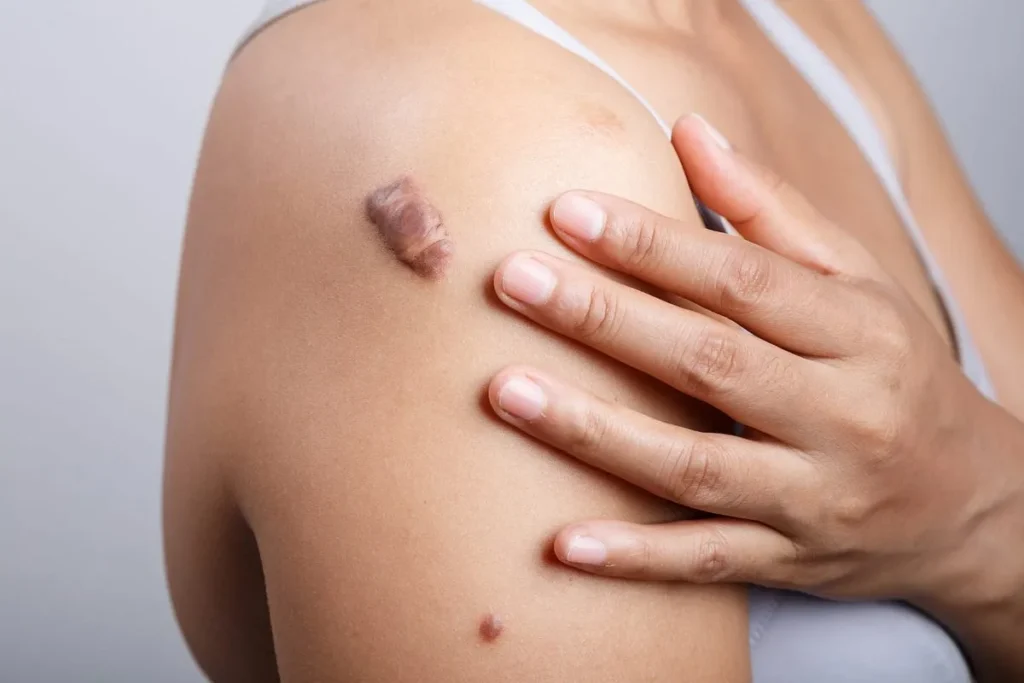
Scars often turn purple because of how our bodies heal. When we get injured or have surgery, our body starts to fix itself. This healing process changes the scar’s color.
The Biology Behind Purple Scar Coloration
When we get hurt, our body sends more blood to the area. This blood brings cells and nutrients needed for healing. White blood cells, for example, help clean the wound and fix tissues.
The healing process has three main stages: inflammation, proliferation, and remodeling. In the inflammation phase, bleeding and clotting happen. White blood cells also arrive to fight off bacteria and clean the wound.
Increased Blood Flow and Inflammation
Increased blood flow and inflammation make scars look purple or red. The oxygen-rich blood in the area gives scars their color. For more details on scar color, check out Understanding Scar Discoloration.
As scars heal, their color can change. At first, they might look red or purple because of the blood flow and inflammation. Later, as they mature, the color can fade to a lighter shade, making them less visible.
The Normal Timeline for Scar Color Changes
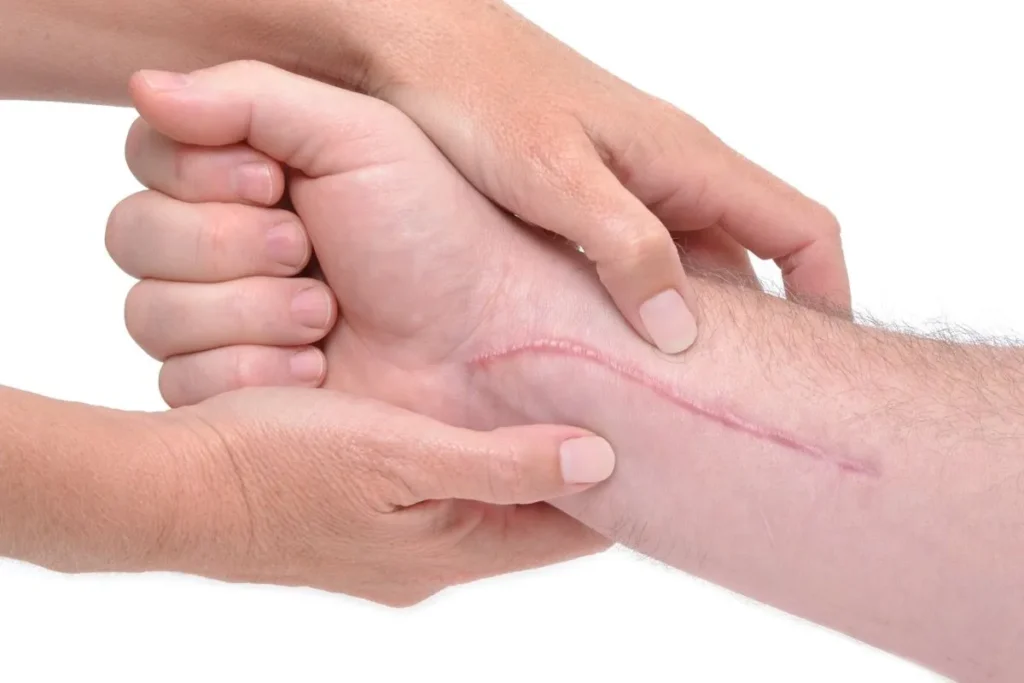
Scars change color over time. They usually go from red or purple to white or match the skin tone in a year. This change is part of healing, and knowing when it happens can help you understand it better.
Initial Healing Phase: Red and Purple
New scars are often red or purple because of more blood flow and swelling. This early stage is key for healing, as the body fixes the damaged area. Scars might look raised and more noticeable during this time.
The red or purple color shows the body is starting to heal. It’s a natural response to injury.
Maturation Phase: Fading to White or Skin Color
When a scar starts to fade and flatten, it’s moving into the maturation phase. This can take months to a year or more, depending on the scar and the person. The scar tissue gets harder and more permanent, but treatments can help it look better.
Over time, the scar will keep fading. It will eventually get lighter, closer to the skin tone around it.
Being patient is key during this time. Scar color changes can differ a lot between people. Things like skin type, wound size and depth, and health can affect healing.
Understanding how scars change color can help you manage your expectations. It can also guide your decisions about caring for your scars.
When Purple Scars May Indicate Abnormal Healing
Purple scars are usually a normal part of healing. But sometimes, they can mean something is not healing right. It’s important to know the difference between normal scars and possible problems.
Keloid and Hypertrophic Scars
Keloid or hypertrophic scars are signs of abnormal healing. Keloid scars grow beyond the original wound and can look purple or red. Hypertrophic scars stay within the wound but are raised.
These scars can be itchy, painful, or tender. Knowing about keloid and hypertrophic scars helps find the right treatment.
Post-inflammatoire hyperpigmentatie
Post-inflammatory hyperpigmentation (PIH) can also change how scars look. It makes the skin darker, leading to purple or brown spots. This is more common in darker skin tones.
PIH can be treated with creams and procedures. But, it’s best to talk to a dermatologist for advice.
When to Consult a Healthcare Provider
If your scar looks different or hurts, see a healthcare provider. They can check the scar and suggest treatments.
Here are signs you should get medical help:
A scar that is growing or becoming more painful
Increased redness or swelling around the scar
Pus of afscheiding uit het litteken
A scar that is significantly different from others you’ve had
Seeing a doctor early can prevent problems and help your scar heal better.
Conclusion: Managing Expectations During Your Scar Healing Journey
Understanding how scars heal can help you manage your expectations. If you’re wondering why your scars are purple, it’s usually a natural response to injury.
Scars are permanent but can look better with the right care. As your scar heals, the purple color might fade. Things like your skin type and the size of the wound can affect how it looks.
To make scars less noticeable, stick to a good skincare routine. Treatments that boost collagen and skin growth can also help. If you’re worried about your scars, talking to a doctor or dermatologist can offer personalized advice.
Being patient and taking good care of your scars can lead to better results. You’ll enjoy healthier, more radiant skin.
FAQ
Waarom zijn mijn littekens paars?
Paarse littekens ontstaan door meer doorbloeding en zwelling wanneer de huid geneest. Je lichaam stuurt meer bloed om de huid te herstellen. Hierdoor ziet het litteken er paars of rood uit.
What does it mean when a scar turns purple overnight?
If a scar turns purple overnight, it might mean more blood flow or swelling. This is often part of healing. But, if you’re worried, talk to a doctor.
How long do purple scars last?
Purple scars can last different times for different people. They usually turn from red or purple to white or skin color in months to a year or more.
Why are my scars are purple after a year?
If scars are purple after a year, it could mean they’re healing abnormally. This could be keloid or hypertrophic scarring, or post-inflammatory hyperpigmentation. See a doctor to figure out what to do next.
Can I prevent my scars from turning purple?
You can’t stop scars from turning purple completely. But, good wound care can help them look less noticeable. Keep the wound moist, clean, and covered to help it heal well.
What are the different colors of scars and what do they mean?
Scars can be red, purple, pink, white, or skin-colored. The color shows how far along the healing is. Red or purple means it’s early, while white or skin-colored means it’s more healed.
How can I improve the appearance of my purple scars?
To make purple scars look better, take good care of the wound. Use sunscreen to avoid more irritation. Try treatments like silicone gel or sheeting, or laser therapy to help the scar blend in better.
Referenties
Nationaal Centrum voor Biotechnologie-informatie. Evidence-Based Medisch Inzicht. Opgehaald van https://pmc.ncbi.nlm.nih.gov/articles/PMC3022978/





