Hoe kan ik veilig haar laten groeien? Volg deze 7 krachtige bewezen stappen om dunner wordend haar om te keren en een volle, gezonde haardos te krijgen.
Haaruitdunning omkeren is nu een reële mogelijkheid. Dankzij nieuw haargroeionderzoek is het krijgen van een volle bos haar dichterbij dan ooit. Behandelingen zoals minoxidil en finasteride hebben aangetoond te helpen haar te laten groeien en follikels sterker te maken.
Zacht zijn voor je haar en omgaan met stress helpt ook. Het maakt je hoofdhuid gezonder en stimuleert de hergroei van je haar. Dit artikel gaat in op 7 bewezen manieren om dunner wordend haar tegen te gaan en krijg het haar dat je wilt.
Belangrijkste opmerkingen
Begrijp de oorzaken van haaruitdunning en hoe je ze kunt aanpakken.
Leer meer over klinisch bewezen behandelingen zoals minoxidil en finasteride.
Ontdek het belang van zachte haarverzorging en stressmanagement bij het teruggroeien van haar.
Ontdek de 7 bewezen methodes om dunner wordend haar tegen te gaan.
Ontdek de geheimen van een gezondere hoofdhuid en voller haar.
De wetenschap van haaruitval en -groei
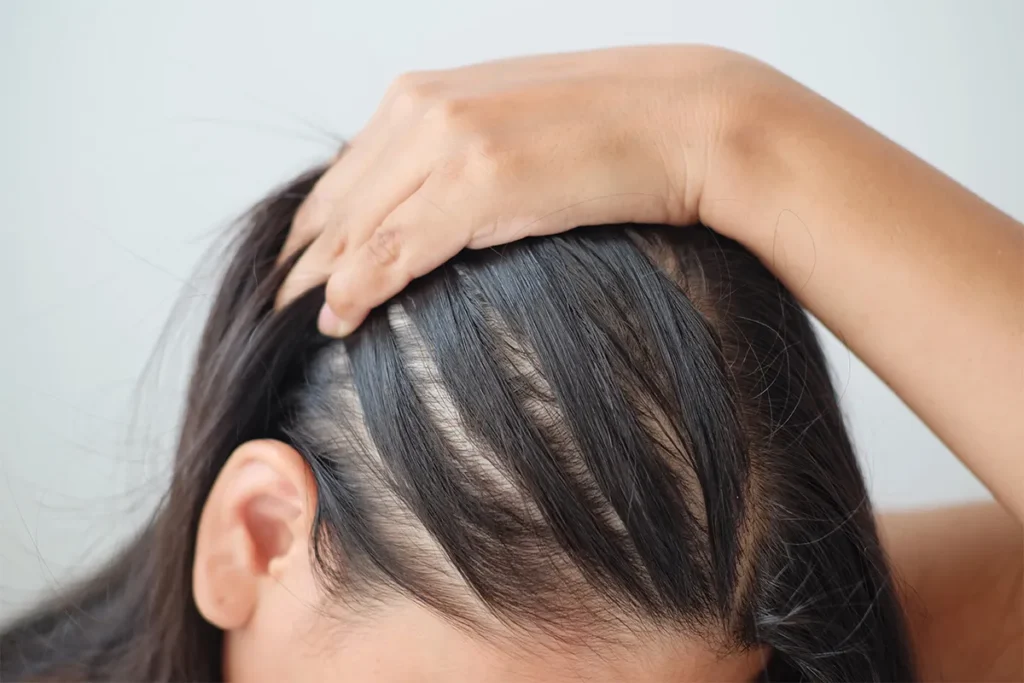
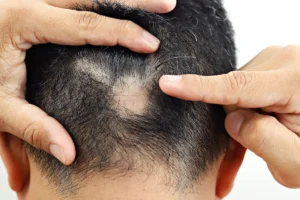
Haaruitval heeft geleid tot veel onderzoek naar de oorzaken en behandelingen ervan. Alopecia, of haaruitval, treft wereldwijd miljoenen mensen. Patroonkaalheid is een veel voorkomende vorm. De wetenschap erachter kennen is de sleutel tot het vinden van oplossingen.
Statistieken over kaalheid
Alopecia androgenetica is een erfelijke aandoening. Het wordt beïnvloed door hormonen. In de VS lijden bijna 30 miljoen vrouwen en 50 miljoen mannen eraan.
Jongere mensen verliezen meer haar dan ooit tevoren. Dit is een groeiende zorg voor velen.
Genetica speelt een grote rol bij kaalheid. Door hormonale veranderingen, zoals van testosteron naar DHT, krimpen de haarzakjes ook. Dit leidt tot dunnere, kortere haren.
Is haaruitval omkeerbaar?
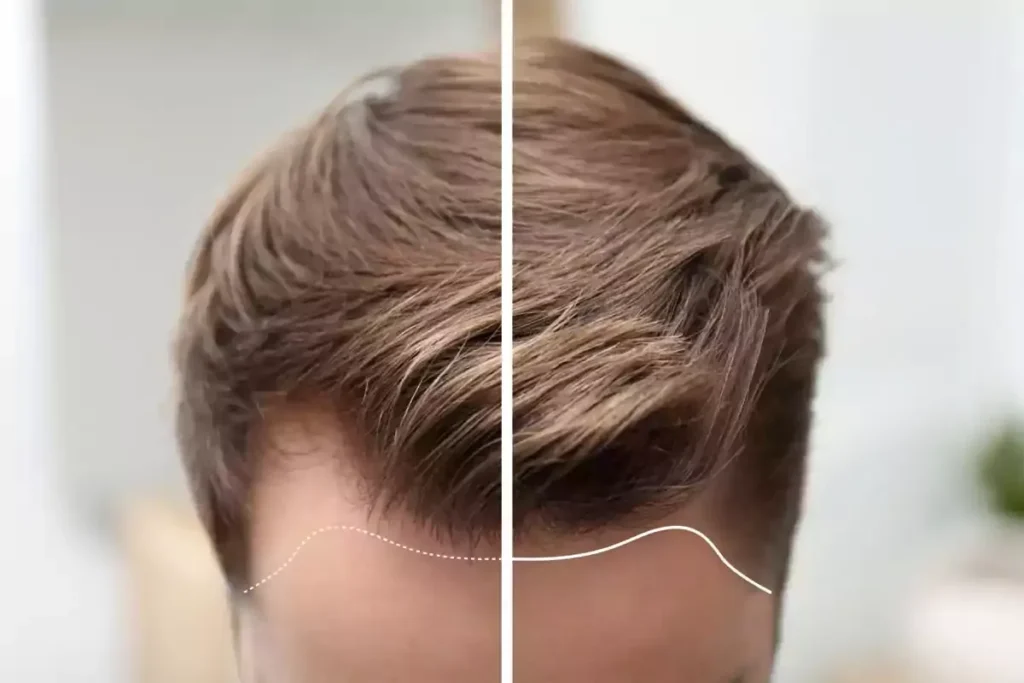
Het goede nieuws is dat haaruitdunning ongedaan kan worden gemaakt. Hoewel het kaalheidspatroon aanhoudt, kunnen behandelingen de haaruitval vertragen en zelfs helpen om het haar terug te laten groeien. Het kennen van de oorzaken is essentieel voor een effectieve behandeling.
Onderzoek naar nieuwe onderzoeken en behandelingen helpt mensen betere keuzes te maken op het gebied van haarverzorging. Er zijn veel opties om dunner wordend haar tegen te gaan en groei te stimuleren.
Hoe kan ik mijn haar laten groeien met FDA goedgekeurde behandelingen?
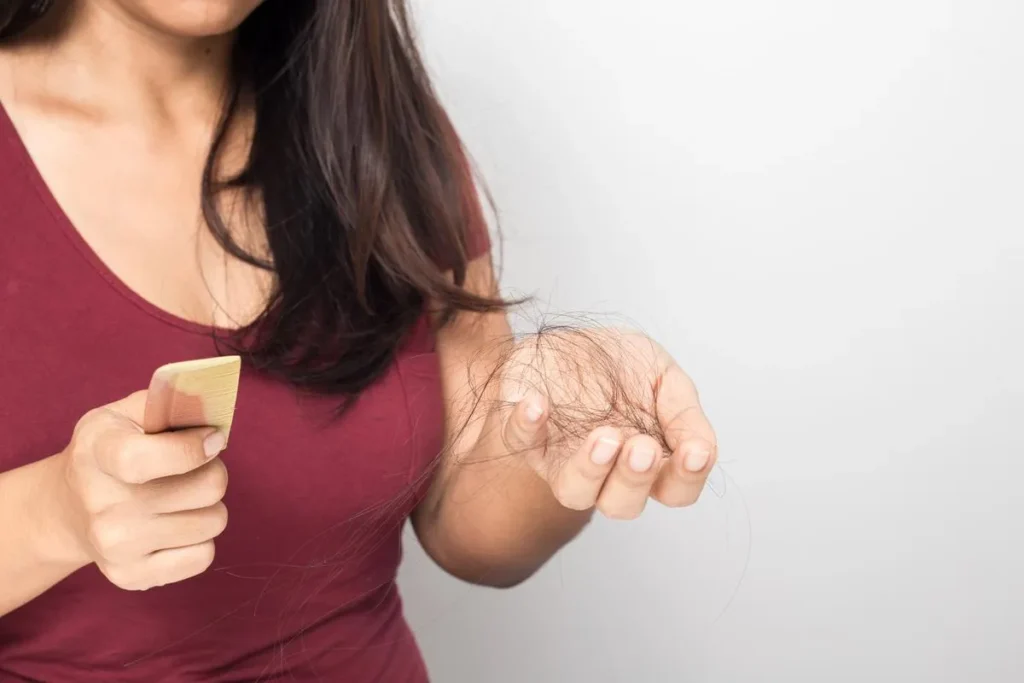
Haargroei is mogelijk met door de FDA goedgekeurde behandelingen. Deze behandelingen zijn veelbelovend in het stoppen van haaruitdunning. Ze worden ondersteund door de wetenschap en het is bewezen dat ze helpen om het haar terug te laten groeien.
FDA-goedgekeurde behandelingen zijn belangrijk voor de veiligheid en effectiviteit. Minoxidil en Finasteride zijn twee bekende behandelingen. Er is veel onderzoek naar gedaan en ze worden veel gebruikt.
Minoxidil voor verbetering van de haardichtheid
Minoxidil is een topische oplossing die op de hoofdhuid wordt aangebracht om de haargroei te stimuleren. Het verlengt de groeifase van het haar en versterkt de follikels. Dit leidt tot dikker, voller haar.
Onderzoeken tonen aan dat Minoxidil de haardichtheid met 10-30 procent kan verhogen. Het is een topkeuze voor mensen met dunner wordend haar.
Finasteride voor kaalheid bij mannen
Finasteride is een oraal geneesmiddel tegen mannelijke kaalheid. Het blokkeert het hormoon DHT, dat haaruitval veroorzaakt.
Klinische studies tonen aan dat Finasteride de haardichtheid na een jaar met 10-20 procent kan doen toenemen. Het is een goede optie voor mannen met dunner wordend haar.
Minoxidil en Finasteride zijn effectief in het bevorderen van haargroei en het stoppen van uitdunnen. Weten hoe ze werken en wat hun voordelen zijn, helpt mensen om slimme keuzes te maken op het gebied van haarverzorging.
Geavanceerde klinische oplossingen tegen dunner wordend haar
Voor mensen die te maken hebben met dunner wordend haar bieden geavanceerde klinische oplossingen hoop. Nieuwe medische technologie en onderzoek hebben geleid tot innovatieve behandelingen. Deze kunnen helpen om een volle, gezonde haardos te herstellen.
Bloedplaatjes-rijk plasma (PRP) therapie
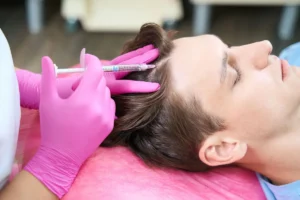
PRP-therapie is een baanbrekende behandeling. Hierbij wordt bloedplaatjesrijk plasma (PRP) in de hoofdhuid geïnjecteerd. PRP komt uit het eigen bloed van de patiënt en is rijk aan bloedplaatjes en groeifactoren.
Deze groeifactoren stimuleren de haargroei, verhogen de dichtheid en verbeteren de gezondheid van de hoofdhuid. De therapie werkt door haarzakjes te stimuleren, waardoor de natuurlijke groei wordt bevorderd.
Onderzoeken tonen aan dat PRP-therapie de haardichtheid aanzienlijk kan verbeteren en het uitvallen kan verminderen.
Apparaten voor Low-Level Lasertherapie
Low-Level Laser Therapy (LLLT)-apparaten zijn een andere geavanceerde oplossing. Ze zenden laser- of lichtemitterende diodes op laag niveau uit om de haargroei te stimuleren. LLLT verhoogt de bloedtoevoer naar de hoofdhuid, bevordert de groei en vermindert ontstekingen.
Klinische studies hebben aangetoond dat LLLT apparaten de haardichtheid verbeteren en hergroei bevorderen. Ze zijn niet-invasief en kunnen samen met andere behandelingen worden gebruikt voor betere resultaten.
Haartransplantatie procedures
Haartransplantatie is een chirurgische methode. Hierbij worden gezonde haarzakjes van de ene hoofdhuidzone naar de andere verplaatst. Dit is effectief voor mensen met mannelijke of vrouwelijke kaalheid.
Het succes van haartransplantatie hangt af van de vaardigheid van de chirurg en de kwaliteit van het donorhaar. Moderne technieken maken het effectief en relatief pijnloos.
Opkomende behandelingen zoals Clascoterone
Opkomende behandelingen zoals Clascoterone zijn de toekomst van haargroei. Clascoterone is een lokale oplossing met veelbelovende resultaten. Klinische studies tonen tot 539% verbetering in haargroei.
De ontwikkeling van Clascoterone en andere opkomende behandelingen laten zien dat er voortdurend wordt gewerkt aan de bestrijding van haaruitval. Deze behandelingen bieden hoop voor mensen met dunner wordend haar.
Natuurlijke manieren om dunner wordend haar dikker te maken
Een stralende manen begint van binnenuit. Laten we eens kijken naar natuurlijke manieren om de dikte en gezondheid van je haar te verbeteren. Voeding en hoofdhuidverzorging spelen een grote rol bij het bevorderen van haargroei.
Essentiële voedingsstoffen en supplementen voor haargroei
Voedingstekorten kunnen de gezondheid van het haar schaden en leiden tot dunner worden en haaruitval. Het is belangrijk om voldoende essentiële voedingsstoffen binnen te krijgen voor haargroei. Belangrijke voedingsstoffen zijn onder andere
IJzer: ijzer is van vitaal belang voor een gezonde haargroei, maar een ijzertekort is een veel voorkomende oorzaak van haaruitval.
Biotine: Speelt een cruciale rol in haargroei en -onderhoud.
Vitamine D: Vitamine D-receptoren zijn aanwezig in haarzakjes en zijn belangrijk voor de algehele gezondheid.
Eiwit: De bouwstenen van haar. Voldoende proteïne-inname is essentieel voor sterkte en groei van het haar.
Supplementen kunnen helpen om voedingsgaten op te vullen. Biotine, vitamine B en keratine zijn populair voor haargroei. Maar raadpleeg altijd een arts voordat je met supplementen begint.
Technieken voor hoofdhuidverzorging ter ondersteuning van hergroei
Zachte hoofdhuidverzorging is van vitaal belang voor haargroei. De technieken omvatten:
Massage: Stimuleert de doorbloeding van de hoofdhuid, wat een gezonde haargroei bevordert.
Zachte reiniging: Vermijd agressieve chemicaliën en overmatige hitte styling.
Verlichting van stress: hoge stressniveaus kunnen bijdragen aan haaruitval; oefeningen zoals meditatie en yoga kunnen dit helpen verminderen.
Door een combinatie van natuurlijke benaderingen, een uitgebalanceerd dieet en een gezonde levensstijl kunnen mensen hun haargroei bevorderen.
Conclusie
Haaruitdunning omkeren en haar terug laten groeien is een reis. Je hebt geduld, doorzettingsvermogen en de juiste aanpak nodig. We hebben zeven bewezen methodes besproken, van FDA-goedgekeurde behandelingen zoals Minoxidil en Finasteride tot natuurlijke manieren met essentiële voedingsstoffen en hoofdhuidverzorging. Er is een oplossing voor elk haarverliesprobleem.
Het is belangrijk om inzicht te hebben in de kosten van haaruitvalbehandelingen. Of je nu kiest voor geavanceerde klinische oplossingen zoals PRP-therapie of natuurlijke methoden, zoek uit wat past bij je behoeften en budget. Dit is belangrijk.
Beginnen met het aanpakken van haaruitdunning is een grote stap. Het gaat niet alleen om het redden van je haar; het gaat ook om het winnen van zelfvertrouwen. Met de juiste behandelingen en veranderingen in je levensstijl kun je ervoor zorgen dat je haar er op zijn best uitziet.
Professioneel advies inwinnen is van vitaal belang om de beste oplossing voor haaruitval te vinden. Dit zal je op weg helpen om je haar terug te laten groeien.
FAQ
Hoe kan ik mijn haarzakjes terug laten groeien?
Gebruik FDA-goedgekeurde behandelingen zoals Minoxidil en Finasteride om de haarzakjes opnieuw te laten groeien. Probeer ook geavanceerde klinische oplossingen zoals PRP-therapie en low-level lasertherapie. Natuurlijke methoden, zoals essentiële voedingsstoffen en supplementen, kunnen ook helpen.
Is haaruitdunning omkeerbaar?
Ja, haaruitdunning kan omgekeerd worden. Het is belangrijk om de oorzaken te kennen, zoals genetica en hormonale veranderingen. Dit helpt bij het vinden van de beste behandeling.
Hoe kun je dunner wordend haar op natuurlijke wijze tegengaan?
Om dunner wordend haar op een natuurlijke manier tegen te gaan, moet je je richten op gezond haar. Eet evenwichtig en beheers stress. Gebruik zachte haarverzorgings- en hoofdhuidverzorgingstechnieken. Supplementen kunnen ook helpen bij de hergroei.
Wat zijn de wetenschappelijk bewezen manieren om dikker haar te kweken?
Bewezen manieren om dikker haar te kweken zijn FDA-goedgekeurde behandelingen zoals Minoxidil en Finasteride. Geavanceerde klinische oplossingen zoals PRP-therapie en low-level lasertherapie werken ook.
Hoe stop je dunner wordend haar?
Om een einde te maken aan dunner wordend haar, moet je de oorzaken begrijpen. Gebruik vervolgens behandelingen zoals FDA-goedgekeurde medicijnen, natuurlijke methoden en geavanceerde klinische oplossingen.
Kan haar teruggroeien na uitdunnen?
Ja, haar kan teruggroeien na uitdunnen. De juiste behandeling, waaronder FDA-goedgekeurde behandelingen, geavanceerde klinische oplossingen en natuurlijke methoden, kan de hergroei stimuleren.
Hoe kan ik voorkomen dat mijn haar uitdunt?
Spaar je haar door vroeg met behandelingen te beginnen. Zorg voor een gezonde levensstijl en gebruik zachte haarverzorging. Professioneel advies inwinnen is de sleutel tot de juiste behandeling.
Wat zijn de kosten van een behandeling tegen hergroei?
De kosten van een behandeling voor haarherstel variëren. Ze variëren van betaalbare FDA-goedgekeurde behandelingen tot dure geavanceerde klinische oplossingen zoals haartransplantatie.
Hoe verdik je een dunner wordende haarlijn?
Om een dunner wordende haarlijn dikker te maken, kun je behandelingen gebruiken zoals Minoxidil, PRP-therapie en low-level lasertherapie. Natuurlijke methoden zoals hoofdhuidverzorging en essentiële voedingsstoffen helpen ook.
Referenties
JAMA-netwerk. Evidence-Based Medisch Inzicht. Opgehaald van https://jamanetwork.com/journals/jamadermatology/fullarticle/479220