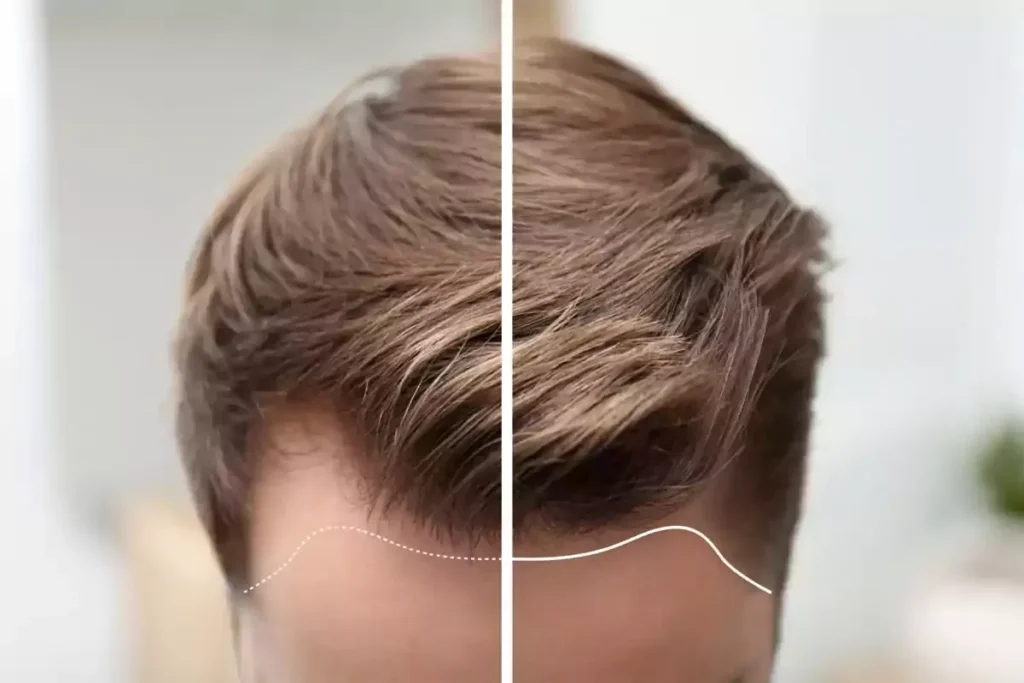
How long does a receding hairline take to progress? Discover the timeline of hair loss and how to stop it with powerful treatments.
A receding hairline can be upsetting. Knowing how it progresses is key for those seeing changes. Kopelman Hair says it can start in the late teens.
The time it takes for a receding hairline to progress differs a lot. It can be a few months or many years. This depends on your genes and health. GoldCity Centrum offers detailed, science-backed ways to manage hair loss. They focus on both medical standards and caring for the patient.
Understanding what causes hair loss helps keep your hair healthy. The hair loss timeline is shaped by genetics, health, and lifestyle.
Belangrijkste opmerkingen
A receding hairline can start as early as the late teens.
The progression speed varies significantly among individuals.
Genetic and health factors influence the timeline of a receding hairline.
Understanding hair loss factors is key to keeping your hair healthy.
GoldCity Center provides detailed ways to manage hair loss.
Understanding Receding Hairline Progression
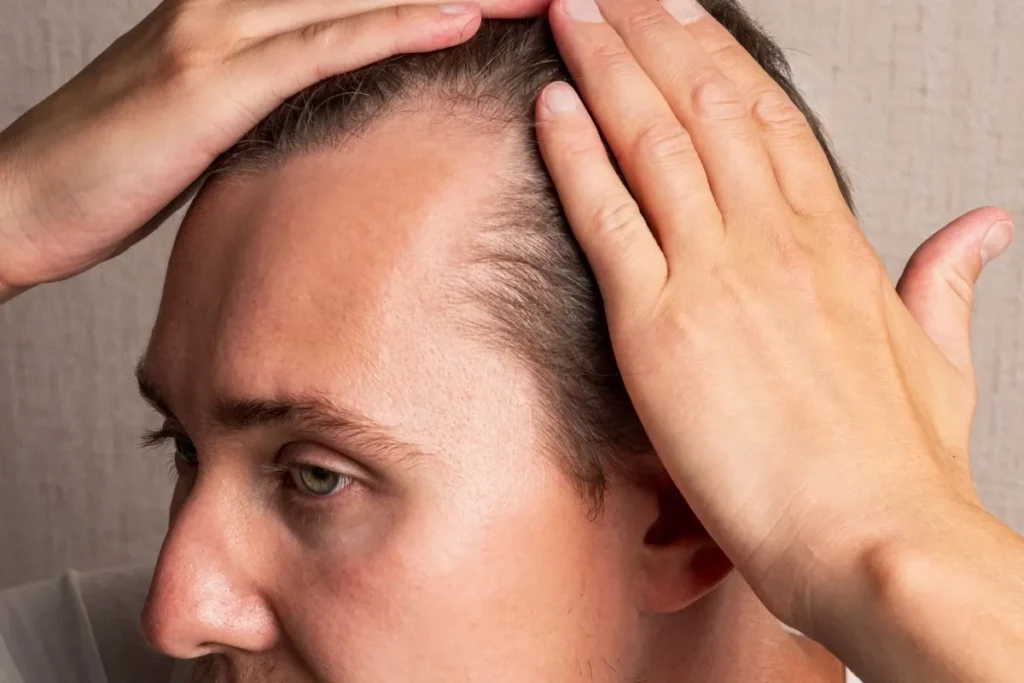
Seeing your hairline recede can be scary. It happens differently for everyone. Studies show that up to 50 percent of men have male pattern baldness by age 50. Early signs often show up in the late teens to early 30s.
Age of Onset
The age when a receding hairline starts can vary a lot. The American Academy of Dermatology says it’s usually linked to male pattern baldness. This can start as early as the late teens, but it’s more common in the 20s or 30s.
Early Signs: Thinning at the temples or a receding hairline at the crown are early signs.
Individual Variation
How fast a receding hairline happens can vary a lot. Some men lose hair quickly, while others lose it slowly. Genetics play a big role in when and how fast it happens.
Factors Influencing Variation: Genetics, health, and lifestyle can affect how fast a receding hairline happens.
Knowing these factors and spotting early signs can help you manage hair loss. By understanding how different people’s hairlines recede, men can prepare for changes.
How Long Does a Receding Hairline Take to Advance?
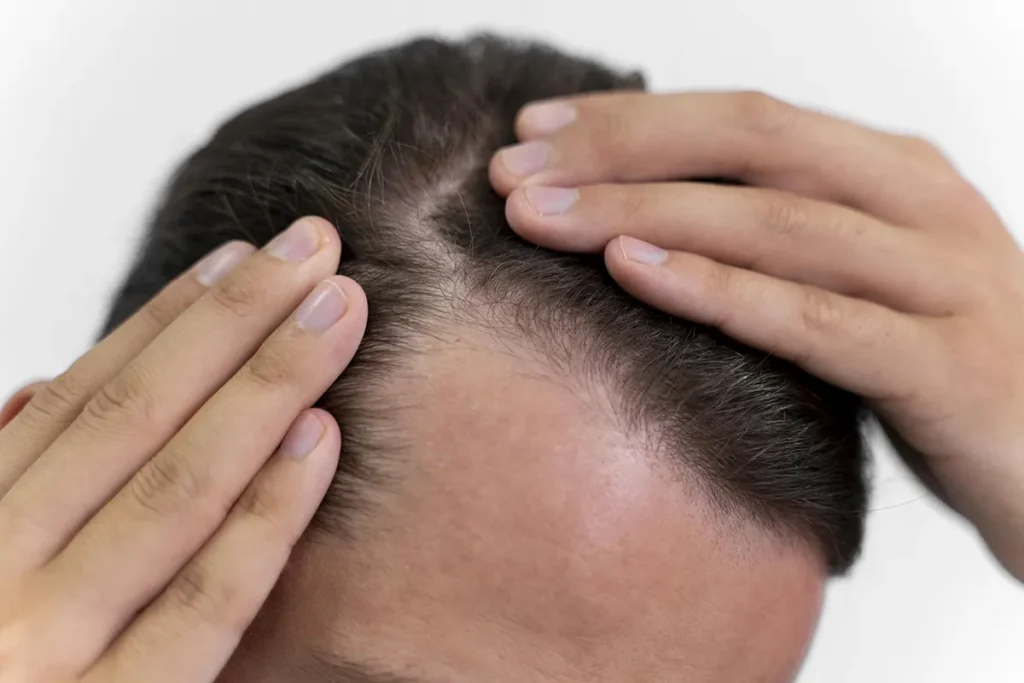
A receding hairline can change at different speeds. Many wonder what to expect. The time it takes for a hairline to recede varies a lot. This depends on genetics, health, and lifestyle.
Typical Progression Timelines
Kopelman Hair says the speed of hairline recession is different for everyone. Some see changes over decades, while others notice thinning in just a few years. Some might go bald in five years, while others may take 15 to 25 years. Knowing these timelines helps people prepare and make smart choices about their hair loss.
The way a hairline recedes isn’t always the same. It can change based on genetics, health, and lifestyle. For example, a family history of baldness can affect how fast hair loss happens.
Fast vs. Slow Progression Cases
Hairline recession can happen fast or slow. Fast progression cases see a lot of hair loss quickly, often because of genetics or health issues. Slow progression cases can take decades, giving people more time to think about their options.
Knowing if you’re losing hair fast or slow helps you pick the right treatment. Talking to a healthcare professional or hair restoration expert can give you important advice.
By spotting the signs of hairline recession and knowing typical timelines, people can act early. Whether your hair loss is fast or slow, there are ways to manage and possibly fix your hairline.
The Norwood Scale: Measuring Hairline Recession
The Norwood Scale is a well-known way to classify male pattern baldness. It helps people understand how much hair loss they have. This scale is a standard for measuring hair loss.
Classification of Male Pattern Baldness
Male pattern baldness, or androgenetic alopecia, goes through several stages. Each stage has a specific pattern of hair loss. The Norwood Scale breaks this down into seven stages.
Stage 1 shows little to no hair loss, with a hairline that’s almost unchanged. By Stage 2, the hairline starts to recede, mainly at the temples.
Visual Patterns of Recession
As baldness gets worse, the hairline recedes more. By Stage 3, the hair loss is more noticeable, with deeper recession at the temples. There might also be some thinning on the crown.
The condition worsens through Stage 4 and Stage 5. Hair loss increases, and a horseshoe-shaped pattern starts to form around the sides and back. In Stage 6 and Stage 7, hair loss is severe. Only a horseshoe-shaped ring of hair remains around the sides and back.
Knowing these stages is key for understanding hair loss. It helps people find the right treatment. While the Norwood Scale is clear, talking to a healthcare professional is also important. They can discuss treatment options and find the best plan.
Factors Influencing Receding Hairline Progression
Age is a big factor, but it’s not the only one. Other things like genetics and health also play a role. Knowing about these can help people deal with hair loss better.
Genetische aanleg
Genetics are key in determining if you’ll get a receding hairline. Studies show genetics are behind about 80% of male pattern baldness. The androgen receptor (AR) gene is a big part of this.
The Role of the AR Gene: The AR gene affects how hair follicles react to hormones like DHT. DHT is a hormone that can cause hair loss. Changes in the AR gene can make hair follicles more sensitive to DHT, which can speed up hair loss.
Health and Lifestyle Factors
Health and lifestyle also affect hair loss. A bad diet, stress, and some health issues can make hair loss worse.
Diet and Nutrition: Not getting enough nutrients like iron, zinc, and biotin can lead to hair loss.
Stress: Too much stress can cause hair loss. It can make the body shed more hair than usual.
Medical Conditions: Some health problems, like thyroid issues and autoimmune diseases, can also cause hair loss.
Knowing about these factors can help people take steps to slow down or stop hair loss.
By tackling these factors, people can understand their hair loss better. They can then look for ways to manage or slow it down.
Conclusie
Understanding how a receding hairline progresses is key to fighting hair loss. The speed at which it moves varies a lot between people. This is due to genetics, health, and lifestyle.
Starting treatment early is vital to slow down or stop hairline recession. Kopelman Hair says early action can really help. Research shows that starting treatment before hair follicles shrink can slow down the problem.
Knowing the receding hairline stages and what affects them helps in fighting hair loss. Whether you’re just noticing signs or it’s more advanced, looking into hair loss treatment is important.
Many wonder if a receding hairline stop moving. While stopping hair loss is hard, early intervention can slow it down a lot. Knowing what age does hair recede helps in being ready and taking steps to prevent it.
Starting to fight hair loss needs patience, understanding, and the right advice. By taking action and finding good solutions, people can feel healthier and more confident.
FAQ
How long does a receding hairline take to progress?
The time it takes for a receding hairline to progress varies. It depends on genetics, health, and lifestyle. Some people see it progress slowly, while others notice it faster.
At what age does a receding hairline typically start?
A receding hairline often starts in late teens to early twenties. Genetics greatly influence when it begins.
Can a receding hairline grow back?
Usually, a receding hairline doesn’t grow back by itself. But, there are treatments that can slow down or even reverse hair loss.
What are the stages of a receding hairline?
The Norwood Scale is used to measure male pattern baldness. It has seven stages, each showing different levels of recession.
How long does it take for a hairline to grow back?
Growing back a hairline is hard, but treatments can help. How well these treatments work and how long they take varies for each person.
Does a receding hairline stop at some point?
Treatment can slow down or stop a receding hairline from getting worse. But, it’s unlikely to completely stop without treatment. Knowing what causes hair loss is key to treating it.
What factors influence the progression of a receding hairline?
Genetics, health, and lifestyle all affect hair loss. Understanding these factors is important for a good treatment plan.
Can receding hair grow back with treatment?
While hair regrowth is not guaranteed, treatments can help. Medications and therapies can slow down or stimulate hair growth. It’s important to talk to a healthcare professional to find the best treatment.
Referenties
Nationaal Centrum voor Biotechnologie-informatie. Evidence-Based Medisch Inzicht. Opgehaald van https://pubmed.ncbi.nlm.nih.gov/24566563/