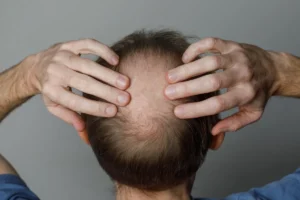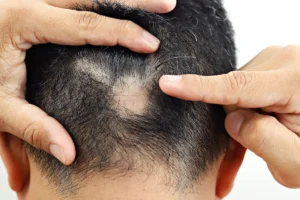
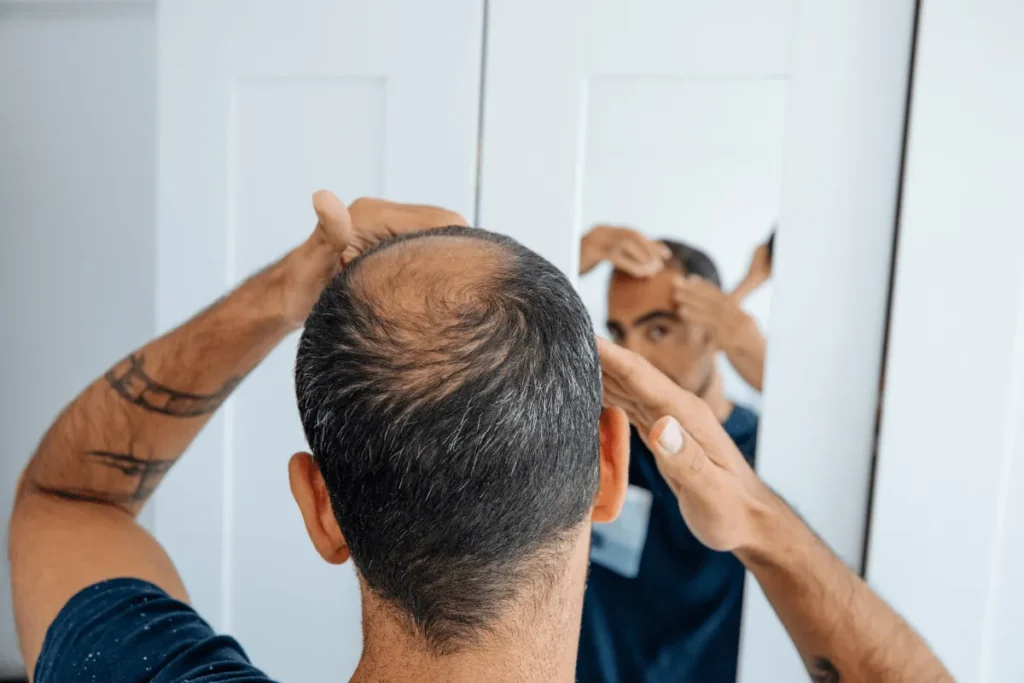
Hair loss is a big worry for men all over the world. About two-thirds of men will lose some hair in their lives. Male pattern baldness, or androgenetic alopecia, is the top reason for hair loss in men.
The Hamilton-Norwood scale is the top way to measure hair loss. It was made by Medical Expert 1950s and improved by Medical Expert’Tar Norwood in the 1970s. This 7-stage scale helps spot the different stages of hair loss.
Knowing the 7 stages of hair loss is key for good treatment and care. This guide will show you how hair loss gets worse. It will help you take charge of your hair health.
Belangrijkste opmerkingen
Approximately two-thirds of men experience some degree of hair loss in their lifetime.
The Hamilton-Norwood scale is the gold standard for measuring hair loss progression.
Understanding the 7 stages of hair loss is critical for effective treatment and management.
The 7-stage scale offers a detailed way to identify different hair loss stages.
Early medical action can help manage and treat hair loss.
Understanding Male Pattern Baldness
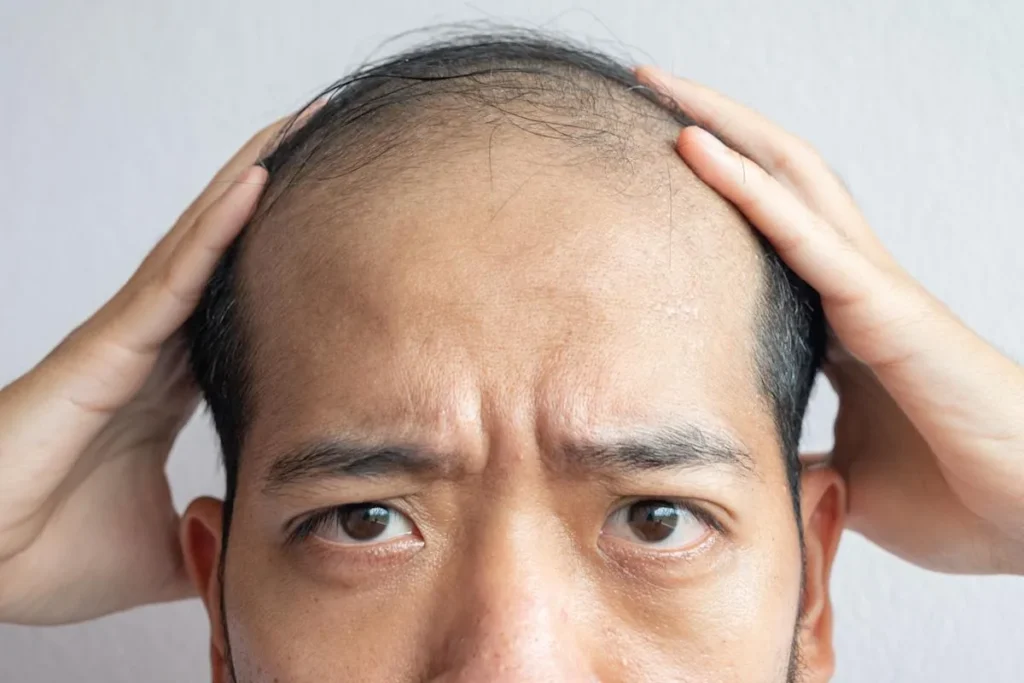
Male pattern baldness is a common condition where hair loss is caused by genetics and hormones. It’s also known as androgenetic alopecia. This name shows its link to both genetics and hormones.
The condition goes through different stages, leading to a lot of hair loss. Knowing the causes and how common it is helps in finding good treatments.
Genetische en hormonale factoren
Genetics play a big role in male pattern baldness. Men with a family history of baldness are more likely to lose their hair. Hormones, like the conversion of testosterone to dihydrotestosterone (DHT), also affect it.
DHT makes hair follicles shrink. This leads to thinner, shorter hairs and eventually stops hair growth. This happens slowly, starting with a receding hairline or thinning at the crown.
Prevalence and Statistics
Male pattern baldness affects a lot of men. By 50, about 50% of men will have lost some hair.
These numbers show why understanding male pattern baldness is key. By knowing what causes it, men can find better ways to treat it and slow down hair loss.
The 7 Stages of Male Baldness Explained

The 7 stages of male baldness offer a clear way to understand hair loss. This system helps people know where they are in hair loss and find the right treatments.
Stage 1: No Visible Hair Loss
In Stage 1, there’s no sign of balding or hair loss. The hairline looks young, and there’s a full head of hair. This is the best stage for preventing hair loss.
Stage 2: Slight Temple Recession (Mature Hairline)
At Stage 2, the hairline starts to recede, mainly at the temples. This is a natural sign of aging but can signal hair loss to come.
Stage 3: M or U-Shaped Hairline Recession
Stage 3 shows a clear recession, making the hairline look like an M or U. Hair loss is more obvious, and the bald spots grow.
Stage 4: Deep Recession with Crown Hair Loss
In Stage 4, the hairline recedes even more, and the crown starts to lose hair. The bald spots are clear, showing a more serious stage of baldness.
Knowing these stages is key for men dealing with hair loss. By figuring out where they are, they can find the right treatments and strategies.
Key Features of the 7 Stages:
Progressive hair loss
Distinct characteristics at each stage
Variability in the rate of progression
Recognizing your stage of hair loss is the first step to take control. With the right approach, you can slow down or stop male baldness.
The Hamilton-Norwood Scale: Identifying Your Stage
Male pattern baldness needs a clear way to measure. The Hamilton-Norwood scale is a key tool for this. It helps track hair loss in men.
A Brief History of the Hamilton-Norwood Scale
Medical Expert-Norwood scale in the 1950s. Medical Expert’Tar Norwood updated it in the 1970s. This system is now the top choice for checking male pattern baldness. It makes it easy to see the different stages of hair loss.
The scale’s creation was a big step forward in hair loss research. It lets doctors better diagnose and treat hair loss. It helps people understand their hair loss and find the right treatments.
Self-Assessment Techniques Using the Hamilton-Norwood Scale
Checking yourself is key to knowing your hair loss stage. Here’s how to use the Hamilton-Norwood scale:
Look at your hairline: See if it’s receding, mainly at the temples.
Examine the crown: Check how thick your hair is here.
Match with the scale: Use the illustrations to find your stage.
Being honest with yourself is important. But, seeing a doctor for a precise diagnosis is best. They can give you tailored advice and treatment plans.
Knowing your hair loss stage is the first step to dealing with it. The Hamilton-Norwood scale helps you find the right treatments.
Conclusion: Treatment Options Across Different Stages
Knowing the stages of male baldness is key to picking the best treatments. Treatments change with each stage, from meds like minoxidil and finasteride to laser therapy and hair transplants.
At the start of hair loss, meds and lifestyle changes can slow it down. But as hair loss gets worse, surgeries like hair transplants become options. It’s important to look into these treatments to make smart choices for your hair.
By figuring out your balding stage and looking into treatments, you can start your hair restoration journey. Whether it’s growing back hair or keeping your scalp healthy, the right treatment boosts confidence and looks.
FAQ
Wat is kaalheid bij mannen?
Male pattern baldness, also known as androgenetic alopecia, is a common condition. It causes hair loss due to genetics, hormones, and environment.
What are the 7 stages of male baldness?
The 7 stages of male baldness are outlined by the Hamilton-Norwood scale. They range from Stage 1 (no hair loss) to Stage 7 (advanced hair loss). Each stage has its own features.
How is the Hamilton-Norwood scale used to diagnose male pattern baldness?
The Hamilton-Norwood scale helps identify and understand male pattern baldness. It lets people know their stage of hair loss. This helps them find the right treatment.
What are the treatment options for male pattern baldness?
Treatments include medications, lifestyle changes, and surgery. The best option depends on the person’s hair loss stage and health.
Can male pattern baldness be prevented or slowed down?
Male pattern baldness can’t be completely stopped. But early treatment can slow it down. It can even help grow new hair in some cases.
What are the genetic and hormonal factors that contribute to male pattern baldness?
Genetics and hormones play a big role in male pattern baldness. Dihydrotestosterone (DHT), a strong form of testosterone, shrinks hair follicles.
How can I self-assess my stage of hair loss?
You can check your hairline and crown to guess your stage. But getting a professional diagnosis is always best.
What is the difference between the Hamilton-Norwood scale and other hair loss classification systems?
The Hamilton-Norwood scale is a well-known system for male pattern baldness. It offers a clear way to understand hair loss progression.
Are there any lifestyle changes that can help manage male pattern baldness?
Yes, eating well, reducing stress, and avoiding too much heat styling can help. They promote hair health and slow down hair loss.
Referenties
Nationaal Centrum voor Biotechnologie-informatie. Evidence-Based Medisch Inzicht. Opgehaald van https://pubmed.ncbi.nlm.nih.gov/1185828/