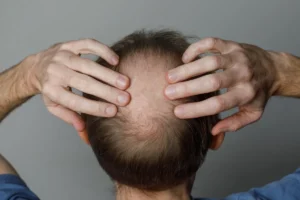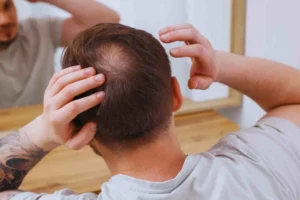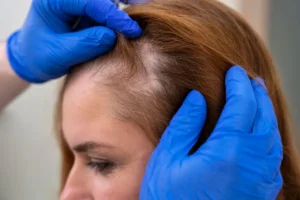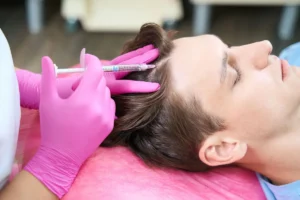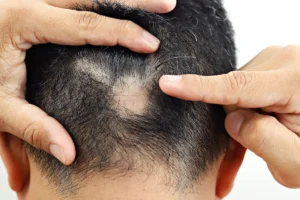
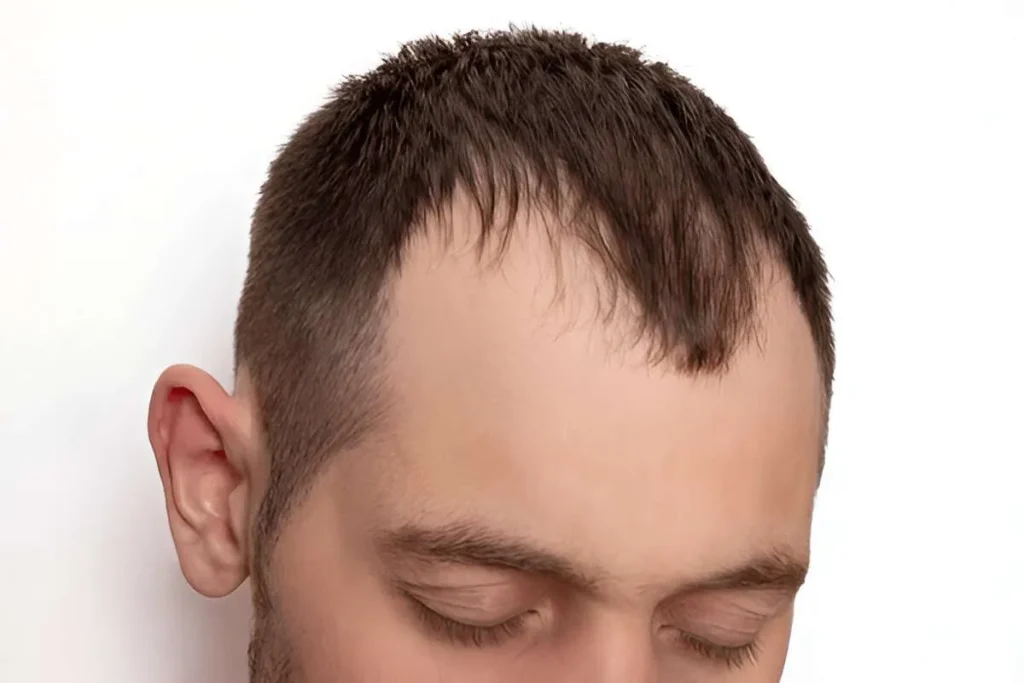
Androgenetic alopecia is a genetic disorder that leads to hair loss in both men and women. It’s caused by a mix of genetics and sensitivity to androgens. This affects how people look and feel about themselves.
Understanding androgenetic alopecia is important for finding good treatments. By looking at new research and studies, people can learn more about their condition. This helps them find ways to feel more confident again.
Starting treatment early is very important for androgenetic alopecia. With the right knowledge, people can start their journey to luxury transformation. They can bring back their hair’s natural beauty.
Belangrijkste opmerkingen
Androgenetic alopecia is a common condition causing progressive hair loss.
Genetic predisposition and androgen sensitivity play a significant role in its development.
Understanding the condition is key for effective treatment.
Early intervention is key to managing androgenetic alopecia.
Various treatment options are available to help regain confidence.
Understanding Male or Female Pattern Baldness
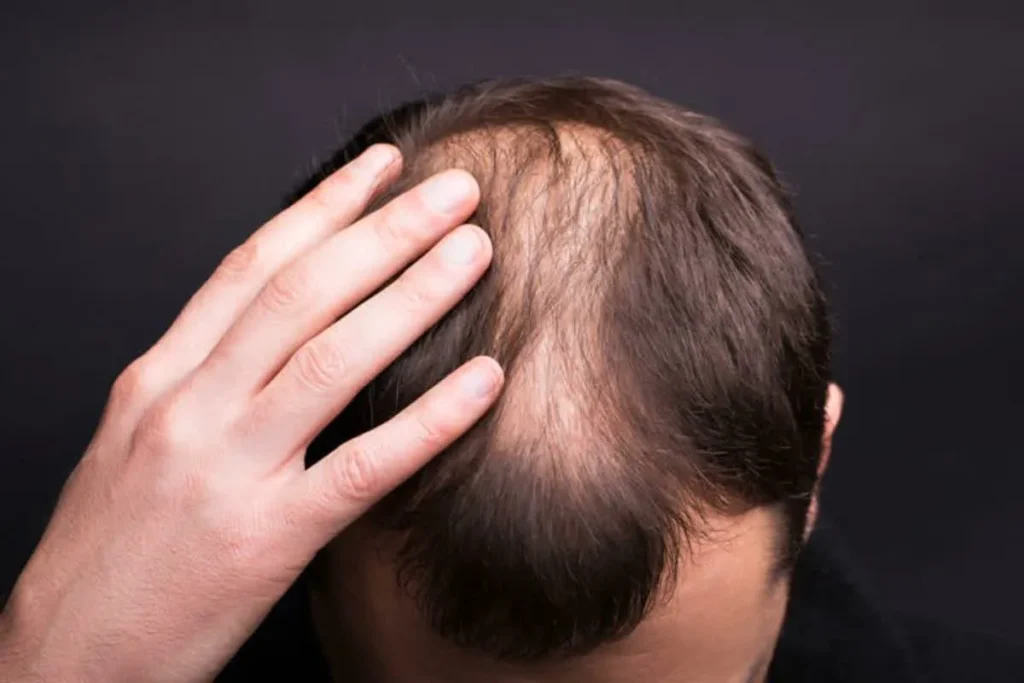
It’s important to understand male and female pattern baldness to tackle hair loss. Androgenetic alopecia affects not just hair but also self-esteem and confidence.
Definition and Clinical Characteristics
Androgenetic alopecia, or male/female pattern baldness, is known for its hair loss pattern. Men often see a receding hairline and thinning at the crown. Women experience thinning all over the scalp.
This condition is linked to androgens, like dihydrotestosterone (DHT). DHT makes hair follicles shrink, leading to thinner, shorter hairs.
Hair thinning, mainly on the top and crown, is a key sign. Catching it early is vital for effective management and slowing its progress.
Prevalence and Age of Onset Statistics
Up to 80% of men and 50% of women get androgenetic alopecia by 70. Men usually start losing hair earlier than women. By 50, about half of males and a quarter of females show signs of hair loss.
Early detection is key to getting the right treatment. Knowing the risks helps in managing the condition better.
The Biological Mechanisms of Androgenetic Alopecia
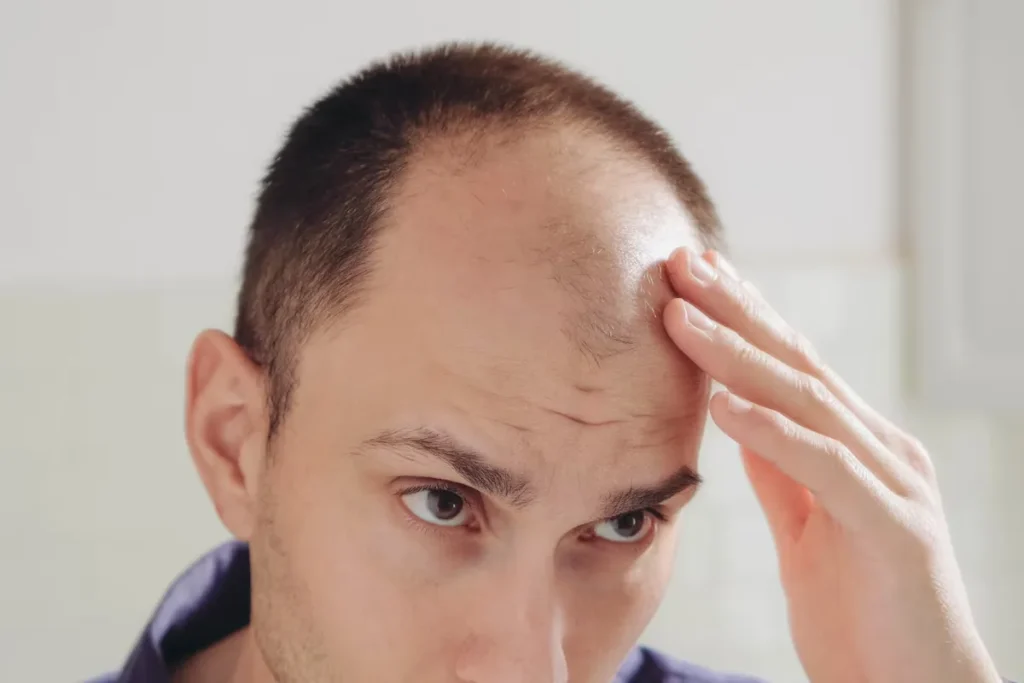
Androgenetic alopecia starts with a mix of genetic factors and hormones. It’s a complex process that ends in hair loss.
Genetic Factors and Hereditary Influence
Genetics play a big part in androgenetic alopecia. Heredity is responsible for about 80% of the risk. Certain genes make hair follicles more sensitive to androgens, leading to hair loss.
Genetics affect how hair grows and reacts to hormones. This is why some people are more likely to lose their hair.
The Role of DHT and Androgen Sensitivity
Dihydrotestosterone (DHT) is a hormone that causes androgenetic alopecia. It makes hair follicles smaller, leading to thinner, shorter hairs and hair loss.
DHT binds to androgen receptors in hair follicles, reducing hair growth.
People with a genetic predisposition are more sensitive to DHT.
DHT and androgen receptors work together, causing follicles to shrink.
Follicular Miniaturization Process
The follicular miniaturization is key to androgenetic alopecia. DHT makes follicles smaller, leading to finer, less pigmented hairs.
The hair growth cycle gets shorter, reducing the number of hairs in the anagen phase.
Follicles shrink, turning terminal hairs into vellus hairs.
This change is permanent, causing permanent hair loss if not treated.
Knowing how androgenetic alopecia works is key to finding effective treatments. It helps address the condition’s root causes.
Gender-Specific Patterns and Progression
It’s important to know how androgenetic alopecia affects men and women differently. This condition, also known as male or female pattern baldness, shows up in unique ways for each gender. This leads to different patterns of hair loss.
Male Pattern Hair Loss Characteristics
Men often see their hairline recede, forming an M shape. This can spread to the crown, causing thinning or bald spots.
Key characteristics of male pattern hair loss include:
Receding hairline, often starting above the temples
Hair thinning or balding at the crown
Progression to more extensive hair loss over time
A leading dermatologist notes, “Male hair loss starts with a receding hairline and can lead to more balding.” This highlights the importance of acting early to treat male pattern hair loss.
Female Pattern Hair Loss Presentation
Women typically see hair thinning all over their scalp, mainly at the crown. Their hairline usually stays the same.
Knowing these differences is key to finding the right treatment. A specialist points out, “Women with androgenetic alopecia often see their part line widen due to thinning, not a receding hairline.”
Learning about your specific condition is the first step to managing and treating androgenetic alopecia effectively.
Conclusie
Androgenetic alopecia is a complex condition. It is influenced by genetics, hormones, and the environment. Understanding its causes is key to finding effective treatments.
Early detection and treatment can greatly improve life quality. There are many hair loss treatment options. These include medical therapies like minoxidil and finasteride, and surgical options like hair transplant surgery.
New treatments like low-level laser therapy and platelet-rich plasma (PRP) therapy show promise. By learning about the condition and exploring treatments, people can manage androgenetic alopecia. This helps them regain their confidence.
Research into new treatments gives hope to those affected. Staying informed and working with healthcare professionals can lead to effective solutions. This way, individuals can achieve a more radiant and confident self.
FAQ
What is androgenetic alopecia?
Androgenetic alopecia, also known as male or female pattern baldness, is a condition. It causes hair loss due to genetics and hormones.
What causes androgenetic alopecia?
It’s caused by genetics, hormones, and the environment. Dihydrotestosterone (DHT) is a key hormone in its development.
How does androgenetic alopecia manifest in men and women?
Men often see a receding hairline and balding at the crown. Women experience thinning hair, mainly at the crown, without a receding hairline.
What is the role of DHT in androgenetic alopecia?
DHT is a hormone that leads to hair loss. It causes hair follicles to shrink and eventually lose hair.
How common is androgenetic alopecia?
By age 70, many will have androgenetic alopecia. Men usually start earlier than women.
What are the available treatment options for androgenetic alopecia?
There are many treatments, from medical to surgical. New research also offers hope for those affected.
Can androgenetic alopecia be treated effectively?
Yes, early treatment can manage symptoms. People can take steps to manage hair loss and improve their life.
What is the significance of genetic predisposition in androgenetic alopecia?
Genetics play a big role. Certain genes make hair follicles more sensitive to androgens.
How does androgenetic alopecia progress?
It causes hair loss that gets worse over time. It affects men and women differently. Knowing the signs early helps find the right treatment.
Referenties
National Center for Biotechnology Information. Male and female pattern hair loss. Retrieved from https://pmc.ncbi.nlm.nih.gov/articles/PMC12187474/