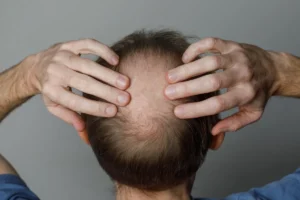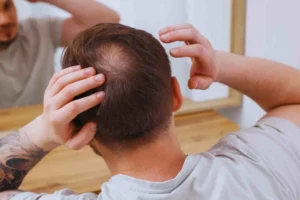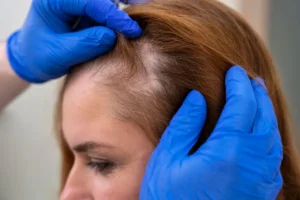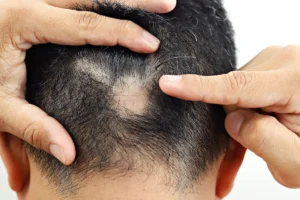
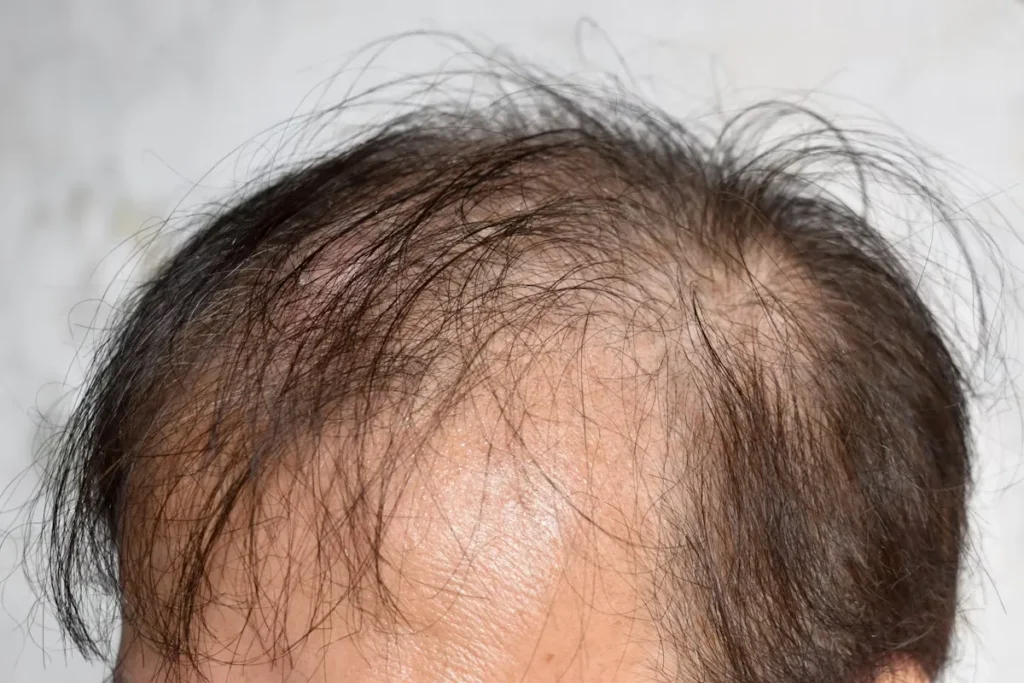
Male pattern hair loss, also known as androgenetic alopecia, affects millions of men globally. By age 35, about 40% of men see noticeable hair thinning. This number jumps to 85% by age 50.
Knowing how this condition progresses is key for choosing the right treatment. GoldCity Centrum offers top-notch care and personalized plans for hair loss.
With the right information, men can manage their hair loss and feel confident again. Learning about the seven stages of this condition is a big step towards a luxury transformation in their hair journey.
Belangrijkste opmerkingen
Understanding the stages of androgenetic alopecia is vital for effective treatment.
GoldCity Center provides tailored solutions for hair restoration.
Acting early can greatly improve treatment results.
Combining medical excellence with patient care is essential for success.
Regaining confidence through hair restoration is a life-changing journey.
Haaruitval bij mannen begrijpen
Male pattern hair loss is a common issue for many men. It’s the main cause of hair loss in men, driven by genetics and a hormone called DHT.
The Prevalence and Impact
Male pattern hair loss, or androgenetic alopecia, affects a lot of men. It’s not just about looks; it can also hurt a man’s self-esteem and confidence.
As men get older, more of them experience hair loss. This can lead to a receding hairline, thinning at the crown, and even baldness.
Genetics and DHT: The Root Causes
Genetics and hormones, like DHT, play a big role in male pattern hair loss. DHT makes hair follicles smaller, leading to thinner, shorter hairs and hair loss.
Genetics can make some men more likely to lose their hair. DHT sensitivity is a key factor in this process.
The Hamilton-Norwood scale helps identify the stages of male pattern baldness. Here’s a table showing the different stages:
Knowing these stages helps find the best treatment. Starting treatment early can slow down hair loss.
The 7 Stages of Male Pattern Hair Loss
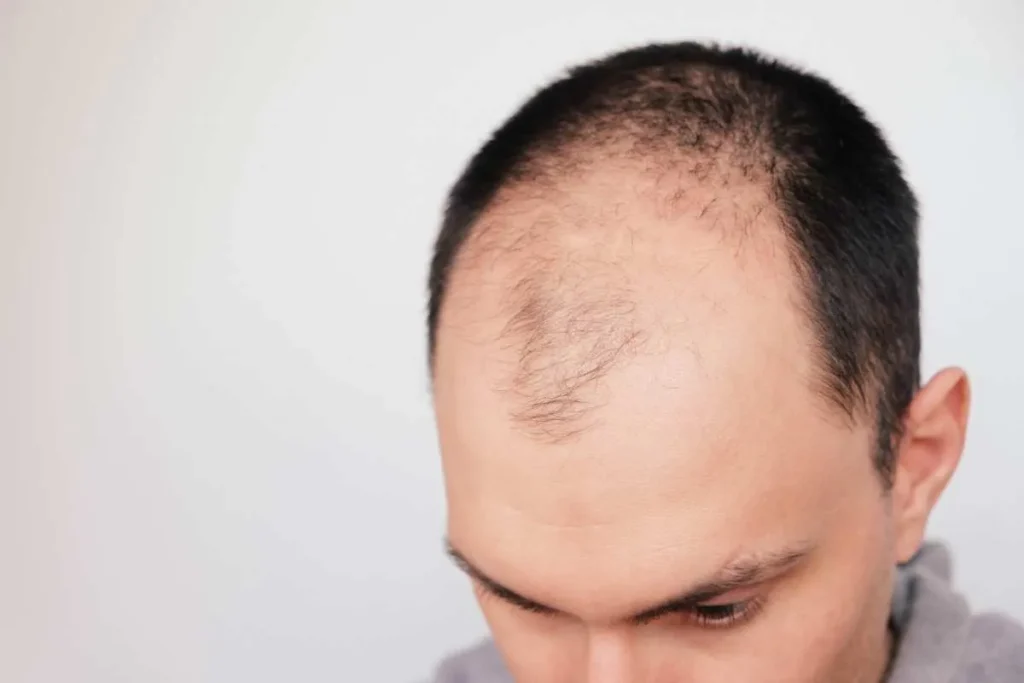
The Hamilton-Norwood Scale helps us understand male pattern hair loss. It’s a well-known system used by doctors and patients. It shows how much hair loss has happened.
The Hamilton-Norwood Scale Explained
This scale breaks down male pattern baldness into 7 stages. These stages range from a little hair loss to a lot. Knowing the stage helps find the right treatment and understand how it might get worse.
Stage I: Minimal or No Recession
At Stage I, there’s minimal or no hair recession. The hairline is mostly the same, with no big bald spots. This stage is normal, where hair loss isn’t a worry.
Stage II: Slight Recession at the Temples
Stage II shows a slight recession of the hairline at the temples. It’s the first sign of hair loss, but it’s small. The hair density is mostly the same.
Stage III: First Signs of Clinical Baldness
Stage III is when clinical baldness starts. Hair thinning at the top of the scalp is clear. The hairline recession is more obvious. This stage is key because it shows serious hair loss.
Knowing these stages is key for men to tackle hair loss. By identifying their stage, they can find the right treatment. This helps manage their hair loss better.
Treatment Options and Management Strategies
Modern research has changed how we treat male pattern hair loss. It offers many effective solutions. Knowing the right treatment as we go through the balding stages is key.
Early Intervention Methods (Stages I-III)
At the start of male pattern hair loss, acting early can slow down or stop hair loss. Minoxidil and finasteride are proven treatments. They help grow hair and prevent more loss.
For early stages, these treatments work well. Lifestyle changes, like reducing stress and eating well, also help.
Moderate Stage Solutions (Stages IV-V)
When hair loss gets to moderate stages, we need more advanced treatments. Low-Level Laser Therapy (LLLT) is a popular choice. It helps grow hair.
Advanced Stage Approaches and Hair Transplantation
For advanced hair loss, hair transplantation is a top choice. It moves healthy hair from the back to the thinning spots.
Hair transplantation gives natural-looking results. It’s a lasting fix. Talking to a specialist helps find the right treatment for your stages of baldness.
Knowing the treatments for each balding stage helps manage hair loss. There are many ways to fight male pattern hair loss, from medicine to surgery.
Conclusie
Knowing the 7 stages of male pattern hair loss is key to feeling confident again. It helps improve your overall life quality. By understanding these stages, you can start managing your hair loss early.
Early action is important in fighting male pattern hair loss. There are many treatments out there, from medical to hair care. These options help you shine and feel beautiful.
Starting your journey to understand male pattern hair loss can change your life. You can make your routine better and glow. With the right treatment, you can get your hair back and feel young and confident again.
FAQ
What is male pattern hair loss?
Male pattern hair loss, also known as androgenetic alopecia, is a common condition. It causes hair to thin and fall out, usually starting at the temples or crown.
What causes male pattern hair loss?
It’s caused by genetics, hormonal changes, and other factors. Dihydrotestosterone (DHT) is a key player in this process.
What is the Hamilton-Norwood Scale?
The Hamilton-Norwood Scale is a system used to measure male pattern hair loss. It categorizes it into seven stages.
What are the stages of male pattern hair loss?
The seven stages of male pattern hair loss are defined by the Hamilton-Norwood Scale. They range from minimal loss to significant balding. Each stage shows different patterns of hair thinning and loss.
Can male pattern hair loss be treated?
Yes, it can be treated with various methods. These include medications, hair transplantation, and lifestyle changes. The best approach depends on the stage and severity of the condition.
What are the treatment options for early-stage male pattern hair loss?
Early-stage hair loss can be treated with medications like minoxidil and finasteride. Low-level laser therapy (LLLT) and platelet-rich plasma (PRP) therapy are also options.
Is hair transplantation effective for advanced male pattern hair loss?
Yes, hair transplantation is effective for advanced hair loss. It involves moving healthy hair follicles to balding areas to create a natural-looking hairline.
Can male pattern hair loss be prevented?
While it can’t be completely prevented, early treatment can slow it down or stop it. Some treatments also promote hair regrowth.
How can I determine my stage of male pattern hair loss?
A dermatologist or hair restoration specialist can help determine your stage. They will assess your hair loss pattern and suggest treatment options.
Referenties
Nationaal Centrum voor Biotechnologie-informatie. Evidence-Based Medisch Inzicht. Opgehaald van https://pubmed.ncbi.nlm.nih.gov/33335712/