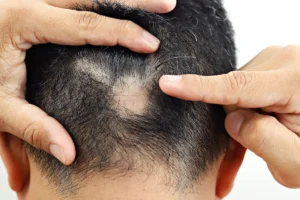
Alopecia barbae is an autoimmune condition that causes hair loss in the beard area. It affects many people with alopecia areata. This can make someone feel less confident and affect their self-image.
Effective beard alopecia treatment is now available. It offers hope for alopecia beard regrowth. With the right treatment, people can feel more confident and have a fuller beard. GoldCity Centrum‘s dermatologists provide trusted care to help manage alopecia barbae.
Belangrijkste opmerkingen
Understanding alopecia barbae and its causes is essential for effective treatment.
Alopecia barbae affects approximately 28% of alopecia areata cases.
Various beard alopecia treatment options are available, including dermatological care.
GoldCity Center offers expert care for managing alopecia barbae.
Alopecia beard regrowth is possible with the right treatment approach.
Understanding Alopecia Barbae
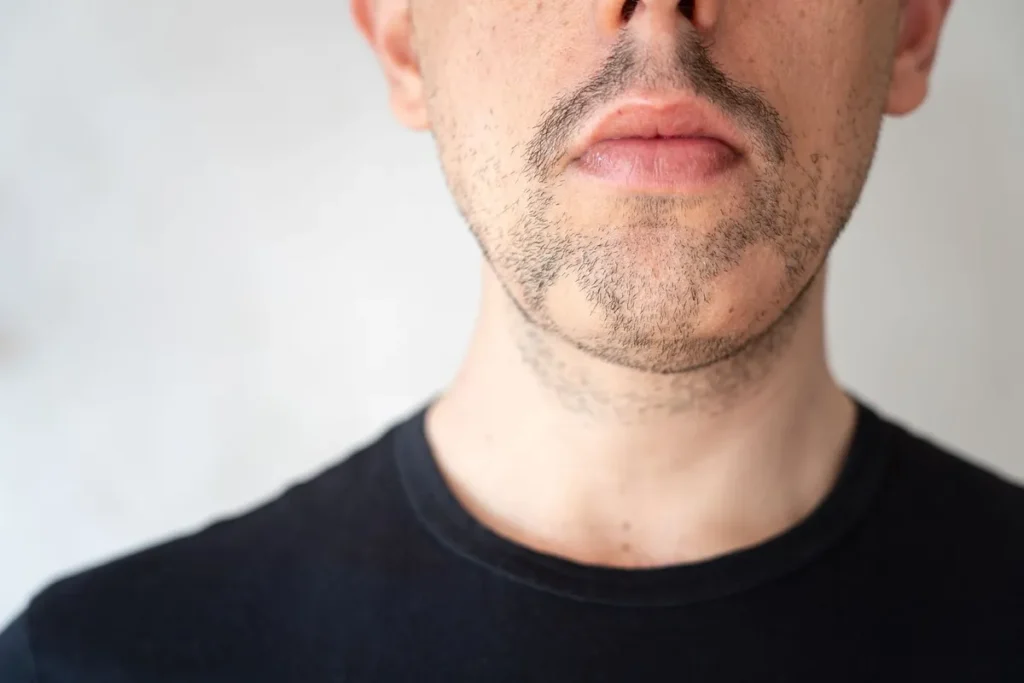
Alopecia barbae is a complex condition. It involves genetics, autoimmunity, and the environment. It causes hair loss in the beard area, leading to distress for those affected.
Causes of Beard Hair Loss
The exact cause of alopecia barbae is not fully understood. Research points to a mix of genetic predisposition and autoimmune responses. In those with the condition, the immune system attacks hair follicles, causing hair loss.
Autoimmune factors are key, as it often comes with other autoimmune diseases. Stress and environmental triggers may also play a role in starting alopecia barbae.
Prevalence and Risk Factors
Alopecia barbae can hit anyone, at any age. But, those with a family history of alopecia areata or other autoimmune diseases are at higher risk.
Other risk factors include existing autoimmune diseases and possibly, certain environmental factors. Knowing these risks helps in early detection and treatment.
By understanding the causes and risks of alopecia barbae, people can start looking for effective beard hair loss treatment. They might even find an alopecia areata beard cure.
Identifying the Mustache Bald Spot and Other Symptoms
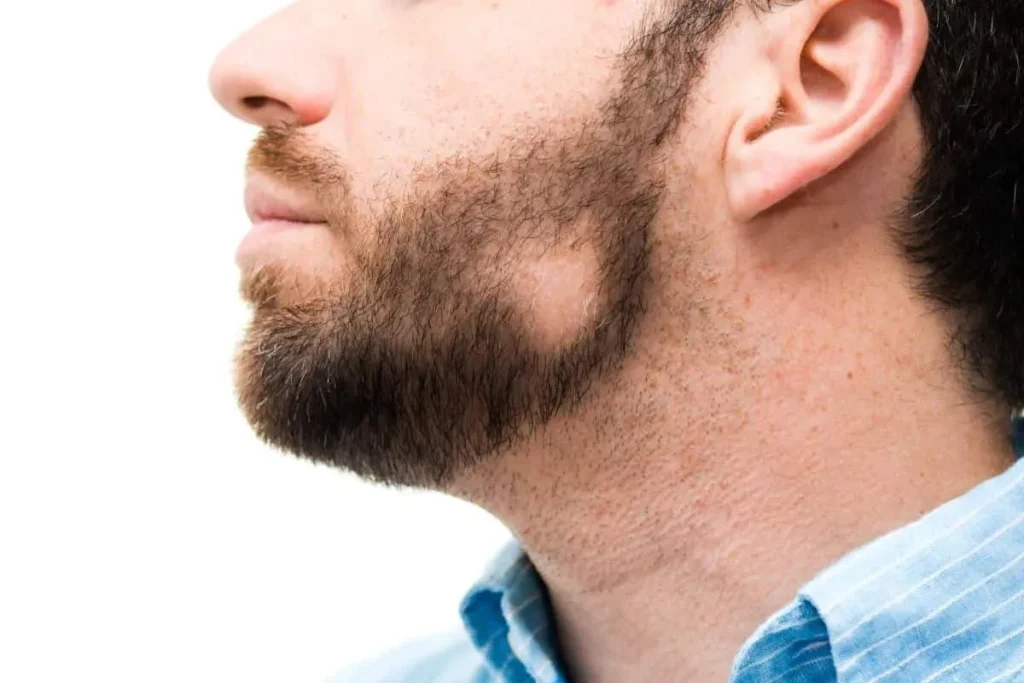
Spotting the mustache bald spot early can really help with treatment. Alopecia barbae shows up in clear signs that you can learn to spot.
Common Patterns of Hair Loss in the Beard Area
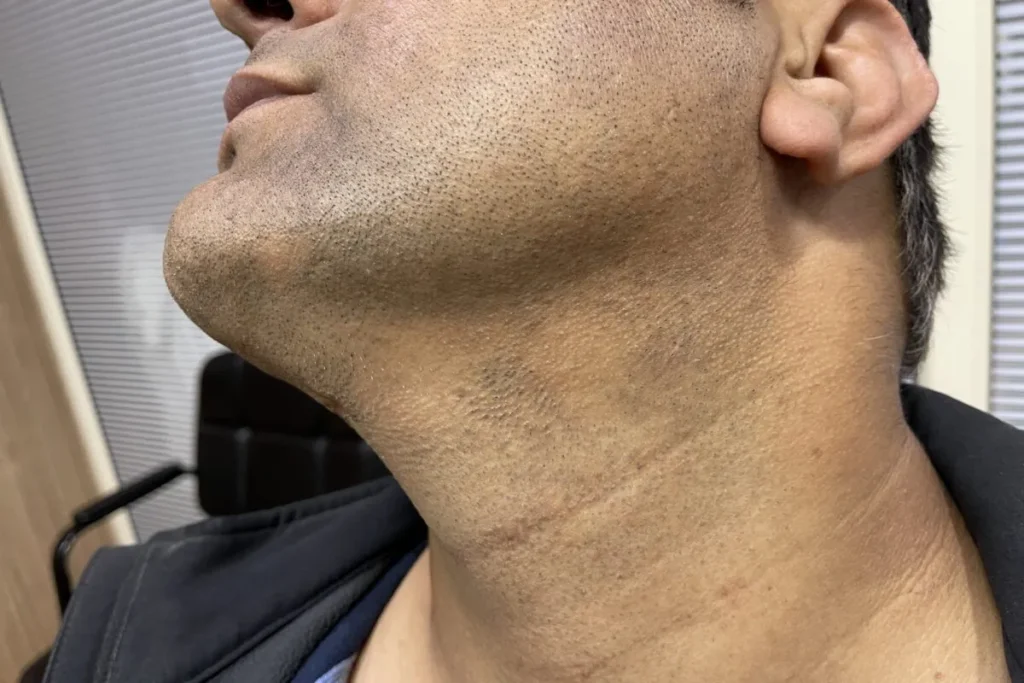
Alopecia barbae often brings small, round bald spots to the jawline or cheeks. These spots might be smooth or red and itchy.
The condition can spread to the scalp or other face areas, causing more hair loss. Spotting these patterns is key for a correct diagnosis.
Wanneer een dermatoloog raadplegen
See a dermatologist if you notice odd hair loss or bald spots in your beard or mustache. They can figure out what’s causing it and suggest the best treatments.
A dermatologist can give you a plan tailored to your needs. Don’t wait to get help if you think you might have alopecia barbae.
Early action is vital in fighting alopecia barbae. Knowing the signs and getting medical advice quickly can help you get a full beard back.
Effective Treatment Options for Alopecia Barbae
Alopecia barbae, or beard hair loss, can be upsetting. But, there are many effective treatments today. Knowing these options is key to managing the condition and possibly growing back your beard hair.
Medical Treatments
Medical treatments are often the first step. These include:
Topical Corticosteroids: Applied directly, these reduce inflammation and help grow hair back.
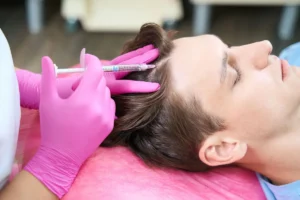
Intralesional Steroid Injections: Injected into bald spots, steroids can promote hair growth.
Minoxidil: Common for hair loss, minoxidil stimulates hair growth in alopecia barbae.
Emerging Therapies
New research has led to promising emerging therapies. These include:
Platelet-rich Plasma (PRP) Therapy: This therapy uses the patient’s own blood to stimulate hair growth.
Janus Kinase (JAK) Inhibitors: These drugs may treat alopecia areata and barbae by stopping immune attacks on hair follicles.
Home Remedies and Lifestyle Changes
Home remedies and lifestyle changes also help manage alopecia barbae:
Dietary Changes: Eating foods rich in vitamins and minerals, like biotin and vitamin D, supports hair growth.
Reducing Stress: Stress can cause hair loss. Stress-reducing activities like meditation or yoga help.
Gentle Hair Care: Avoiding harsh chemicals and heat styling tools can reduce hair loss.
By using these treatments and making smart lifestyle choices, people with alopecia barbae can improve their condition. They may even grow back their beard hair.
Conclusion: Managing Alopecia Barbae Long-Term
Managing alopecia barbae well needs a mix of medical care, lifestyle changes, and ongoing support. Knowing the causes of beard loss and picking the right treatments is key. This helps people start on the path to a full and healthy beard.
Long-term care for alopecia barbae means sticking to a treatment plan and making changes when needed. It also means living a healthy life. This includes using gentle hair care, reducing stress, and eating well.
With the right plan, people can look radiant and beautiful. They can feel confident and glow from within. This is true for those dealing with alopecia barbae.
Managing alopecia barbae for the long term is a journey. It takes patience, dedication, and the right advice. By following the tips in this article, people can improve their routine and get a fuller, healthier beard.
FAQ
What is alopecia barbae, and how does it differ from other forms of hair loss?
Alopecia barbae is a type of alopecia areata that affects the beard area. It causes patchy hair loss. Unlike other hair loss, it mainly impacts facial hair.
Is alopecia barbae a sign of an underlying health issue?
Alopecia barbae is an autoimmune condition. It might be linked to health issues like thyroid disease or vitiligo. Seeing a dermatologist can help find out if there’s an underlying condition.
Can alopecia barbae be treated with over-the-counter (OTC) medications?
Some OTC treatments, like minoxidil, might help grow hair. But, it’s best to talk to a dermatologist to find the right treatment for you.
Are there any natural remedies that can help manage alopecia barbae?
Natural remedies like saw palmetto, biotin, and keratin might help hair growth. But, their effectiveness varies. Always check with a dermatologist before trying new supplements.
Can stress trigger or exacerbate alopecia barbae?
Yes, stress can trigger or worsen alopecia areata, including alopecia barbae. Stress management through meditation or yoga might help.
How long does it take to see results from alopecia barbae treatment?
Treatment results and time vary by person and treatment. Some see results in months, while others need longer treatment.
Can I stil grow a full beard with alopecia barbae?
Yes, with the right treatment and care, you can regrow hair and keep a full beard. A dermatologist can help create a plan for your goals.
Are there any emerging treatments or therapies for alopecia barbae?
New treatments like JAK inhibitors and low-level laser therapy (LLLT) are being researched. They show promise in hair growth. Keeping up with new research can help you make informed choices.
How can I prevent further hair loss due to alopecia barbae?
A healthy lifestyle, stress management, and gentle hair care can help prevent more hair loss. Your dermatologist can give you personalized advice on how to prevent further loss.
Referenties
Nationaal Centrum voor Biotechnologie-informatie. Evidence-Based Medisch Inzicht. Opgehaald van https://pubmed.ncbi.nlm.nih.gov/28636141/