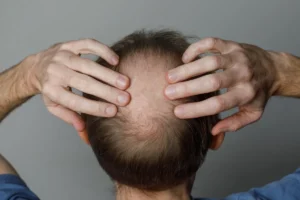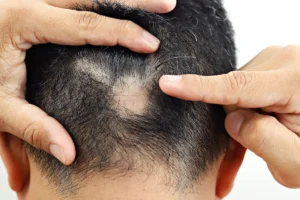
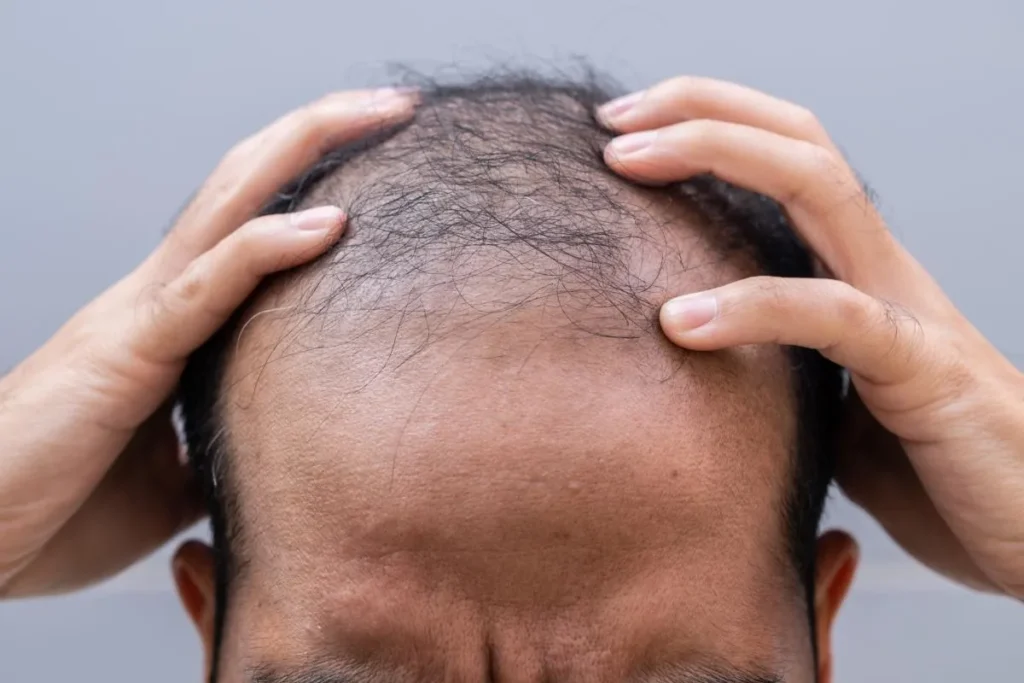
Male pattern baldness, also known as androgenetic alopecia, is the most common hair loss in men. It affects over 95% of men who lose their hair. This condition follows a predictable progression, categorized by the Norwood-Hamilton scale. It classifies seven distinct stages of baldness.
Understanding these stages is key for men to spot their condition early. This way, they can take action to stop or slow down hair loss.
Understanding the stages of balding is vital. Use this incredible guide to find powerful treatments for every level of hair loss today.
The Norwood scale tracks recession at the temples and mid-frontal area. It also looks at vertex thinning. This helps men manage their hair loss better.
This guide aims to boost confidence and elegance. It will cover the progression of baldness. You’ll learn about the Norwood-Hamilton scale and treatments for hair loss.
Belangrijkste opmerkingen
Understand the 7 stages of male pattern baldness
Recognize the importance of early intervention
Learn about the Norwood-Hamilton scale
Explore treatment options for hair loss
Empower confidence through knowledge of hair loss progression
Understanding Male Pattern Baldness
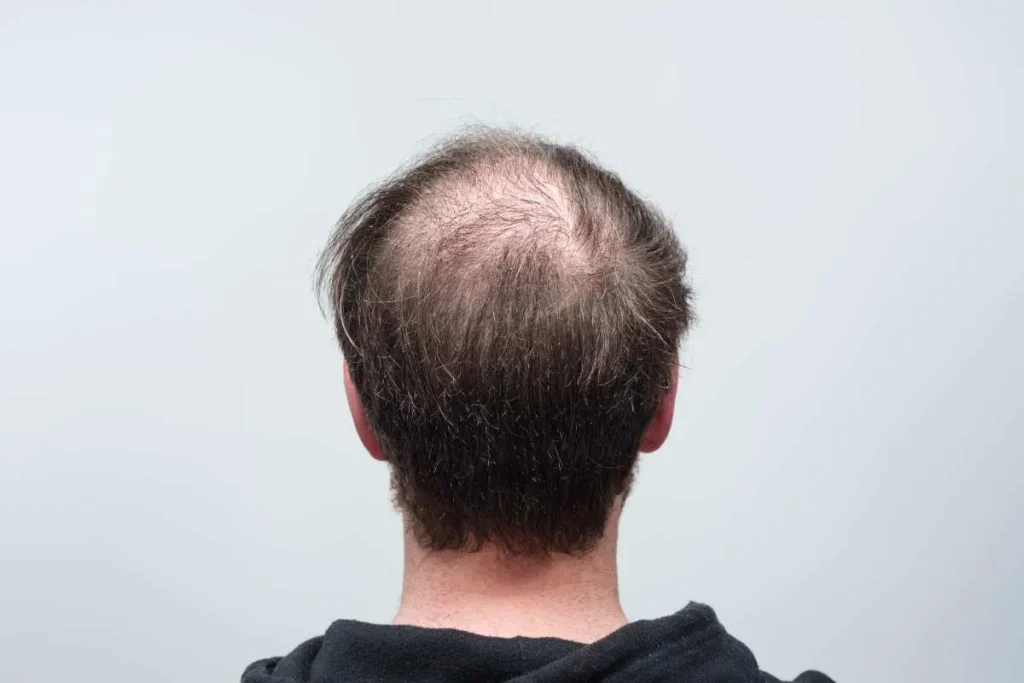
Understanding male pattern baldness starts with knowing its causes. The main cause is androgenetic alopecia. This is the most common reason for hair loss in men. It happens because hair follicles are sensitive to dihydrotestosterone (DHT).
What is Androgenetic Alopecia?
Androgenetic alopecia makes hair follicles smaller because of genes and hormones. It affects millions of men, causing hair to thin and eventually fall out if not treated.
Dihydrotestosterone (DHT) plays a big role. It’s a strong form of testosterone that affects hair follicles. This makes hairs thinner, shorter, and grow less often, leading to balding.
Hair Follicle Miniaturization Process
The miniaturization of hair follicles is key to understanding male pattern baldness. Here’s what happens:
Genetic Predisposition: Men with a family history of baldness are more likely to get androgenetic alopecia.
Hormonal Influence: DHT makes hair follicles smaller.
Progressive Thinning: Over time, hairs get thinner and shorter, making hair less dense.
Knowing these factors is important for men fighting hair loss. By understanding androgenetic alopecia and hair follicle miniaturization, men can choose the right treatments. This might help slow down or stop baldness.
The 7 Stages of Balding: Norwood-Hamilton Scale
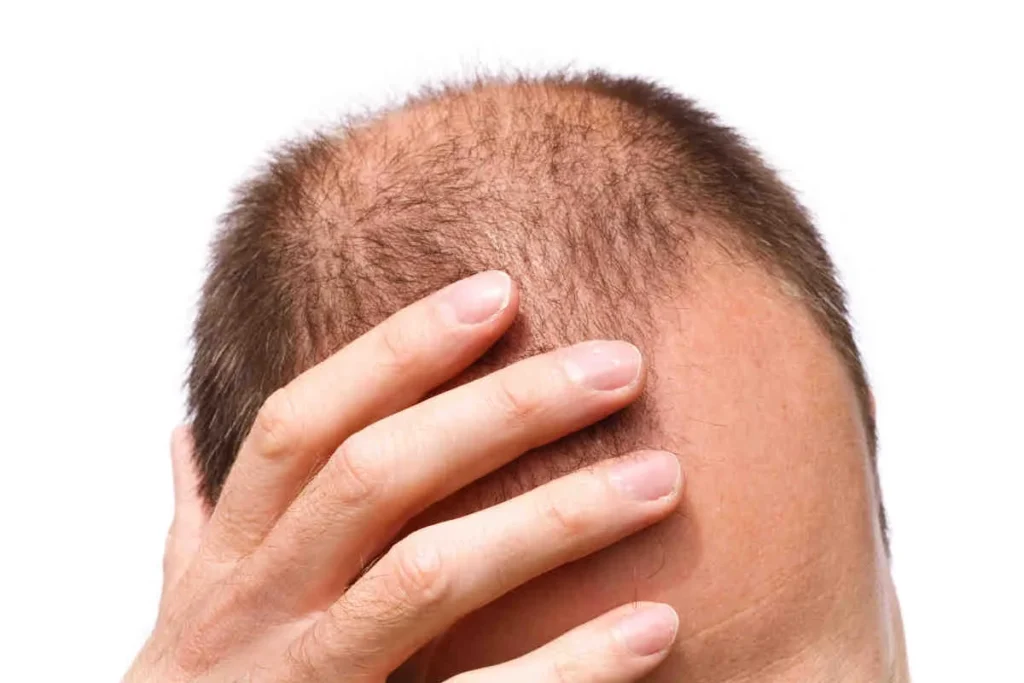
The Norwood-Hamilton scale helps us understand male pattern baldness. It shows how hair loss progresses from small changes to full balding.
Stage 1: Minimal or No Visible Hairline Changes
In Stage 1, the hairline looks the same as a young person’s. There’s no sign of thinning or recession. This stage is the start of a healthy hairline.
Stage 2: Slight Recession at the Temples
Stage 2 shows a slight hairline recession at the temples. This is the first sign of male pattern baldness. The hairline starts to look a bit older.
Stage 3: Deep Recession with M or U Shape
Stage 3 has a more noticeable hairline recession. It often forms an ‘M’ or ‘U’ shape due to temple hair loss. This is the first stage of balding that’s easy to see.
Stage 4: Severe Recession and Crown Thinning
Stage 4 shows a severe hairline recession and crown thinning. The crown area starts to show more baldness. The hair bridge between the front and crown thins out.
Knowing these stages helps men understand their hair loss. The Norwood-Hamilton scale is a key tool for identifying and treating male pattern baldness.
Causes and Risk Factors
It’s important to know why male pattern baldness happens. This condition is caused by genetics, hormones, and age. Knowing this helps in treating and managing it.
Genetische aanleg
Genetics play a big role in male pattern baldness. Studies show that certain genes can raise the risk. Men with a family history of baldness are more likely to lose their hair, if their dad or granddad did too.
Hormonal Influences and DHT
Hormones, like testosterone turning into DHT, also play a big part. DHT makes hair follicles shrink, leading to thinner, shorter hairs and hair loss. Knowing about DHT helps in finding treatments that work against it.
Age-Related Statistics
Age is a big risk factor for male pattern baldness. About 25 percent of men start losing hair before they’re 21. By 50, nearly half of men will have some hair loss. As men get older, the chance of losing hair keeps going up, making it common in older men.
Understanding these causes and risks helps men make better choices for treating their hair loss.
Conclusie
Understanding the 7 stages of male pattern baldness is key for men to manage their hair loss. Early action is the best way to control hair loss and keep what you have. There are many treatments, like medicines, growth factor therapy, and hair transplants.
The right treatment for male pattern baldness depends on how much hair you’ve lost. By knowing the signs of each stage, men can find the best hair loss solutions. These treatments can boost confidence and make your hair look fuller.
Men facing hair loss can try different ways to tackle it. Options range from medicines that slow hair loss to hair transplants. Knowing how male pattern baldness progresses helps men choose the best treatment.
Teaching men about balding stages and treatments is vital. It boosts confidence and keeps the scalp healthy. With the right solutions, men can feel better and look younger.
FAQ
What are the 7 stages of male pattern baldness?
The 7 stages of male pattern baldness are outlined by the Norwood-Hamilton scale. They range from minimal hair loss to extensive balding. Knowing these stages helps men identify their condition and find the right treatments.
Wat is kaalheid bij mannen?
Male pattern baldness, or androgenetic alopecia, is hair loss due to genetics and hormones. It affects millions of men worldwide. Early treatment can manage it.
How does DHT contribute to hair loss?
DHT, or dihydrotestosterone, causes hair follicle miniaturization, leading to hair loss. Knowing DHT’s role is key to effective treatments.
What is the Norwood-Hamilton scale?
The Norwood-Hamilton scale classifies male pattern baldness into 7 stages. It helps understand the condition’s progression.
Can male pattern baldness be treated?
Yes, it can be treated with medications, hair transplantation, and low-level laser therapy. Early treatment is essential.
What are the stages of hair loss?
The stages include minimal hair loss, slight recession at the temples, deep recession, and severe recession with crown thinning.
Does male pattern baldness stop at a certain stage?
It progresses differently for each man. Some may experience extensive balding, while others may not. Understanding and treating it can manage its progression.
What is stage 2 balding?
Stage 2 balding shows a slight recession of the hairline at the temples. It’s an early sign of male pattern baldness. Knowing its causes helps men find treatments.
How does age affect male pattern baldness?
Age significantly increases the risk of male pattern baldness. As men get older, their hair loss risk grows. Understanding age-related statistics helps in choosing treatments.
What is the role of genetics in male pattern baldness?
Genetics play a big role in male pattern baldness. Men with a family history are more likely to lose hair. Knowing genetic predisposition helps in seeking early treatment.
Referenties
Nationaal Centrum voor Biotechnologie-informatie. Evidence-Based Medisch Inzicht. Opgehaald van https://pubmed.ncbi.nlm.nih.gov/1228188/