For over 2500 years, traditional Chinese medicine has used a system of 361 acupuncture points. These points help promote wellness and balance. The World Health Organization (WHO) made these points standard in 1989, creating a common language for practitioners.
It’s important to understand the pathways, or meridians, that connect these points. This knowledge helps unlock the full benefits of this therapy.
The ancient art of mapping acupuncture points on the hand and the body is key to traditional Chinese medicine. By learning about these points’ history and how they work, we can appreciate the meridian system more. This knowledge helps create detailed acupuncture points charts. These charts are vital for both practitioners and patients to grasp the complex network of meridians.
Belangrijkste opmerkingen
Understanding the 361 acupuncture points is key to using traditional Chinese medicine fully.
The World Health Organization (WHO) standardized acupuncture nomenclature in 1989.
A detailed acupuncture points chart helps both practitioners and patients understand the complex network of meridians.
Acupuncture meridian points charts are essential tools for practitioners.
Resources like 361 acupuncture points pdf free download offer valuable info for those interested in traditional Chinese medicine.
The Ancient Science of Acupuncture Points

Acupuncture is based on understanding the body’s energy paths and 361 points along them. It’s a key part of traditional Chinese medicine, with points that affect the body’s functions.
Historical Origins of the 361 Acupuncture Points
Acupuncture started in ancient China, where experts mapped the body’s energy paths. They found 361 points along these paths, creating a complex network. Recent studies have started to explain how these meridians work, showing the science behind this old practice.
Our understanding of acupuncture has grown, so has its recognized benefits. Learning about acupuncture’s history helps us see how it works.
Biophysical Characteristics of Acupuncture Points
Research shows that acupuncture points have special properties, like better electrical and thermal conductance. They also connect with the body’s fascia networks. This new knowledge helps us understand how acupuncture works.
Studies also found that acupuncture points are near nerves and fascia. This explains why they can help with health issues. Knowing these points’ properties helps practitioners tailor treatments for different needs.
By mixing old knowledge with new research, acupuncture is becoming more effective. As we learn more, we’ll find new ways to use acupuncture points for health.
Understanding the Complete Meridian System

The meridian system has 361 recognized acupuncture points. It’s a complex web that affects many body functions. This network is the base of acupuncture, a practice that has improved over centuries to help people stay healthy.
How Meridians Connect the Entire Body
The meridian system is like a network of energy paths across the body. These paths are not random but are connected in a way that helps the body work as a whole. The meridian pathways link to the nervous system, fascial networks, and other body processes. This creates a complex system that affects our overall health.
Understanding how meridians connect the body helps practitioners find and fix imbalances. This is what makes acupuncture different from other medical practices.
Scientific Research on Meridian Pathways
Recent studies have found connections between meridian pathways and body functions. They show that some acupuncture points link to specific parts of the nervous system. This suggests a real connection between the meridian system and the body’s nervous system.
Studies have found links between meridian pathways and fascial networks. This suggests a way acupuncture could work.
Research has looked into how the nervous system helps acupuncture work. It shows a complex relationship between neural structures and meridian pathways.
As research keeps going, we’ll learn more about how acupuncture works. This will help practitioners improve their skills. It will lead to better treatments and results for patients.
Acupuncture Points on the Hand: A Guide
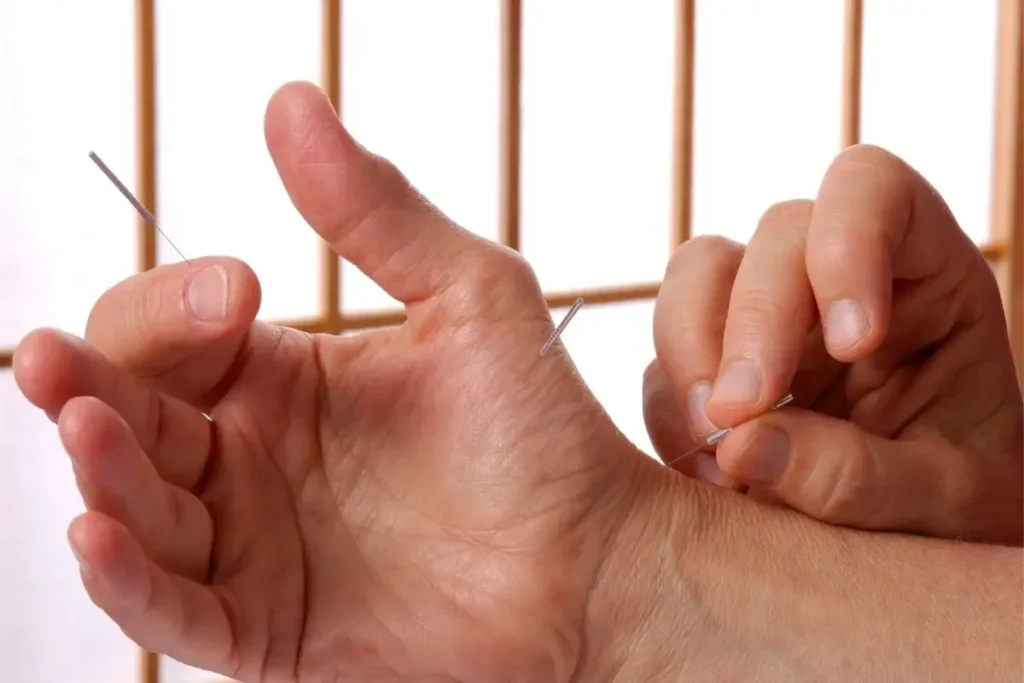
Acupuncture points on the hand give us a peek into the body’s energy flow. The hand has key points linked to the Lung, Heart, and Pericardium meridians. These points help treat many health issues, from breathing problems to emotional ups and downs.
Major Hand Meridians
The Lung, Heart, and Pericardium meridians are very important in hand acupuncture. The Lung meridian affects breathing. The Heart meridian is linked to emotions and heart health. The Pericardium meridian helps protect the heart and keeps the cardiovascular system in balance.
Knowing how these meridians work is key for good acupuncture. For more info, check out this detailed guide on acupuncture points.
Key Therapeutic Hand Points
There are many key points on the hand for treating different conditions. For example, LI-4 (Hegu) helps with pain and boosts the immune system. P-6 (Neiguan) is great for nausea and anxiety. By pressing these points or using needles, practitioners can help the body heal itself.
Points linked to the Heart and Pericardium meridians also play a big role. They help with emotional and heart health issues. Knowing where these points are and how to use them makes hand acupuncture very powerful.
Conclusion: Practical Applications of Hand Acupuncture
Learning about the 361 acupuncture points on the hand is key to using hand acupuncture fully. This knowledge lets readers start using hand acupuncture to improve health and wellness. They can use the acupuncture body chart and meridian points for this.
Hand acupuncture is a strong tool for managing pain and stress. The body maps guide us to specific areas for balance. Using this knowledge daily can bring big benefits, like feeling more connected to our bodies and the world.
By diving into acupuncture’s ancient wisdom and modern uses, we can find new wellness levels. Holistic healing is within our grasp. It starts with understanding the meridian points’ network.
FAQ
What are the 361 acupuncture points and their significance in traditional Chinese medicine?
The 361 acupuncture points are a key part of traditional Chinese medicine. They are spread out all over the body. They form pathways called meridians, which are vital for acupuncture.
What is the historical origin of the 361 acupuncture points?
In ancient China, people mapped out the 361 acupuncture points along meridians. This network has been used in acupuncture for over 2500 years.
What are the biophysical characteristics of acupuncture points?
Studies have shown that acupuncture points have special electrical and thermal properties. They are often near nerves and fascial networks. This explains why they can help heal.
How do meridians connect the entire body?
Meridians are like energy paths that cover the body. They affect health and wellness. They form a complex web that acupuncture uses to treat.
What are the major hand meridians and their corresponding points?
The Lung, Heart, and Pericardium meridians are very important. They deal with breathing, emotions, and heart health. Points like LI-4 and P-6 are used to treat many issues.
What is the significance of acupuncture points on the hand?
The hand mirrors the body’s energy system. It has many acupuncture points linked to different meridians. This makes it a key area for acupuncture’s benefits.
How can understanding acupuncture points and meridians promote health and wellness?
Knowing about acupuncture points and meridians helps practitioners use acupuncture for health. It can help with pain, stress, emotions, and overall well-being.
Where can I find an acupuncture points chart or map?
You can find acupuncture points charts in traditional Chinese medicine texts, online, and in guides for practitioners. They help locate the 361 points and their meridians.
What is the WHO’s role in standardizing acupuncture points?
The WHO has helped standardize acupuncture points. This has created a common language for practitioners worldwide, making acupuncture more global.
Referenties
Wereldgezondheidsorganisatie. Evidence-Based Medisch Inzicht. Opgehaald van https://apps.who.int/iris/handle/10665/43783