In today’s fast world, stress and anxiety hit millions. Yet, a powerful tool lies within you: your breath. Deep breathing techniques are proven to calm your nervous system. They do this without needing medication or complex steps.
Use breathing and relaxation techniques for powerful stress help. Master amazing methods to calm painful anxiety and feel brilliant now.
Studies show slow and deep breathing turns on the parasympathetic nervous system. This promotes relaxation. You breathe about 20,000 times a day, often without thinking about it. Yet, your breath is a key energy source and a major stress reliever.
Belangrijkste opmerkingen
Deep breathing techniques can help reduce stress and anxiety.
Slow and deep breathing activates the parasympathetic nervous system.
Deep breathing is a scientifically-proven method to calm the nervous system.
It is an immediately accessible method without medication or complex procedures.
Your breath is a significant way to relieve stress and feel more relaxed.
The Science Behind Deep Breathing and Stress Reduction
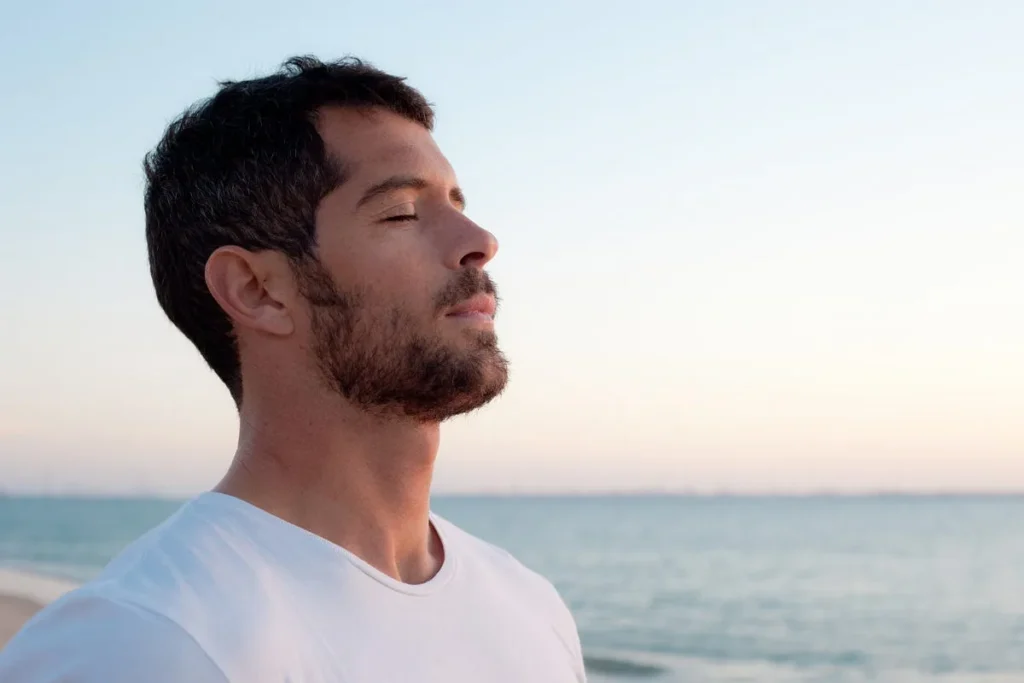
Research shows that slow and deep breathing helps reduce stress and promotes relaxation. It’s not just a simple exercise. It’s a powerful tool that affects the body’s autonomic nervous system. This leads to many benefits for both physical and mental health.
How Slow and Deep Breathing Activates the Parasympathetic Nervous System
Slow and deep breathing turns on the parasympathetic nervous system (PNS), our natural calming system. The PNS balances the ‘fight or flight’ response of the sympathetic nervous system. When we breathe slowly and deeply, it tells the brain to relax and reduce stress. This is thanks to the vagus nerve, a key part of the PNS that controls heart rate and digestion.
Many breathwork techniques work on the vagus nerve, the main parasympathetic pathway. This nerve helps slow the heart rate and lower blood pressure. Regular deep breathing exercises can lower cortisol levels, blood pressure, and anxiety symptoms in many people.
Research-Backed Benefits: Cortisol Reduction and Lower Blood Pressure
Many studies have shown deep breathing’s benefits for stress reduction. Some key findings are:
Cortisol Reduction: Deep breathing lowers cortisol levels, the stress hormone.
Lower Blood Pressure: Regular deep breathing exercises can lower blood pressure, reducing heart disease risk.
Improved Mental Clarity: Deep breathing reduces stress and improves focus and mental clarity.
Adding deep breathing to daily life can bring these benefits. As research shows, slow and deep breathing is a simple yet effective way to manage stress and improve well-being.
Essential Breathing and Relaxation Techniques
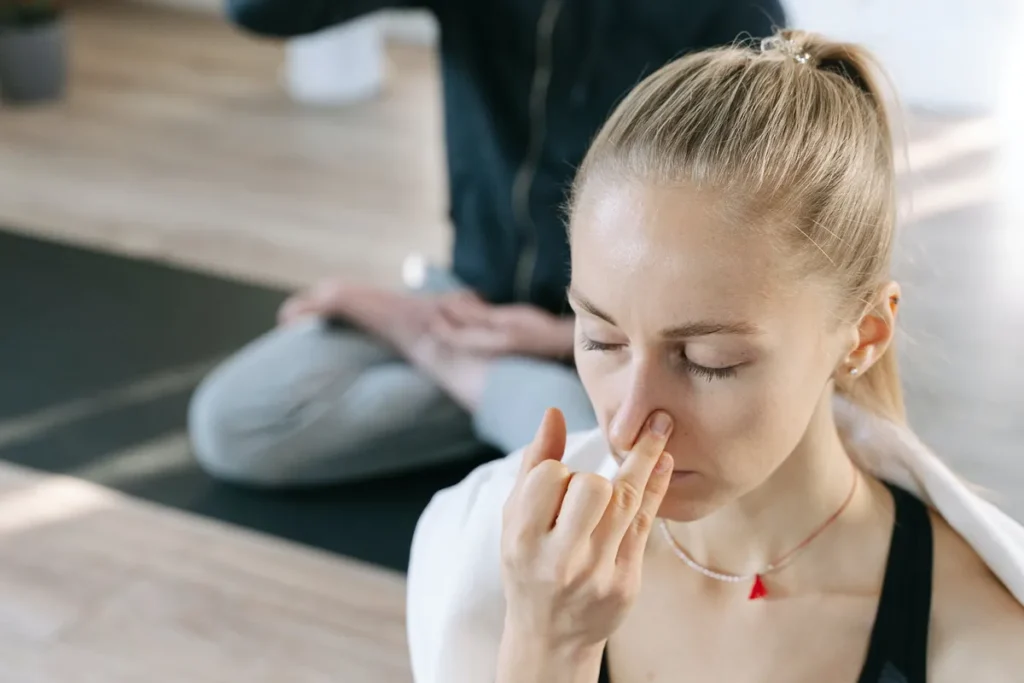
To manage stress well, learning key breathing and relaxation methods is vital. These techniques help lower stress and anxiety. They also boost your mental and physical health.
Diaphragmatic Breathing: The Foundation of Stress Relief
Diaphragmatic breathing, or belly breathing, is key for stress relief. It means breathing deeply into your lungs, not just shallowly into your chest. This strengthens your diaphragm, making lung use more efficient.
To do diaphragmatic breathing, lie on your back with knees bent or sit in a chair. Put one hand on your belly and the other on your chest. Breathe in slowly through your nose, letting your belly rise as your diaphragm goes down. Your chest should not move. Then, breathe out slowly through your mouth, letting your belly fall as your diaphragm goes up.
Voordelen van diafragmatisch ademen:
Vermindert stress en angst
Improves lung efficiency
Enhances overall relaxation
4-7-8 Breathing Method for Quick Stress Relief
The 4-7-8 breathing method, or “Relaxation Breath,” is simple yet powerful for stress relief. Sit comfortably with your back straight and close your eyes.
Breathe in through your nose for a count of 4, filling your lungs. Hold your breath for a count of 7. Then, breathe out through your mouth for a count of 8, emptying your lungs. Repeat this for several minutes.
Benefits of 4-7-8 Breathing:
Quickly reduces stress and anxiety
Promotes relaxation and calmness
Improves sleep quality
Box Breathing: A Technique for Focus and Calm
Box breathing, or square breathing, is used by athletes and military to focus and calm. It involves breathing in for 4 counts, holding for 4 counts, exhaling for 4 counts, and holding again for 4 counts.
To practice box breathing, sit with your back straight and eyes closed. Breathe in for 4 counts, filling your lungs. Hold for 4 counts. Then, breathe out for 4 counts, emptying your lungs. Hold again for 4 counts. Repeat for several minutes.
Targeted Breathing Exercises for Specific Situations
Targeted breathing exercises are a great tool for dealing with tough situations. They help manage stress and anxiety by focusing on specific challenges.
Breathing Exercises for Social Anxiety and Public Speaking
For those with social anxiety or public speaking jitters, breathing exercises can really help. Diaphragmatic breathing is a good technique to calm down. Doing these exercises for at least five minutes can make them more effective.
Studies show that getting help from a person while doing these exercises can lead to better results. This is great for those who get really anxious in social situations or when speaking in public.
Five-Minute Breathing Techniques for Panic Attacks
Panic attacks can be really tough, but five-minute breathing techniques can offer quick relief. The 4-7-8 breathing method is very helpful. It involves breathing in for four counts, holding for seven, and exhaling for eight.
This method can slow down your heart rate and calm your mind. By focusing on your breath, you can take your mind off the panic and stay present.
Yoga Breathing Exercises for Daily Anxiety Management
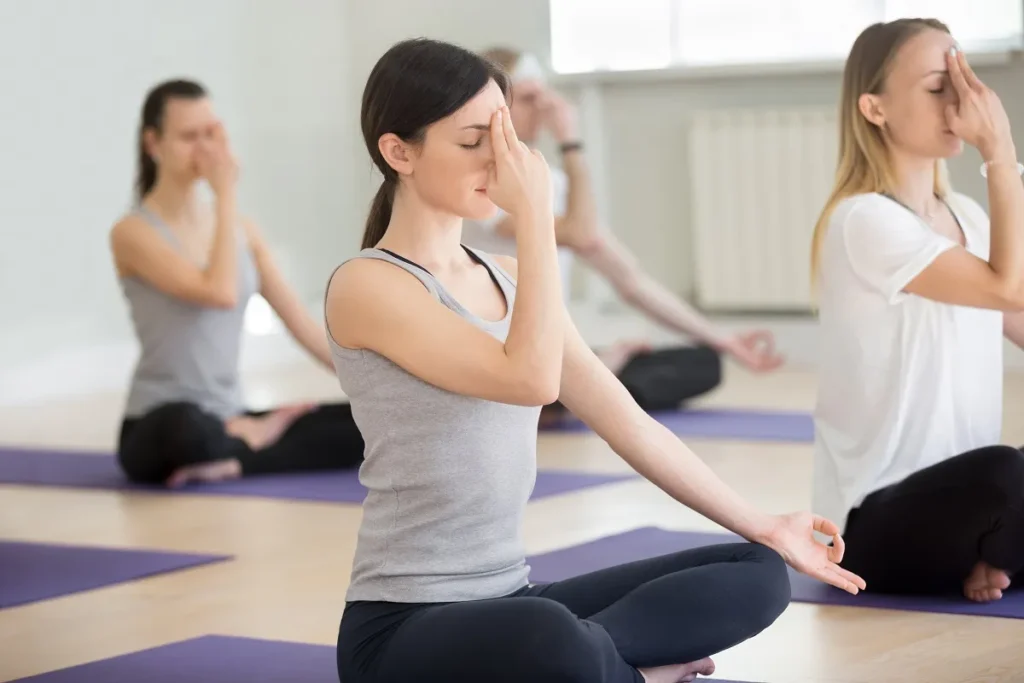
Adding yoga breathing exercises to your daily routine can help manage anxiety. Techniques like box breathing and alternate nostril breathing can balance your nervous system and bring calm.
Regular practice of these yoga breathing exercises can make you more resilient to anxiety. It’s about making it a regular part of your day, like brushing your teeth or taking a shower.
Conclusie
Deep breathing and relaxation techniques are great for managing stress and anxiety. By using slow deep breathing daily, you can relax naturally. This lowers cortisol levels and brings calm.
Techniques like diaphragmatic breathing and the 4-7-8 method are easy to do anywhere. They help reduce stress and anxiety, making you feel better overall.
Adding deep breathing to your daily routine can make you feel more relaxed and calm. It helps you face life’s challenges with confidence. So, start your deep breathing journey today and see how it can change your life.
FAQ
What is deep breathing, and how does it help reduce stress?
Deep breathing is about taking slow, deep breaths. It turns on the parasympathetic nervous system, which helps you relax. This can lower stress hormones like cortisol.
How do I practice diaphragmatic breathing?
Sit up straight with your back. Place one hand on your belly and the other on your chest. Breathe in slowly through your nose, letting your belly rise.
What is the 4-7-8 breathing method, and how can it help with anxiety?
The 4-7-8 method involves inhaling for 4 seconds, holding for 7, and exhaling for 8, which helps calm the nervous system and reduce anxiety.
Can deep breathing exercises help with social anxiety?
Yes, deep breathing can lower physical anxiety symptoms like rapid heartbeat and tension, making social situations feel more manageable.
How can I use breathing exercises to manage panic attacks?
Slow, controlled breathing during a panic attack can reduce hyperventilation and signal the body to relax, helping the attack pass more quickly.
Are there any breathing techniques that can be used for daily anxiety management?
Yes, techniques like diaphragmatic breathing, box breathing, and slow nasal breathing can be practiced daily to maintain calm.
How long does it take to see the benefits of deep breathing exercises?
Some benefits, like immediate relaxation, can be felt right away, while long-term anxiety reduction may take days to weeks of regular practice.
Can deep breathing exercises be combined with other relaxation techniques?
Yes, deep breathing works well with mindfulness, meditation, progressive muscle relaxation, yoga, and acupuncture for enhanced anxiety relief.
Referenties
Nationaal Centrum voor Biotechnologie-informatie. Evidence-Based Medisch Inzicht. Opgehaald van https://pubmed.ncbi.nlm.nih.gov/36638723/