In today’s fast world, stress and anxiety are common. They can make you feel your heart racing and muscles tight. But, calming exercises can help you relax.
Studies show that deep breathing, slow breathing, and yoga-based breathing techniques work well. They can lessen anxiety and stress. Adding these to your day can help you live more balanced.
Belangrijkste opmerkingen
Calming exercises can reduce stress and anxiety.
Deep breathing techniques are effective in promoting relaxation.
Yoga-based breathing techniques can help manage anxiety.
Regular practice of calming exercises can lead to a more balanced life.
These techniques are backed by scientific research.
The Science Behind Stress Reduction Techniques
Exploring the science behind relaxation techniques helps us see how they fight anxiety. Research has shown that breathing exercises and relaxation methods are effective. This knowledge is key to understanding their role in easing anxiety.
Research Evidence Supporting Breathing Exercises
Many studies have found that deep breathing exercises help lower anxiety in adults. Deep breathing slows the heart rate, lowers blood pressure, and relaxes the body. It does this by turning on the parasympathetic nervous system.
A study in the Journal of Alternative and Complementary Medicine showed deep breathing’s benefits. It found that those who practiced it had less anxiety than those who didn’t.
How Relaxation Affects Your Nervous System
Relaxation techniques, like breathing exercises, deeply affect our nervous system. When we’re stressed, our sympathetic nervous system kicks in, causing the “fight or flight” response. But relaxation turns on the parasympathetic nervous system, leading to calm and less stress.
The table shows how different relaxation techniques affect our nervous system. It highlights their benefits in managing anxiety and stress.
Essential Calming Exercises for Anxiety Relief
Some calming exercises are great for easing anxiety. These methods come from old traditions and have been improved over time. Adding them to your daily life can start a journey to peace and balance.
Diaphragmatic Deep Breathing Technique
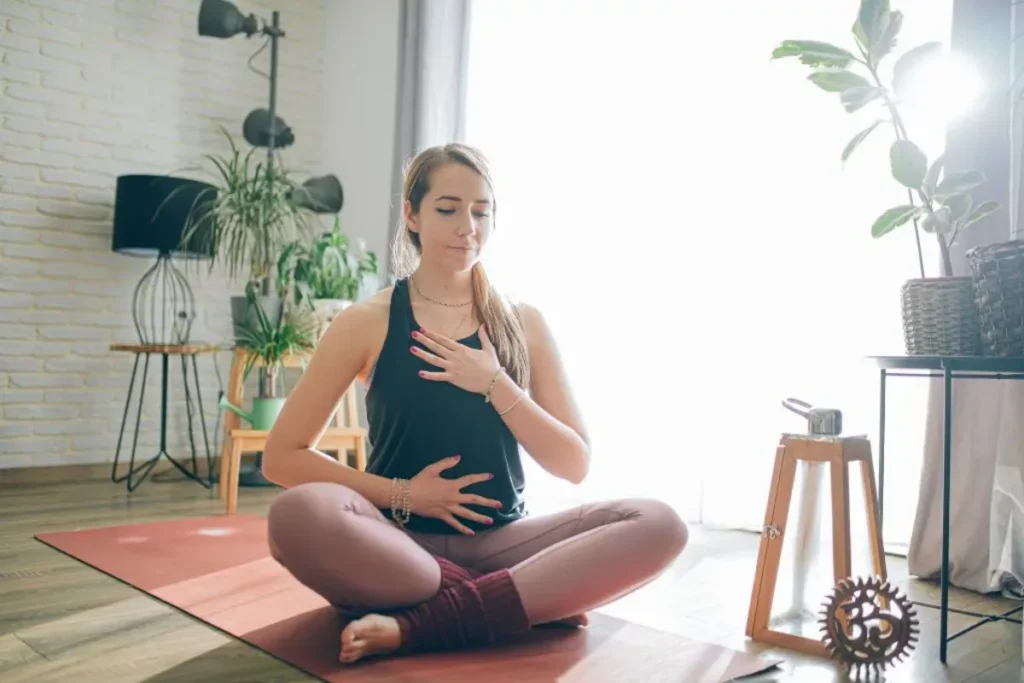
Diaphragmatic deep breathing, or belly breathing, uses the diaphragm to fill the lungs fully. This helps relax and lowers anxiety. To do it, place one hand on your belly and the other on your chest.
Inhale deeply through your nose, letting your belly rise. Your chest should not move. Exhale slowly through your mouth, feeling your belly fall. This calms your nervous system and helps with anxiety.
“Deep breathing is not just a technique; it’s a gateway to a more serene and controlled you.”
4-7-8 Slow Breathing Method
The 4-7-8 slow breathing method, or the “Relaxation Breath,” has a special rhythm. Breathe in through your nose for a count of 4, hold for 7, and exhale for 8. This rhythm slows down your heart rate and promotes relaxation.
Doing this regularly can lower anxiety and boost well-being.
Pranayama: Yoga-Based Breathing Exercises
Pranayama, a yoga-based breathing practice, offers many calming techniques. One is Alternate Nostril Breathing, where you inhale through one nostril and exhale through the other. This balances the breath and calms the nervous system, easing anxiety. Regular Pranayama practice can bring peace and calm.
Exploring these calming exercises can help you find what works best for you. This can lead to a life free from anxiety and full of peace.
Applying Breathing Techniques to Specific Anxiety Situations
Using targeted breathing practices can help reduce anxiety and improve your well-being. These techniques can be adjusted for different situations, making them useful for managing anxiety. They are a valuable tool for your mental health.
Quick Exercises for Immediate Stress Relief
When stress hits fast, a quick breathing exercise can save the day. Try “Box Breathing”: breathe in for 4 counts, hold for 4, exhale for 4, and hold again for 4. This method helps you feel balanced and calm. As Mark Williams, a renowned mindfulness expert, once said, “The breath is the bridge between the body and the mind.”
Breathing Practices for Social Anxiety
Social anxiety can be tough, but certain breathing methods can help. The “4-7-8” or “Relaxation Breath” is great for this. Breathe in for 4 counts, hold for 7, and exhale for 8. This calms your nervous system and eases anxiety. This technique is simple yet effective in stressful social situations.
Techniques for Managing Panic Attacks
Panic attacks can be overwhelming, but specific breathing can help. Diaphragmatic breathing, or belly breathing, is very effective. It slows your heart rate and lessens panic attack intensity. As
notes a mindfulness practitioner.
Incorporating Breathing Exercises into Daily Routines
Adding breathing exercises to your daily routine can help manage anxiety long-term. Spend a few minutes each day on Pranayama, a yoga breathing technique. This improves mental clarity and lowers stress. Making these practices a habit brings calm and resilience into your life.
Remember, consistency is key when using these breathing techniques. Regular practice helps you handle anxiety better with grace and composure.
Conclusie
Calming exercises are a powerful tool for managing stress and anxiety. Techniques like diaphragmatic deep breathing and the 4-7-8 slow breathing method can greatly improve your well-being. By adding these to your daily routine, you can see a big change.
Studies show that calming exercises can really help with anxiety and stress. By making them a part of your day, you’ll face life’s challenges with more confidence. Your journey to a calmer, happier you begins now. Take the first step today.
Embracing calming exercises does more than just reduce stress and anxiety. It unlocks a more balanced and empowered version of you. So, why not start today? Begin your journey to a more peaceful and serene state of being.
FAQ
What are the best breathing exercises for anxiety relief?
Diaphragmatic deep breathing, the 4-7-8 slow breathing method, and pranayama are top choices. They calm the nervous system and help you relax.
How do breathing exercises affect the nervous system?
Breathing exercises slow your heart rate and lower blood pressure. They also calm your mind by activating the parasympathetic nervous system. This system promotes relaxation and reduces stress.
Can breathing exercises help during panic attacks?
Yes, they can be very helpful during panic attacks. The 4-7-8 slow breathing method, for example, can calm your body and mind. This can lessen the severity of the panic attack.
How often should I practice breathing exercises for stress relief?
For the best results, practice breathing exercises daily. Try to do it at the same time each day. Consistency is key to long-term stress relief and anxiety reduction.
Are breathing exercises suitable for everyone?
Yes, breathing exercises are good for everyone. They can be done by anyone, no matter their age or physical ability. They are a natural and easy way to manage stress and anxiety.
Can I use breathing exercises in social situations to manage anxiety?
Absolutely, you can use breathing exercises in social situations. Techniques like diaphragmatic deep breathing can be done subtly. They provide quick relief from anxiety.
What is the 4-7-8 slow breathing method?
The 4-7-8 slow breathing method involves breathing in through your nose for a count of 4. Then, hold your breath for a count of 7. Lastly, exhale through your mouth for a count of 8. This method is known for its calming effects.
How does pranayama help with anxiety?
Pranayama, or yoga-based breathing exercises, balances the nervous system. It reduces stress and promotes calm. Different pranayama techniques can be tailored to meet individual needs, making it a versatile tool for anxiety relief.
Are there any scientific studies supporting the effectiveness of breathing exercises for anxiety?
Yes, many studies have shown that breathing exercises can significantly reduce anxiety and stress symptoms. Research supports their benefits in promoting relaxation and overall well-being.
Referenties
Nationaal Centrum voor Biotechnologie-informatie. Evidence-Based Medisch Inzicht. Opgehaald van https://pubmed.ncbi.nlm.nih.gov/25634689/