Chest trigger points are small, tight spots in muscles that can hurt. They can cause pain in the upper body regions. Studies show that many chest pain cases come from muscle issues, not heart problems.
Knowing about these trigger points is important. It helps people feel better and take charge of their health. By learning about chest trigger points, people can find and fix these tight spots.
Belangrijkste opmerkingen
Chest trigger points are areas of muscular hyperirritability that cause local and referred pain.
Myofascial pain syndrome is a common, underdiagnosed condition affecting the pectoral muscles.
Understanding trigger points is key to alleviating discomfort and managing the condition.
Educating individuals about chest trigger points empowers them to take control of their health.
Releasing trigger points can help reduce muscle tension and promote overall well-being.
Understanding Chest Trigger Points and Muscle Knots
Trigger points in the chest muscles, like the pectoralis major, can cause a lot of pain. These points are like knots in the muscle that hurt both where they are and in other parts of the body.
What Are Chest Trigger Points?
Chest trigger points are specific spots in the pectoral muscles that hurt. The pectoralis major muscle, being the bigger one, often gets these points. They can send pain to the shoulder, arm, and even fingers, making it seem like heart problems.
Common Causes of Pectoral Muscle Knots
Pectoral muscle knots can come from many things like too much use, bad posture, or direct hits to the muscle. Doing the same thing over and over, like lifting weights, can cause these knots. Also, sitting a lot or jobs that make you lean forward can strain the pectoral muscles, leading to knots.
Knowing why these knots happen and how to deal with them is key. By fixing the problems and using the right self-care, people can feel better. This can really improve their life quality.
Identifying Chest Pressure Points and Pain Patterns
Finding the exact spots of trigger points in the pectoral muscles is key to managing pain. These points can send pain to the shoulder, inner arm, and fingers. This makes it hard to diagnose without knowing the details.
Pectoralis Major Trigger Point Locations
The pectoralis major muscle is a big, fan-shaped muscle that often gets trigger points. These points can cause pain in the chest, shoulder, and arm. Common spots for these points are the clavicular head, the sternal head, and along the muscle’s edges.
Trigger points in the clavicular head usually send pain to the front shoulder and clavicle. On the other hand, points in the sternal head can cause pain over the sternum and in the chest.
Pectoralis Minor Trigger Point Locations
The pectoralis minor muscle is under the pectoralis major and can also get trigger points. These points can send pain to the front chest, shoulder, and arm. Sometimes, they can even feel like heart problems.
Trigger points in the pectoralis minor can be felt as tenderness below the clavicle and along the ribs.
Distinguishing Muscular Pain from Cardiac Issues
It’s important to tell the difference between muscle pain and heart pain. Muscle pain can move with movement and touch, but heart pain is usually worse. It might also come with shortness of breath, dizziness, or nausea.
The sternalis muscle can also cause chest pain, making it hard to tell if it’s muscle or heart pain. Knowing the difference is key to getting the right treatment.
By understanding the pain patterns from trigger points in the pectoral muscles, people can better manage their symptoms. They can choose self-treatment or seek medical help.
Effective Techniques to Release Chest Muscle Knots
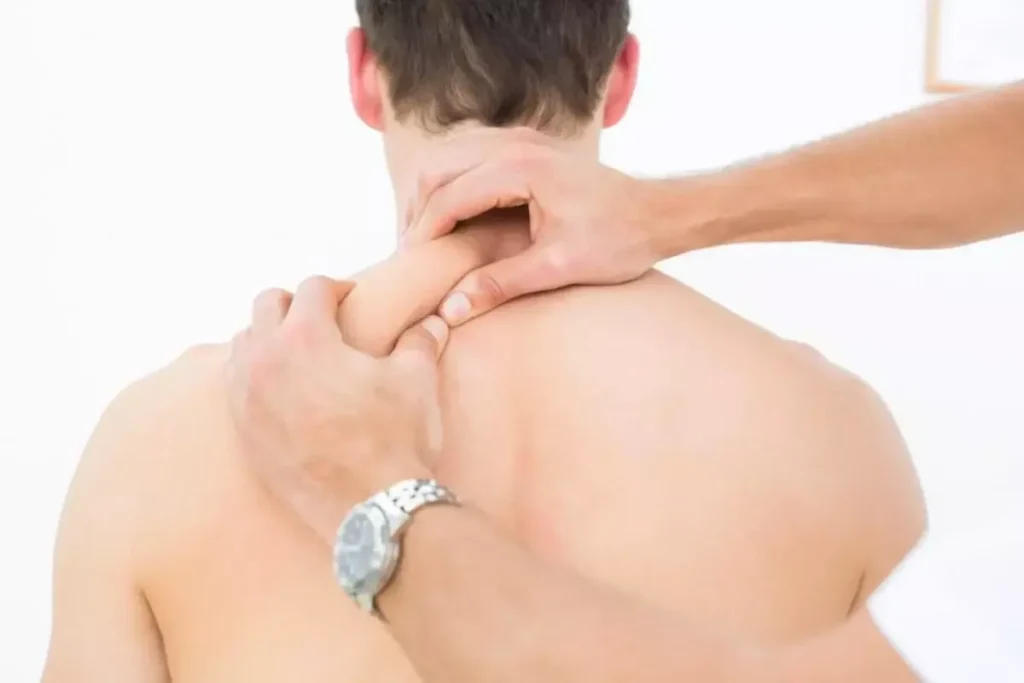
Releasing chest muscle knots involves self-massage, stretching, and professional help. These methods can greatly reduce tension and discomfort.
Self-Massage Techniques
Self-massage is great for easing chest muscle tension. Using a foam roller or tennis ball can help. By applying pressure, you can release knots and improve muscle function.
To start, find the tight spot. Place the foam roller or tennis ball on the ground or against a wall. Slowly roll or press into the muscle. Hold pressure on tight spots for 20-30 seconds to relax the muscle.
Stretching Exercises for Pectoral Muscles
Stretching can ease pectoral muscle tension and boost flexibility. Stand in a doorway with arms up, leaning forward to stretch the chest.
Try the chest stretch on a stability ball too. Lie on the ball with your upper back supported, arms out to the sides. Slowly lower your arms to stretch the chest muscles.
Wanneer professionele behandeling zoeken
Self-massage and stretching are effective, but sometimes you need a pro. If knots don’t go away or cause pain or numbness, see a healthcare expert.
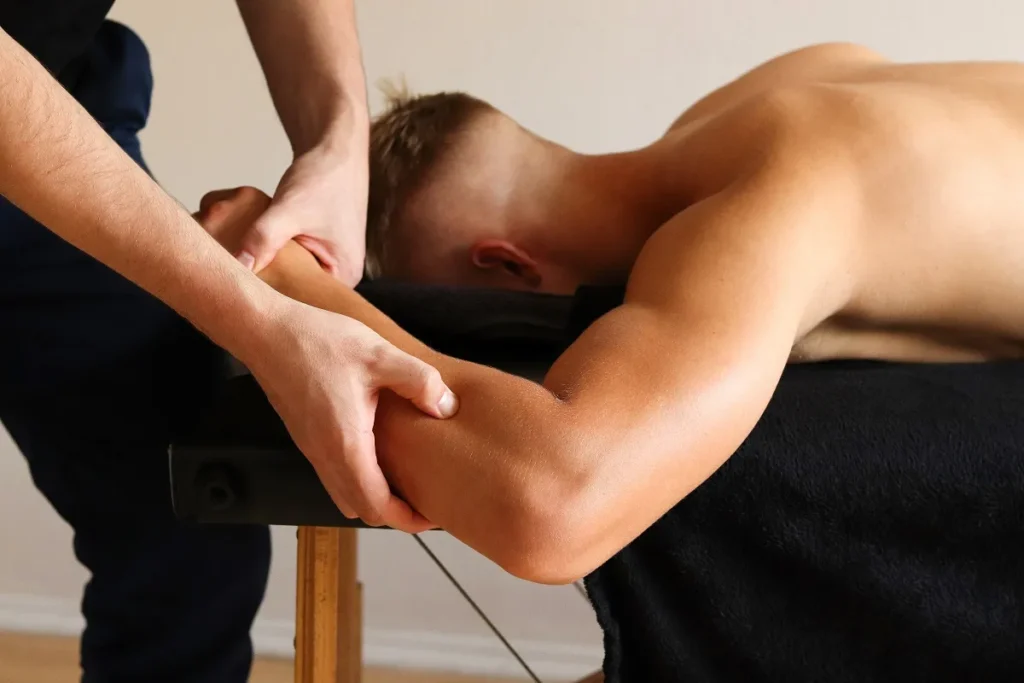
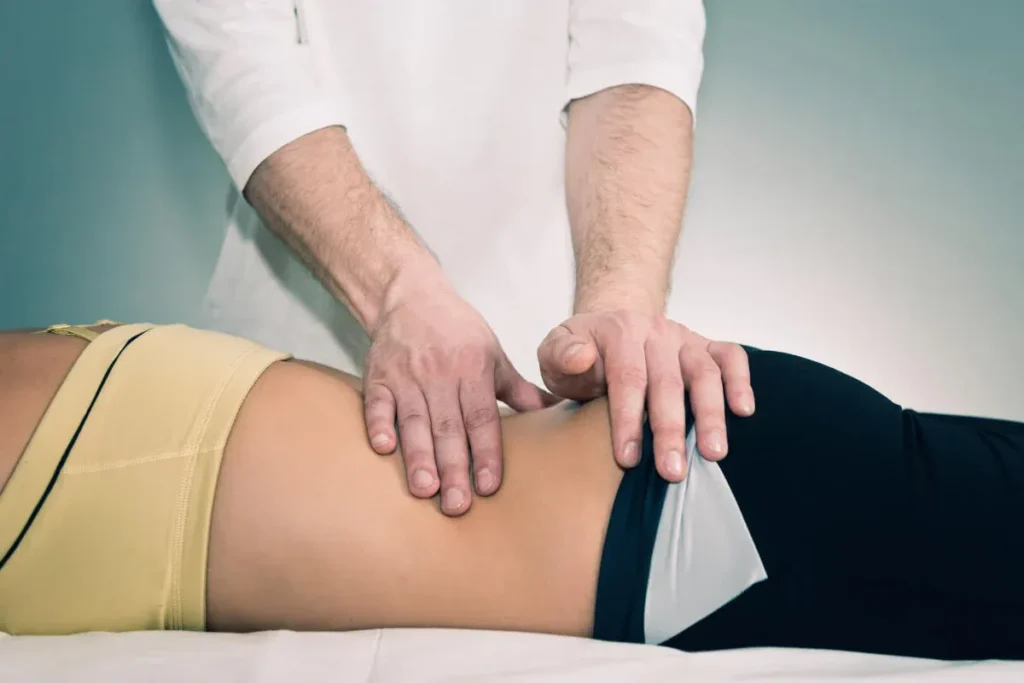
A licensed therapist can do trigger point massage and other treatments. They can also give you exercises and stretches that fit your needs.
Conclusion: Preventing Future Chest Trigger Points
To prevent chest trigger points, it’s important to maintain good posture and exercise regularly. Stress management also plays a key role. These habits can help lower the risk of pectoral trigger points and myofascial pain syndrome.
Stretching and myofascial release are great for preventing new trigger points. They also help reduce the return of old ones. You can do this through self-massage, stretching, and professional treatments when needed.
Keeping a healthy lifestyle is key. This includes proper posture and regular exercise. These actions help avoid chest pressure points and pectoral trigger points. They promote muscle health and overall well-being.
By being proactive, you can live without the pain of myofascial pain syndrome. A holistic approach to muscle health leads to a healthier, more vibrant life.
FAQ
What are chest trigger points and how do they develop?
Chest trigger points are areas in muscle tissue that get knotted and inflamed. This causes pain and discomfort. They form from muscle overuse, strain, or injury, leading to myofascial pain syndrome.
How can I identify trigger points in my pectoral muscles?
To find trigger points, look for tender areas or knots in your chest muscles. Pressing on these spots can cause pain or discomfort that spreads to other parts of your body.
How do I differentiate between muscular pain and cardiac issues?
Muscular pain from trigger points is usually in one spot and gets worse when you press on it. Heart problems, on the other hand, cause pain that spreads and might be with other symptoms like shortness of breath or dizziness.
What are some effective techniques to release chest muscle knots?
To release chest muscle knots, try self-massage, stretching, and physical therapy. These methods relax the muscle, improve blood flow, and reduce pain.
When should I seek professional treatment for chest trigger points?
See a professional if your symptoms don’t get better or get worse with self-care, or if you have severe pain that affects your daily life.
How can I prevent future chest trigger points?
To avoid future chest trigger points, keep good posture, exercise regularly, and avoid straining your pectoral muscles. Regular stretching and self-massage can also keep your muscles relaxed and healthy.
Can stress contribute to the development of chest trigger points?
Yes, stress can make muscles tense, leading to trigger points. Stress-reducing activities like meditation or deep breathing can help relax muscles.
Are there any specific stretches or exercises that can help to alleviate pectoralis major trigger points?
Yes, stretches like the chest stretch or doorway stretch can help with pectoralis major tension. Strengthening exercises for opposing muscles, like the rhomboids, can also improve posture and reduce pectoral muscle strain.
Referenties
Nationaal Centrum voor Biotechnologie-informatie. Evidence-Based Medisch Inzicht. Opgehaald van https://pmc.ncbi.nlm.nih.gov/articles/PMC10966746/