
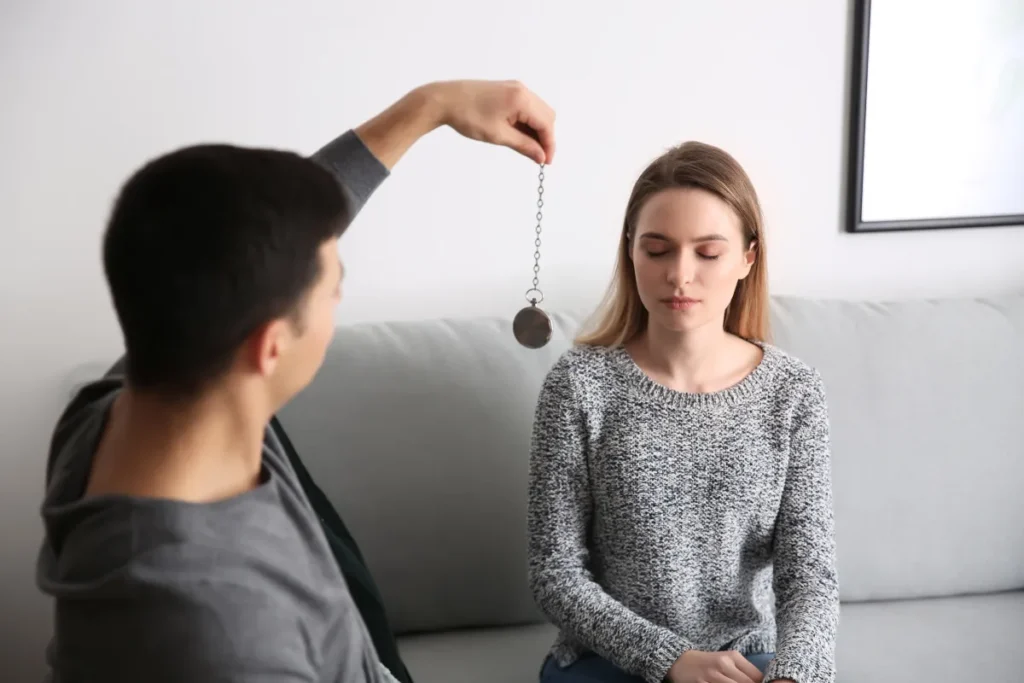
A hypnotist is someone who helps people get into a focused state. This state makes them more open to suggestions. It’s used for therapy or personal growth. We define hypnotist roles and amazing mental power secrets. Discover powerful ways to heal painful stress and achieve brilliant wellness.
The word “hypnotist” means a person who makes clients hypnotized. They help people change their thoughts and feelings. It’s pronounced as /ˈhɪpnətɪst/ (HIP-nuh-tist). Hypnotists are important in both fun shows and serious therapy.
Knowing what a hypnotist does can show how useful hypnotherapy is. It helps with health issues and personal growth.
Belangrijkste opmerkingen
A hypnotist is an expert in inducing hypnosis for therapeutic or personal development purposes.
The pronunciation of the term “hypnotist” is /ˈhɪpnətɪst/ (HIP-nuh-tist).
Hypnotists play a significant role in facilitating meaningful psychological and emotional change.
Hypnotherapy can be used to address various health concerns and promote personal growth.
Understanding the role of a hypnotist can help individuals appreciate the value of hypnotherapy.
How to Define a Hypnotist: Meaning and Role

A hypnotist is a trained expert who uses hypnosis for healing or fun. They help people focus deeply. This makes the subconscious mind open to good ideas.
What Does “Hypnotist” Mean?
The word “hypnotist” means someone who puts others in a hypnotic state. They do this for healing, like fighting fears, or for fun, like on stage. The hypnotist creates a calm place for deep focus.
Simply, a hypnotist helps people reach their subconscious. This makes them more open to good changes in their thoughts or actions.
The Process of Inducing Hypnosis
Getting into hypnosis takes special steps to calm and focus the mind. Hypnotists might use pictures, deep breathing, or other ways to enter a trance. This state makes people more open to suggestions.
First, the hypnotist uses a special way to start. Then, they make sure the person is fully relaxed and ready. After that, they give specific suggestions to help with things like stress or confidence.
Pronunciation Guide for “Hypnotist”
The right way to say “hypnotist” is /ˈhɪpnətɪst/ (HIP-nuh-tist). Knowing how to say it right can make talking about hypnosis easier.
Correctly saying “hypnotist” helps people talk about their needs clearly. This makes the experience more effective and comfortable.
Types of Hypnotists and Their Applications

Hypnotists come in different forms, from therapists to entertainers. They help people with phobias and also entertain on stage. This variety meets many needs.
Clinical Hypnotherapists vs. General Hypnotists
Clinical hypnotherapists get special training and keep learning. They help with anxiety, pain, and personal growth. General hypnotists might not have the same skills.
There’s a big difference between a general hypnotist and a certified clinical hypnotherapist. Clinical hypnotherapists deal with tough cases, making them key in healthcare.
Entertainment and Stage Hypnotists
Stage hypnotists entertain with hypnosis. They make volunteers in the audience go into trance. Their work makes hypnosis seem less scary and more understandable.
Therapeutic Applications and Success Rates
Hypnotherapy helps with anxiety, pain, and addiction. It’s very effective, with studies showing it works well with other treatments.
These numbers show hypnotherapy’s power in solving health problems. Knowing about hypnotists helps people choose the right therapy.
Conclusie
A hypnotist, or hypnosist, helps people focus deeply. This makes them open to new ideas. They can be in entertainment or help people in a clinical setting.
Studies show that about eighty-five percent of people can be hypnotized. Knowing the difference between types of hypnotists is important. It shows their skills and how hypnosis is used.
Understanding what a hypnotist does can help us see the value of hypnosis. A hypnotist for fun might entertain, while a clinical one helps with health issues. This shows how hypnosis can be used in many ways.
FAQ
What is a hypnotist?
A hypnotist is someone who helps others enter a hypnotic state. This is often for therapy, like treating anxiety or pain.
What does the term “hypnotist” mean?
“Hypnotist” means a person who makes others hypnotized. They help people reach their subconscious mind to face challenges.
How do you pronounce the word “hypnotist”?
You say “hypnotist” as /ˈhɪpnətɪst/ (HIP-nuh-tist).
What is the difference between a clinical hypnotherapist and a stage hypnotist?
Clinical hypnotherapists work to help people with therapy. Stage hypnotists entertain with hypnosis in shows.
What are some common applications of hypnosis?
Hypnosis helps with anxiety, insomnia, and chronic pain. It also boosts personal growth and well-being.
Are hypnotists effective in their treatments?
Yes, studies show hypnosis works well for many issues. People often see big improvements in their lives.
What is another word for hypnotist?
Words like hypnotherapist, therapist, or counselor mean the same. The term used depends on the context and the professional’s skills.
How do hypnotists induce hypnosis?
Hypnotists use methods like guided imagery and progressive relaxation. They help people relax deeply and become more open to suggestions.