
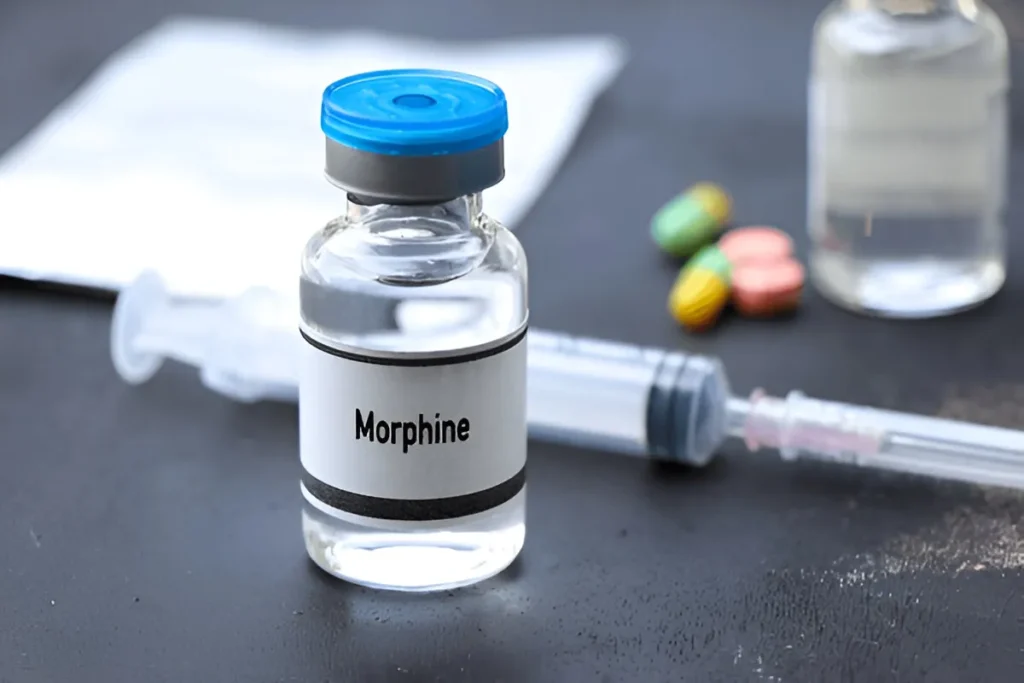
Morphine is a strong pain reliever that works well when used right. But, it’s also highly addictive, even if it’s prescribed. Knowing the risks of morphine is key to managing pain safely.
Morphine activates the brain’s reward system, leading to dependence and addiction. Addiction experts say repeated use changes brain chemistry. This makes it hard to stop without withdrawal symptoms.
GoldCity Center aims to educate on morphine risks. They help patients make smart choices about pain management.
Belangrijkste opmerkingen
Morphine can be highly addictive due to its effect on the brain’s reward system.
Repeated use can lead to significant changes in brain chemistry.
Understanding the risks is key for safe pain management.
Proper medical supervision is essential to minimize addiction risk.
Patients should know the signs of morphine addiction and its health effects.
Is Morphine Addictive? Understanding the Risks
It’s important for both patients and healthcare providers to know about morphine’s risks. Morphine is a strong opioid used for pain relief. But, it can be abused and misused, which is a big worry.
How Morphine Affects the Brain’s Reward System
Morphine binds to opioid receptors in the brain and spinal cord. This changes how we feel pain and can make us feel happy. This happiness is a major reason why morphine can be addictive. It makes the brain’s reward system work overtime, leading to addiction.
The National Institute on Drug Abuse says opioids like morphine can change the brain’s reward system. This makes it hard for people to stop using the drug, even when it’s bad for them. “The brain’s reward system is meant to enjoy good things, but opioids can take over, causing people to keep using the drug.”
Statistics on Morphine Abuse and Misuse
The numbers on morphine abuse are scary. The National Survey on Drug Use and Health found over 5 million people aged 12 and older used morphine in the past year. About 375,000 misused it for nonmedical reasons. Studies show 21 to 29 percent of those on chronic pain opioids abuse them, showing the need for careful watching and teaching.
These numbers show how critical it is to understand morphine’s risks. Healthcare providers must be careful with how they prescribe it. This way, they can help ensure patients get pain relief safely and effectively.
Hoe morfine in het lichaam werkt

Morphine changes how we feel pain by binding to specific receptors. This interaction makes morphine a strong pain reliever for severe pain.
Mechanism of Action in the Central Nervous System
Morphine mainly works in the brain and spinal cord. It binds to opioid receptors, mainly mu-opioid receptors, which help with pain relief. This action stops pain signals from reaching the brain.
“Morphine’s effect on mu-opioid receptors reduces pain and brings a feeling of happiness,” says Medical Expert, a pain management expert. This is why morphine is good for pain but can also be addictive.
Opioid Receptor Activation and Pain Relief
Morphine’s action on opioid receptors is very specific. Its shape lets it fit perfectly into receptor sites, like a key in a lock. This binding is what makes morphine effective against pain.
Morphine does more than just reduce pain; it improves life for those with chronic or acute pain. Knowing how morphine works helps doctors create better treatment plans for each patient.
Common Side Effects and Signs of Morphine Addiction
Morphine is a strong opioid used for pain relief. But, it can cause side effects and lead to addiction. It’s important to know the risks and signs of addiction when taking morphine.
Physical Side Effects
Morphine affects the central nervous system, causing physical side effects. These include drowsiness, constipation, and breathing problems. The drowsiness can make users feel very tired or sleepy.
Some people might feel extremely happy or excited, which can lead to addiction. Other effects include nausea, vomiting, and changes in heart rate or blood pressure.
Psychological Effects and Warning Signs
Morphine’s psychological effects are as important as its physical ones. Users might experience mood swings, from feeling very happy to being irritable or depressed. It can also affect their ability to focus and make decisions.
For more information on morphine addiction, a detailed guide is available. It offers insights into the risks and signs of addiction.
Warning signs of morphine addiction include needing more of the drug to feel the same effect, withdrawal symptoms when trying to stop, and compulsive behavior to get and use morphine.
The Progression from Use to Dependence to Addiction
The journey from using morphine to becoming addicted involves several stages. At first, users might feel pain relief and happiness. But, as they keep using, they might need more of the drug to feel the same relief.
Dependence happens when the body gets used to morphine, leading to withdrawal symptoms if it’s stopped or reduced. Addiction is when someone can’t stop using the drug, even if it harms them.
Knowing how addiction progresses is key to early treatment. Spotting signs of dependence and addiction can help people get help before it’s too late.
Conclusion: Balancing Pain Management and Addiction Risk
It’s important to know the risks of morphine to manage pain safely. Morphine can help with severe pain but also has a high risk of addiction. This balance is key.
Healthcare providers must weigh the benefits and risks of morphine. They adjust treatment plans to lower addiction risk. Treatment for addiction includes detox, therapy, and medication.
There are resources for those fighting addiction. Seeking help is the first step to recovery. By understanding the risks and taking action, we can manage pain safely and avoid addiction.
FAQ
How long does morphine take to kick in?
Morphine starts working in 15 to 60 minutes if taken by mouth. It works faster if given through an IV, in just a few minutes.
Does morphine make you loopy?
Yes, morphine can make you feel happy, sleepy, and a bit confused. This might make you feel “loopy” or off-balance.
Will morphine make you sleepy?
Yes, morphine can make you very sleepy. It does this by slowing down your nervous system.
What does morphine do to the body?
Morphine binds to special receptors in your brain and spine. This changes how you feel pain and brings relief.
How fast does morphine work?
Morphine’s effects start quickly, depending on how you take it. IV morphine works in minutes, while oral forms take 15-60 minutes.
Can you become addicted to morphine?
Yes, morphine is very addictive. Using it for too long can lead to dependence and addiction.
Is morphine addictive?
Yes, morphine has a high risk of abuse and addiction. This is true, even with proper use, if used for a long time.
What does morphine feel like?
Morphine can make you feel pain relief, relaxed, and happy. But, it can also cause nausea and sleepiness.
How long does IV morphine take to work?
IV morphine starts working in just a few minutes.
How long does 4 mg of morphine last?
The effects of 4 mg of morphine can last 4-6 hours. This depends on how your body reacts.
Can you drink morphine?
Yes, morphine comes in liquid forms. These are meant to be taken as directed by a doctor.
How long do the effects of morphine last?
Morphine’s effects can last 4-6 hours. This depends on the dose and how your body reacts.
How long for liquid morphine to work?
Liquid morphine starts working in 15-30 minutes after you take it.
Does morphine work instantly?
IV morphine works fast, in just a few minutes. But, other forms take longer to start working.
How long does morphine take to work?
Morphine’s effects start in a few minutes to 60 minutes. This depends on how you take it.
Does morphine make you high?
Yes, morphine can make you feel very happy, which might feel like being “high.” This is more likely at higher doses or with misuse.
Referenties
JAMA-netwerk. Evidence-Based Medisch Inzicht. Opgehaald van https://jamanetwork.com/journals/jamapsychiatry/fullarticle/2728428