Diffuse patterned alopecia is a form of hair loss that affects the scalp uniformly rather than in distinct patches. While many people associate hair loss with the classic receding hairline of male pattern baldness, this condition presents a more subtle, widespread thinning that can be unsettling for both men and women. Recognizing the early signs is crucial because timely intervention can significantly improve outcomes.
According to recent dermatological studies, diffuse patterned alopecia accounts for a notable portion of unexplained hair loss cases, especially among individuals experiencing hormonal fluctuations or chronic stress. The condition often goes undiagnosed because its presentation mimics normal seasonal shedding, leading patients to overlook the need for professional evaluation.
In this article, we will explore the underlying mechanisms, differentiate it from other alopecia types, outline diagnostic procedures, and discuss the most effective treatment strategies available at Gold City Medical Center. Whether you are seeking answers for yourself or a loved one, understanding this condition empowers you to take informed steps toward healthier hair.
What Is Diffuse Patterned Alopecia and Why Does It Occur?
Diffuse patterned alopecia is characterized by a uniform reduction in hair density across the entire scalp, without the classic “M” shape or receding front commonly seen in androgenetic alopecia. The hair follicles enter the telogen (resting) phase simultaneously, leading to a noticeable thinning that may affect the crown, temples, and even the hairline.
Several factors can trigger this synchronized shedding:
- Hormonal changes, such as those occurring during menopause, thyroid disorders, or anabolic steroid use.
- Chronic stress, which elevates cortisol levels and disrupts the normal hair growth cycle.
- Nutritional deficiencies, particularly iron, zinc, and biotin.
- Medical conditions like autoimmune diseases, severe infections, or systemic illnesses.
- Medications, including anticoagulants, retinoids, and certain antidepressants.
Unlike male pattern baldness, which follows a predictable pattern driven primarily by genetic sensitivity to dihydrotestosterone (DHT), diffuse patterned alopecia does not rely on the same androgenic pathways. However, it can coexist with androgenetic alopecia, complicating diagnosis.
Understanding the root cause is essential because treatment plans differ dramatically based on the underlying trigger. For instance, correcting a thyroid imbalance may resolve the hair loss, whereas hormonal therapy might be necessary for androgen-related patterns.
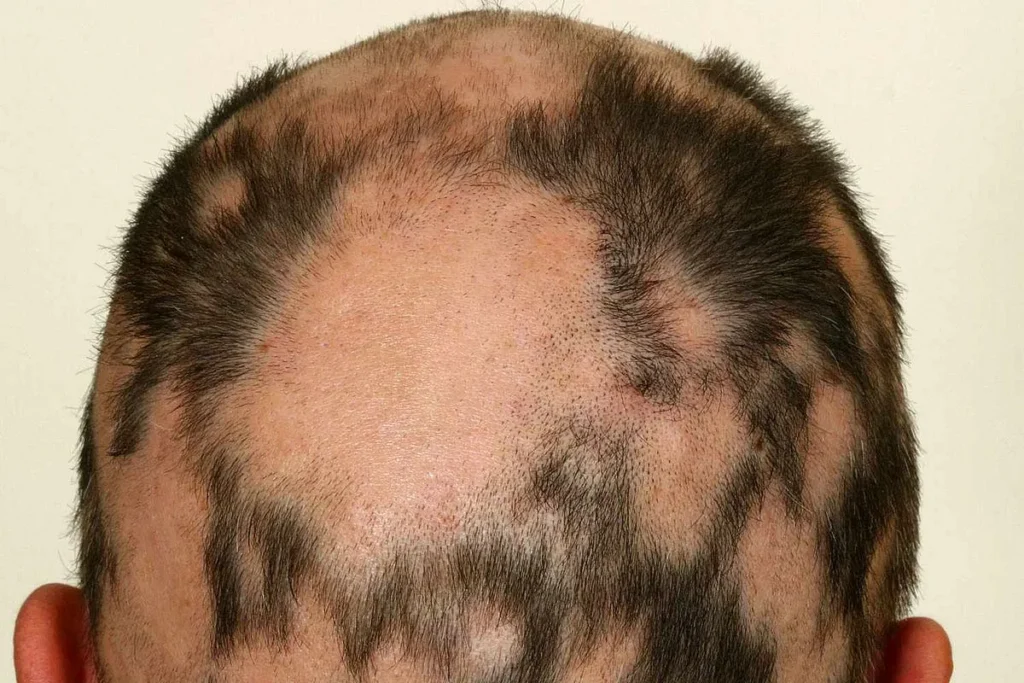
How Diffuse Patterned Alopecia Differs From Male Pattern Baldness
While both conditions result in hair loss, their visual signatures and underlying mechanisms are distinct. Male pattern baldness—also known as androgenetic alopecia—typically starts with a receding hairline and thinning at the crown, progressing in a predictable pattern defined by the Norwood Scale. In contrast, diffuse patterned alopecia presents as an even, overall reduction in hair volume without a clear frontal or vertex pattern.
The table below highlights key differences:
| Feature | Diffuse Patterned Alopecia | Mannelijke kaalheid (Androgenetische Alopecia) |
|---|---|---|
| Hair loss pattern | Uniform thinning across scalp | Receding hairline & crown thinning |
| Primary cause | Hormonal shifts, stress, nutrition, systemic disease | Genetic sensitivity to DHT |
| Age of onset | Variable, often adult years | Typically late teens to early 30s |
| Diagnostic clues | Even density loss, normal hairline | Patterned recession, visible miniaturized hairs |
| Treatment focus | Address underlying cause, scalp health | Block DHT, stimulate follicles |
Recognizing these distinctions helps clinicians tailor interventions. For example, a patient with diffuse patterned alopecia may benefit more from nutritional supplementation and stress management than from finasteride, which targets DHT production.
Diagnosis and Medical Evaluation
Accurate diagnosis begins with a thorough clinical examination performed by a dermatologist or a qualified hair restoration specialist. The process typically includes:
- Medical history review – assessing hormonal changes, medication use, stress levels, and family history of hair loss.
- Physical scalp examination – using a dermatoscope to evaluate follicle miniaturization and hair shaft thickness.
- Laboratory tests – checking thyroid function (TSH, free T4), iron studies, vitamin D, and hormonal panels (testosterone, DHT).
- Scalp biopsy (rare) – in ambiguous cases, a small tissue sample can reveal inflammatory patterns or follicular changes.
Because diffuse patterned alopecia can mimic telogen effluvium—a temporary shedding condition—clinicians often employ the pull test to gauge active shedding. A positive pull test (more than 10 hairs pulled out) may indicate ongoing telogen phase dominance, prompting further investigation.
Advanced imaging, such as high‑resolution photography or trichoscopy, provides baseline documentation for monitoring treatment progress. At Gold City Medical Center, we combine these diagnostic tools with a personalized assessment to pinpoint the exact cause of the thinning.
Effective Treatment Options for Diffuse Patterned Alopecia
Treatment strategies for diffuse patterned alopecia are multifaceted, aiming to address both the underlying cause and the visible thinning. Common approaches include:
- Topical minoxidil – stimulates blood flow to follicles and prolongs the anagen (growth) phase.
- Oral supplements – iron, zinc, biotin, and vitamin D to correct deficiencies.
- Hormonal therapy – for women, low‑dose oral contraceptives or anti‑androgens (e.g., spironolactone) can reduce androgenic influence.
- Platelet‑rich plasma (PRP) injections – concentrate growth factors to rejuvenate dormant follicles.
- Low‑level laser therapy (LLLT) – non‑invasive light treatment that enhances cellular metabolism.
- Hair transplant consideration – in cases where follicular units remain viable, follicular unit extraction (FUE) can restore density, though careful patient selection is essential.
At Gold City Medical Center, we prioritize a customized plan. For example, a patient with iron‑deficiency‑related diffuse thinning may start with supplementation and minoxidil, while another whose condition stems from chronic stress may benefit from PRP combined with lifestyle counseling.
Clinical studies suggest that combining topical minoxidil with PRP yields higher regrowth rates than either treatment alone, especially in diffuse patterns where follicle health varies across the scalp.
Lifestyle Adjustments and Prevention Strategies
Beyond medical interventions, everyday habits play a pivotal role in managing diffuse patterned alopecia. Implementing the following lifestyle changes can bolster hair health:
- Balanced nutrition – incorporate lean proteins, omega‑3 fatty acids, and antioxidant‑rich fruits and vegetables.
- Stress reduction techniques – mindfulness meditation, yoga, or regular aerobic exercise to lower cortisol levels.
- Avoid harsh hair treatments – limit heat styling, chemical relaxers, and tight hairstyles that cause traction.
- Gentle scalp care – use sulfate‑free shampoos, avoid excessive brushing, and consider scalp massage to improve circulation.
- Regular medical check‑ups – monitor thyroid function and hormonal balance annually.
These preventive measures not only support existing hair but also create a favorable environment for any therapeutic regimen to succeed. Patients who combine medical treatment with lifestyle optimization often experience faster and more sustainable regrowth.
Why Choose Gold City Medical Center
Gold City Medical Center offers an integrative approach to hair restoration, combining state‑of‑the‑art diagnostics with personalized treatment plans. Our team of board‑certified dermatologists and hair restoration specialists leverages the latest research in diffuse patterned alopecia to deliver safe, effective solutions. From comprehensive laboratory testing to advanced PRP and FUE techniques, we ensure every patient receives care tailored to their unique needs, backed by a commitment to excellence and patient‑centered outcomes.
Ready to restore your confidence and achieve fuller, healthier hair? Contact Gold City Medical Center today to schedule a personalized consultation and start your journey toward lasting results.
FAQ
What is diffuse patterned alopecia?
Diffuse patterned alopecia is a type of hair loss where thinning occurs uniformly across the entire scalp.
How does diffuse patterned alopecia differ from male pattern baldness?
The two conditions differ in pattern, primary cause, age of onset, and treatment focus.
What are the common causes of diffuse patterned alopecia?
Hormonal changes, chronic stress, nutritional deficiencies, medical conditions, and certain medications.
How is diffuse patterned alopecia diagnosed?
Through clinical examination, dermatoscopy, lab tests, and sometimes scalp biopsy.
What treatment options are effective for diffuse patterned alopecia?
Topical minoxidil, oral supplements, hormonal therapy, PRP, low‑level laser, and selective hair transplant.
Can lifestyle changes help prevent or improve diffuse patterned alopecia?
Yes, balanced nutrition, stress management, gentle scalp care, an





