Inzicht in de hair transplant before and after men journey is essential for anyone considering permanent hair restoration. This article walks you through every stage, from the initial consultation to the final visual results, and highlights why many men choose this solution to regain confidence.
Hair loss affects up to 30 % of men by age 30 and nearly 70 % by age 50, making effective treatment a high priority. Modern transplantation techniques, especially those offered in Turkey, provide natural-looking coverage with minimal downtime.
We will explore the typical timeline, the visual evidence that demonstrates success, and the key factors that influence outcomes. By the end, you’ll have a clear picture of what to expect and how to select a reputable clinic.
Understanding the Transformation: What to Expect
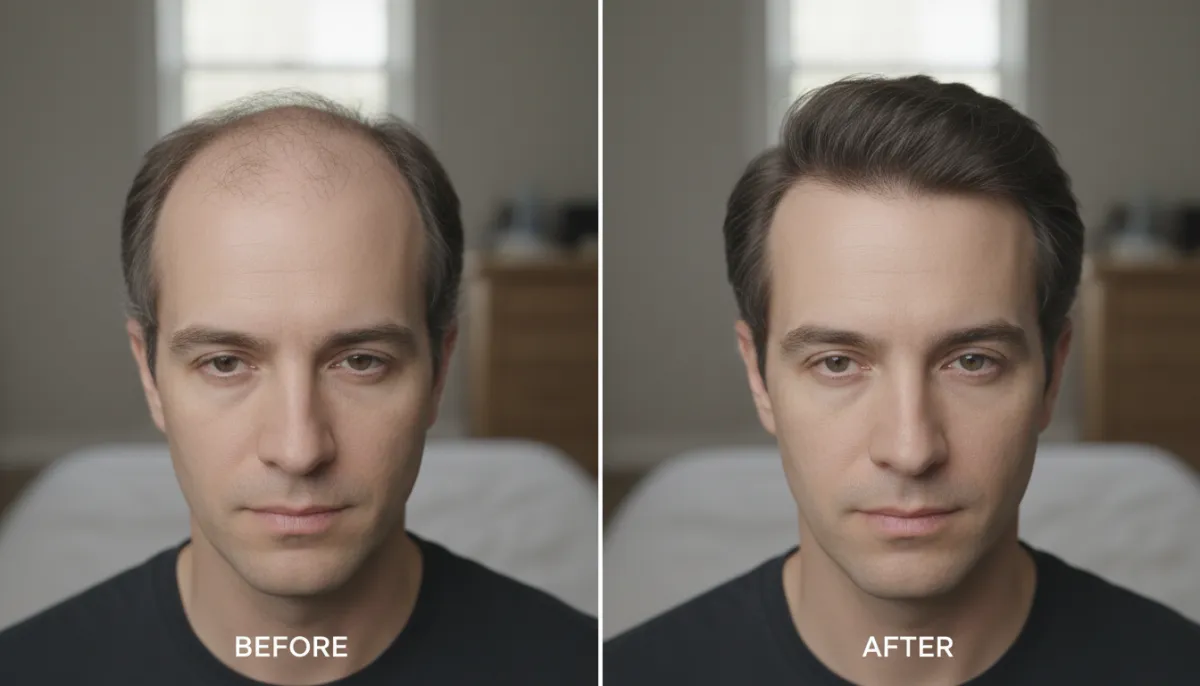
When men first contemplate a hair transplant, the most common question is how the results will look compared to their current state. The hair transplant before and after men comparison provides a realistic benchmark for expectations.
Most patients notice a subtle improvement within the first three months, as transplanted follicles begin to establish blood supply. Full density typically emerges between nine and twelve months, when the new hair thickens and integrates with existing strands.
Key elements to watch for in before‑and‑after photos include:
- Linearity of the hairline – a natural, undulating edge is preferable to a straight cut.
- Coverage density – uniform distribution across the crown and frontal zones.
- Scarring – modern FUE (Follicular Unit Extraction) techniques aim for invisible donor sites.
Below is a quick reference chart summarizing the typical visual changes at each stage.
| Time After Surgery | Typical Visual Change |
|---|---|
| 1–3 Months | Shedding of transplanted hairs (shock loss); minimal visible growth. |
| 4–6 Months | Early regrowth; fine, light hairs appear. |
| 7–9 Months | Increasing thickness; hairline begins to define. |
| 10–12 Months | Full density; natural appearance achieved. |
The Procedure Timeline: From Consultation to Results
The journey from the first appointment to the final hair transplant before and after men picture is structured around several key milestones. Understanding each step helps patients prepare mentally and physically.
1. Initial Consultation – During this stage, the surgeon evaluates the donor area, discusses goals, and outlines a personalized plan. Patients receive a realistic projection of how many grafts are needed, often ranging from 1,500 to 3,500 for moderate baldness.
2. Pre‑Operative Preparation – This includes blood tests, shaving the donor area, and instructing patients on medication adjustments (e.g., stopping blood thinners).
3. Extraction and Implantation – Modern Turkish clinics specialize in FUE and FUT (Follicular Unit Transplant) techniques. FUE, especially the hairline transplant variant, minimizes scarring and allows precise placement.
4. Post‑Operative Care – Patients follow a strict regimen: gentle washing, avoiding direct sunlight, and using prescribed shampoos. Some clinics provide a hair implant after‑care kit to support healing.
Below is a checklist that outlines the essential actions during each phase:
- Schedule a comprehensive scalp analysis.
- Confirm graft count and expected density.
- Arrange travel and accommodation (if necessary).
- Follow pre‑surgery medication guidelines.
- Adhere to post‑surgery care instructions.
- Attend follow‑up visits at 3, 6, and 12 months.
Visual Evidence: Interpreting Before and After Photos
When reviewing the hair transplant before and after men gallery, it is crucial to assess authenticity and relevance. High‑quality images reveal the genuine outcomes of procedures performed at reputable facilities.
Key aspects to evaluate include:
- Lighting Consistency – Similar lighting conditions prevent misleading contrasts.
- Angle and Distance – Matching angles ensure accurate comparison of hair density.
- Time Interval – Photos taken at least 12 months post‑procedure provide a true representation of final results.
Many clinics showcase a range of cases, from early‑stage to extensive coverage. The following table compares typical graft counts with expected visual outcomes:
| Graft Count | Expected Coverage | Typical Visual Result |
|---|---|---|
| 1,500 | Partial frontal coverage | Noticeable improvement, still some thinning. |
| 2,500 | Full frontal and mid‑crown | Natural hairline, dense crown. |
| 3,500+ | Extensive coverage, receding areas | Complete restoration, minimal visible donor scars. |
Real patient stories often include a series of images taken at 3, 6, and 12 months, illustrating the gradual thickening of transplanted hairs.
Factors Influencing Success: Hairline Transplant, Technique, and Care
Not every hair transplant before and after men outcome is identical; several variables shape the final appearance.
Technique Selection – FUE (Follicular Unit Extraction) is favored for its minimal scarring, especially when performing a hairline transplant. FUT (Strip method) may be chosen for larger graft counts but leaves a linear scar.
Kwaliteit donorgebied – The density and health of hair in the donor region (usually the back of the scalp) directly affect graft viability. Men with thin donor hair may require supplemental treatments such as PRP (Platelet‑Rich Plasma) to boost growth.
Post‑Transplant Care – Proper after‑care, including avoiding tight hats, using gentle shampoos, and protecting the scalp from UV exposure, maximizes graft survival.
Below is a summary of factors and their impact on results:
- Surgeon Experience – Higher expertise correlates with better graft placement and natural hairline.
- Graft Density – Adequate grafts (≥ 2,500 for moderate loss) ensure sufficient coverage.
- Patient Age – Younger patients often experience faster healing, but older patients can still achieve excellent outcomes.
- Health Status – Non‑smokers and those with stable health conditions see higher graft survival rates.
Choosing the Right Clinic: Why Turkey and Gold City Stand Out
Turkey has become a global hub for hair restoration, offering competitive pricing, experienced surgeons, and state‑of‑the‑art facilities. Among the many options, Gold City Medical Center distinguishes itself through an integrative approach that blends medical expertise with aesthetic precision.
Key advantages of selecting Gold City include:
- Board‑certified surgeons with extensive experience in FUE and hairline transplants.
- Comprehensive pre‑ and post‑operative care packages, including accommodation and transportation.
- Transparent before‑and‑after galleries verified by independent auditors.
- Use of advanced technologies such as robotic assistance for graft extraction.
Patients benefit from a seamless experience, from the moment they arrive in Istanbul to the final follow‑up visit. The center’s commitment to safety, quality, and natural results aligns with the expectations of men seeking reliable hair restoration.
Choosing a clinic that prioritizes both medical standards and aesthetic outcomes ensures that the hair transplant before and after men images you receive truly reflect lasting, natural improvement.
Why Choose Gold City Medical Center
Gold City Medical Center combines cutting‑edge hair transplant techniques with a holistic healthcare philosophy. Our team of specialists tailors each procedure to the individual, ensuring optimal graft placement and natural‑looking density. With a focus on safety, patient education, and long‑term results, we provide a trustworthy pathway to renewed confidence.
Ready to transform your appearance? Contact Gold City Medical Center today to schedule a personalized consultation and discover how our expert team can help you achieve lasting, natural hair growth.
Take the first step toward a fuller future – your new hairline awaits.
FAQ
What does a hair transplant before and after timeline look like for men?
Typical results appear in stages: shedding at 1‑3 months, fine regrowth at 4‑6 months, increasing thickness by 7‑9 months, and full density around 10‑12 months.
How long does it take to see full results after a hair transplant?
Full, permanent results are usually visible between nine and twelve months after surgery.
What are the key differences between FUE and FUT hair transplant techniques?
FUE extracts individual follicles with minimal scarring, while FUT removes a strip of scalp, leaving a linear scar but allowing larger graft numbers.
How can I evaluate the authenticity of before and after photos from a hair transplant clinic?
Check lighting consistency, angle, distance, and time interval between photos; authentic galleries use standardized conditions and at least a 12‑month follow‑up.
Why is Turkey a popular destination for hair transplants?
Turkey offers competitive pricing, experienced surgeons, modern facilities, and a well‑established medical tourism infrastructure.
What post‑operative care is recommended to ensure graft survival after a hair transplant?
Gentle washing, avoiding direct sun, using prescribed shampoos, and following the surgeon’s medication and activity guidelines are essential.





