Many people wonder is traction alopecia permanent when they notice thinning along their hairline after wearing tight braids, ponytails, or extensions. This condition, caused by chronic pulling on the scalp, can range from a temporary shedding episode to a lasting loss of follicles. Understanding the factors that influence permanence helps you decide when to seek professional help and how to protect your hair for the future.
Traction alopecia is one of the most common forms of hair loss linked to styling choices, yet it is often misunderstood. According to dermatological studies, early intervention can dramatically improve the chances of full regrowth, while delayed treatment may lead to scar tissue formation.
In this article we will explore the underlying mechanisms, typical recovery timelines, effective treatment pathways—including medical and surgical options—and practical steps to prevent further damage. Whether you are experiencing the first signs or are concerned about long‑term outcomes, the information below will guide you toward informed decisions.
Understanding Traction Alopecia: Causes and Early Signs
Traction alopecia develops when repeated tension stresses the hair follicles, especially along the frontal hairline, temples, and occipital region. The condition often begins with subtle symptoms that many overlook.
Common Hairstyles That Contribute to Tension
- Very tight ponytails or buns
- Frequent braiding, cornrows, or box braids
- Hair extensions that pull on natural hair
- Dreadlocks that are tightly wound
- Heavy headwear such as tight caps or beanies
Early signs include a “stretched” appearance of the hairline, small patches of broken hairs, and occasional itching or tenderness. If you notice these symptoms, a dermatologist for traction alopecia can assess follicular health before permanent damage occurs.
At the cellular level, sustained pulling disrupts the normal hair growth cycle, pushing follicles into the telogen (resting) phase prematurely. Over time, repeated trauma can cause follicular mini‑aturization and, in severe cases, scar formation that makes regrowth impossible.
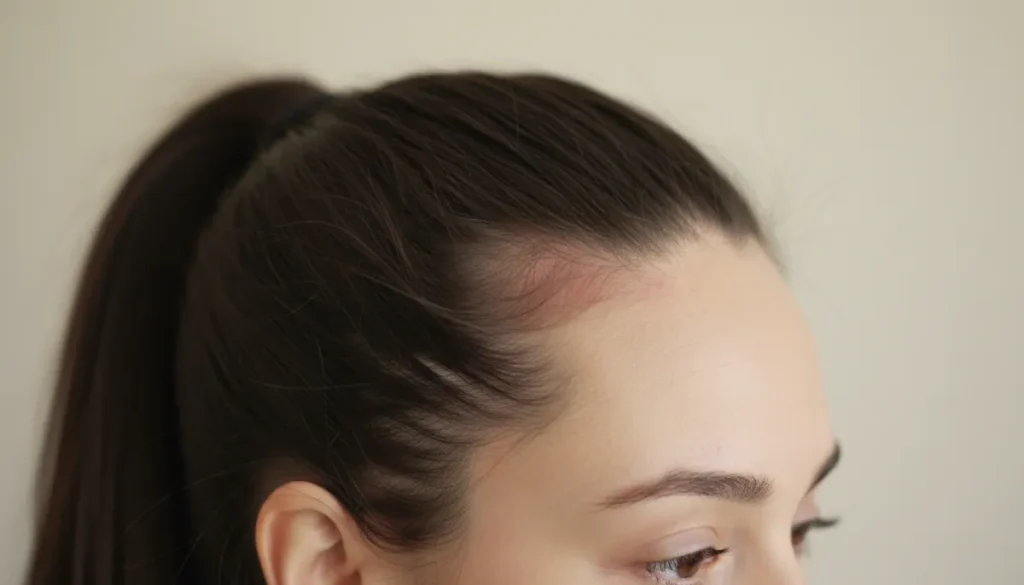
How Long Does It Take to Grow Back? Recovery Timeline
The question “how long for traction alopecia to grow back” depends on the severity of the damage and how quickly the source of tension is removed. Most patients see noticeable improvement within a few months if the condition is caught early.
Typical Recovery Stages
| Stage | Duration | Expected Outcome |
|---|---|---|
| Initial shedding (telogen effluvium) | 2–6 weeks after tension removal | Hair shedding stops; new growth may begin |
| Early regrowth | 3–6 months | Fine, thin hairs reappear along the affected line |
| Full thickness restoration | 6–12 months | Hair returns to normal density if follicles remain viable |
| Permanent loss | 12+ months with ongoing tension | Scar tissue forms; follicles may be irreversibly damaged |
Patients who adopt gentle styling practices within the first two months typically experience full regrowth by the end of the first year. However, if the pulling continues beyond six months, the likelihood of permanent loss increases significantly.
Adjunct therapies—such as topical minoxidil, low‑level laser therapy, and nutritional support—can accelerate the regrowth phase, especially when combined with professional guidance from a hair‑restoration specialist.
Treatment Options: From Topical Care to Surgical Solutions
When you ask “can traction alopecia be reversed,” the answer hinges on the condition’s stage. Early‑stage cases respond well to non‑invasive treatments, while advanced cases may require surgical intervention.
Non‑Surgical Approaches
- Minoxidil (Rogaine) – stimulates follicular activity and prolongs the anagen phase.
- Topical corticosteroids – reduce inflammation around stressed follicles.
- Platelet‑rich plasma (PRP) therapy – delivers growth factors to promote regeneration.
- Low‑level laser devices – improve scalp circulation and cellular metabolism.
- Nutritional supplementation – biotin, zinc, and iron support healthy hair growth.
These remedies are most effective when combined with immediate cessation of tight hairstyles. A qualified dermatologist for traction alopecia can tailor a regimen based on your scalp condition.
Surgical Interventions
For patients where “is traction alopecia permanent” becomes a reality due to scarred follicles, hair transplantation offers a reliable solution. Modern follicular unit extraction (FUE) techniques harvest healthy donor hairs and implant them into the balding zones, restoring natural density and direction.
Gold City Medical Center’s hair transplant specialists evaluate each case individually, considering factors such as donor area availability, scalp laxity, and overall health. Post‑procedure care includes gentle styling, scalp massage, and follow‑up visits to ensure graft survival.
While surgery is not the first line of defense, it provides a definitive answer for those who have exhausted conservative measures and still face permanent loss.
When Is Traction Alopecia Considered Permanent? Risk Factors and Assessment
Understanding when traction alopecia becomes irreversible helps you act before it’s too late. Permanent loss is typically confirmed when scar tissue replaces healthy follicular structures, a condition known as cicatricial alopecia.
Key Risk Factors
- Duration of tension longer than 12 months
- Repeated cycles of tight styling without breaks
- Underlying scalp conditions such as psoriasis or eczema
- Genetic predisposition to follicular weakness
- Smoking and poor nutrition, which impair healing
Clinical assessment involves trichoscopy, scalp biopsies, and sometimes dermatoscopic imaging to differentiate reversible telogen effluvium from permanent scarring.
If a specialist determines that the follicles have been replaced by fibrous tissue, the prognosis for natural regrowth is low, and the focus shifts to reconstructive options like hair transplantation or scalp micropigmentation.
Early detection remains the most powerful tool. Regular self‑exams and professional scalp evaluations can catch subtle changes before they solidify into permanent loss.
Preventive Strategies: Safe Styling Practices for Long‑Term Hair Health
Prevention is the cornerstone of avoiding permanent traction alopecia. Simple adjustments to daily styling habits can dramatically reduce tension on the hair follicles.
Guidelines for Gentle Hair Management
- Limit ponytails, buns, and braids to a maximum of 2–3 times per week.
- Choose loose, low‑profile hairstyles that do not pull at the roots.
- Use soft, fabric‑friendly hair ties (e.g., silk or satin) instead of elastic bands.
- Rotate hairstyles regularly to give the scalp rest periods.
- Avoid heavy extensions or weaves that add significant weight.
- Maintain a balanced diet rich in vitamins A, C, D, E, and B‑complex.
For those who love protective styles, consider using protective caps that distribute pressure evenly and incorporating scalp massages to improve blood flow.
Regular check‑ins with a hair‑care professional can help you adjust your routine as your hair grows and your styling preferences evolve.
Why Choose Gold City Medical Center for Hair Restoration
Gold City Medical Center combines integrative medicine with advanced cosmetic expertise, offering a comprehensive approach to hair health. Our team of board‑certified dermatologists and hair‑transplant surgeons tailors each treatment plan to the individual’s scalp condition, lifestyle, and aesthetic goals. With state‑of‑the‑art facilities, cutting‑edge technologies such as FUE hair transplantation, and a commitment to patient education, we ensure safe, effective, and lasting results for those concerned about traction‑related hair loss.
Ready to take control of your hair health? Contact Gold City Medical Center today for a personalized consultation and discover the most effective path to recovery.
Call us or fill out our online request form – your journey to stronger, fuller hair starts now.
FAQ
Is traction alopecia permanent?
Traction alopecia can be temporary or permanent depending on the severity and duration of the tension on the scalp.
How long does it take for traction alopecia to grow back?
Recovery can range from a few weeks to a year, depending on how quickly the tension is removed and the extent of follicle damage.
Kan tractiealopecia ongedaan worden gemaakt?
Yes, it can be reversed in early stages through non‑surgical treatments, but advanced cases may require surgery.
What are the treatment options for traction alopecia?
Treatments range from topical medications and laser therapy to surgical hair transplantation for irreversible cases.
How can I prevent traction alopecia?
Adopt gentle styling practices, limit tight hairstyles, use soft hair ties, and maintain a balanced diet.
When is traction alopecia considered permanent?
It is deemed permanent when scar tissue replaces healthy follicles, confirmed by clinical assessment.





