Microneedling for acne scars has become a go‑to solution for many seeking smoother, clearer skin without invasive surgery. This article explains the science behind the treatment, what patients can expect on the day of the procedure, and how results compare with other scar‑reduction options.
Acne scarring affects up to 85 % of teenagers and adults who have experienced moderate to severe breakouts. Traditional therapies such as laser resurfacing or chemical peels often require longer downtime and carry higher risks of hyperpigmentation, especially for darker skin tones. Microneedling offers a minimally invasive alternative that stimulates the body’s natural healing processes.
We will cover the mechanism of action, the treatment workflow, recovery tips, and how Gold City Medical Center tailors the procedure to each individual’s needs. By the end, you’ll know whether microneedling for acne scars is the right choice for you.
How Microneedling Works on Acne Scars
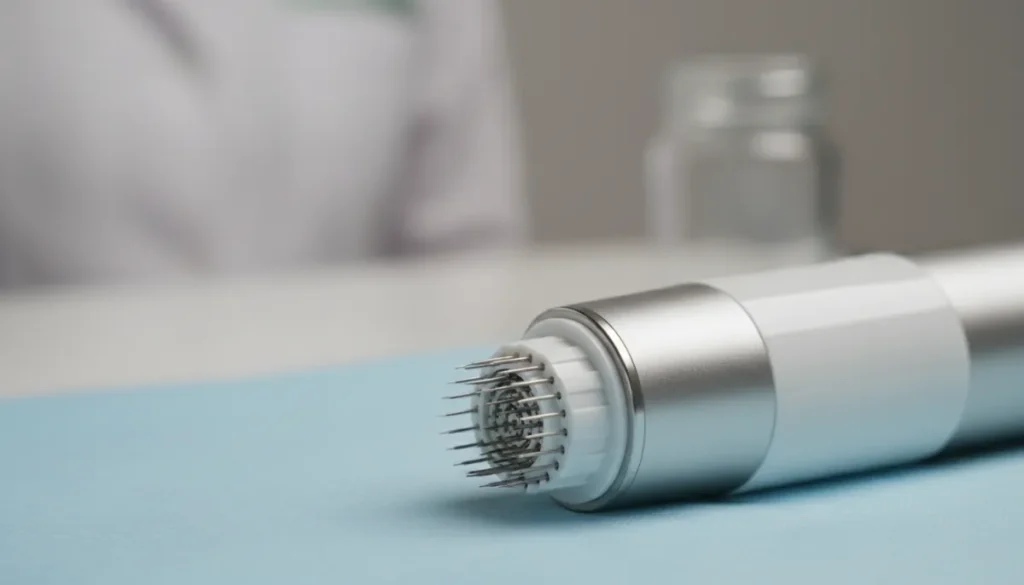
At its core, microneedling is a form of collagen induction therapy. A device equipped with fine, sterile needles creates micro‑channels in the epidermis and upper dermis. These micro‑injuries trigger a cascade of physiological responses:
- Release of growth factors that promote new collagen and elastin production.
- Enhanced skin remodeling that softens the appearance of pitted and hyper‑pigmented scars.
- Improved absorption of topical serums, allowing active ingredients to reach deeper layers.
Scientific studies report that patients see a 30‑50 % improvement in scar depth after a series of sessions. The treatment is customizable: needle lengths ranging from 0.5 mm for surface texture issues to 2.5 mm for deeper depressions can be selected based on scar severity.
Key Benefits of Microneedling
Beyond scar reduction, microneedling offers several ancillary advantages:
| Benefit | Why It Matters |
|---|---|
| Minimale uitvaltijd | Most clients return to daily activities within 24‑48 hours. |
| Broad skin type compatibility | Safe for Fitzpatrick skin types I‑VI, reducing risk of hyperpigmentation. |
| Versatile application | Can be combined with PRP, vitamin C, or hyaluronic acid serums for enhanced results. |
What to Expect During a Microneedling Session
When you arrive for your first microneedling for acne scars appointment, the process typically follows these steps:
- Consult: A board‑certified dermatologist evaluates scar severity, skin type, and medical history.
- Preparation: The treatment area is cleansed, and a topical anesthetic is applied to ensure comfort.
- Procedure: The practitioner uses a motorized pen to deliver controlled micro‑injuries. Depending on the chosen needle length, the session lasts 20‑45 minutes.
- Post‑treatment care: A soothing serum is applied, and the skin is covered with a protective dressing.
Patients often describe the sensation as a mild “tingling” or “scratching” feeling. The level of discomfort varies with needle depth, but the anesthetic minimizes pain for most individuals.
Safety Measures and Precautions
Gold City Medical Center adheres to strict hygiene protocols. All needles are single‑use, and the device is calibrated before each patient. Contra‑indications include active infections, uncontrolled diabetes, and recent use of isotretinoin.
Results, Recovery Time, and Aftercare
After microneedling for acne scars, the skin may appear slightly red, similar to a mild sunburn. This erythema typically subsides within 24‑48 hours. Most clients experience minimal swelling and no scabbing, allowing them to resume normal activities quickly.
Optimal results are usually observed after 4‑6 weeks, when new collagen has fully remodeled the treated area. A series of 3‑6 sessions, spaced 4‑6 weeks apart, is recommended for deeper scars. Consistency is key; each session builds on the previous one, gradually smoothing the scar texture.
Aftercare Tips
- Keep the treated area clean and moisturized; use a gentle, fragrance‑free cleanser.
- Apply broad‑spectrum sunscreen (SPF 30 or higher) daily for at least two weeks.
- Avoid harsh exfoliants, retinoids, or intense heat (saunas, hot tubs) for 48 hours.
- Consider adjunctive treatments such as vitamin C serums or platelet‑rich plasma (PRP) to boost collagen synthesis.
Comparing Microneedling with Other Scar Treatments
When deciding between microneedling and alternatives like laser resurfacing, chemical peels, or dermal fillers, several factors come into play:
| Behandeling | Invasiveness | Downtime | Ideal for |
|---|---|---|---|
| Microneedling | Minimaal invasief | 1‑2 days | All skin types, mild‑to‑moderate scars |
| Laser for acne scars | Moderately invasive | 1‑2 weeks | Deeper scars, high‑pigment issues |
| Chemical peel | Variable | 3‑7 days | Surface texture, pigmentation |
| Dermal filler | Invasive (injection) | Minimal | Immediate volume restoration |
Microneedling is often preferred for patients who cannot tolerate the heat of laser devices or who have a history of post‑inflammatory hyperpigmentation. While lasers can achieve faster scar flattening, they carry a higher risk of pigmentary changes, especially in darker skin tones.
Cost‑wise, microneedling sessions tend to be more affordable than multiple laser treatments, making it an attractive option for those on a budget.
Choosing the Right Microneedling Protocol for Your Skin
Individual factors such as scar depth, skin thickness, and personal tolerance dictate the optimal microneedling protocol. At Gold City Medical Center, we perform a detailed assessment to customize the treatment plan.
Needle Length Selection
Shallow scars (e.g., post‑inflammatory hyperpigmentation) respond well to 0.5‑1 mm needles. Deeper, ice‑pick scars may require 1.5‑2.5 mm depths. Longer needles stimulate more robust collagen production but may increase mild downtime.
Combination Therapies
Integrating microneedling with adjuncts such as PRP or growth‑factor serums can accelerate healing and enhance results. Studies show that PRP‑infused microneedling can improve scar texture by an additional 15‑20 % compared to microneedling alone.
Frequency and Maintenance
For most patients, a treatment series spaced 4–6 weeks apart yields the best outcomes. Maintenance sessions every 6‑12 months can preserve skin smoothness and prevent scar recurrence.
Why Choose Gold City Medical Center
Gold City Medical Center integrates medical expertise with aesthetic precision, offering a holistic approach to skin rejuvenation. Our team of board‑certified dermatologists and aesthetic specialists tailors each microneedling session to your unique skin profile, ensuring safe, effective results. With state‑of‑the‑art equipment, strict sterilization standards, and a commitment to patient education, we provide a trustworthy environment for addressing acne scars and enhancing overall skin health.
Ready to transform your skin and diminish acne scars? Contact Gold City Medical Center today to schedule your personalized microneedling consultation. Experience smoother, radiant skin backed by science and compassionate care.
FAQ
What is microneedling and how does it work for acne scars?
Microneedling is a collagen induction therapy that creates micro‑channels in the skin, stimulating collagen and elastin production to smooth acne scars.
How many microneedling sessions are needed to see results?
Most patients notice visible improvement after 3‑6 sessions spaced 4‑6 weeks apart.
What is the downtime after a microneedling treatment?
Downtime is minimal—most clients return to normal activities within 24‑48 hours.
Is microneedling safe for all skin types?
Yes, it is safe for Fitzpatrick skin types I‑VI when performed by trained professionals.
How does microneedling compare to laser resurfacing for acne scars?
Microneedling offers lower downtime and less risk of hyperpigmentation, while lasers may provide faster scar flattening but higher pigment risk.
Can microneedling be combined with PRP or other serums?
Yes, combining microneedling with PRP or vitamin C serums can boost collagen production and improve outcomes.
What aftercare steps should be followed after microneedling?
Keep the area clean, moisturized, use sunscreen, and avoid harsh products for two weeks.
What are the contraindications for microneedling?
Active skin infections, uncontrolled diabetes, and recent isotretinoin use are contraindications.
How is the needle length selected for a microneedling session?
Needle length is chosen based on scar depth and skin thickness, ranging from 0.5 mm to 2.5 mm.





