Alopecia areata hair transplant is possible. Get the expert view on success rates, risks, and when you should consider surgery for patches.
Living with alopecia areata makes finding a way to look great tough. Hair transplantation is a known fix for many hair loss issues. But, it’s not that simple for those with alopecia areata.
This autoimmune disease is hard to predict. So, picking the right patients for the surgery is key.
Studies show that results can be quite different. They range from 30-80% success, based on how stable the disease is. It’s important to remember that hair transplantation doesn’t fix the disease itself.
Belangrijkste opmerkingen
Hair transplantation for alopecia areata requires careful patient selection.
Success rates vary significantly depending on disease stability.
The procedure does not cure the underlying autoimmune condition.
Patients should be aware of the possible risks and unpredictable results.
A detailed check-up is needed before the surgery.
Understanding Alopecia Areata and Hair Transplantation
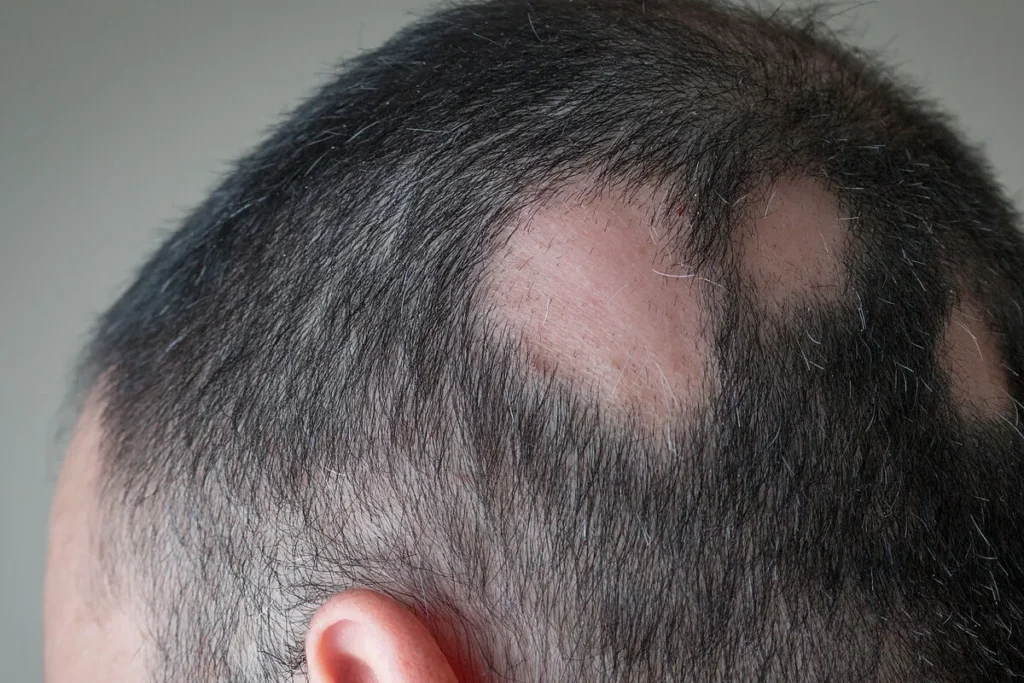
It’s important to know about alopecia areata before thinking about hair transplantation. This condition is an autoimmune disorder that affects 0.2% to 2% of people worldwide. It makes the immune system attack hair follicles, causing hair loss in patches or all over.
Wat is Alopecia Areata?
Alopecia areata is hard to treat because it’s unpredictable. It happens when genes and the environment trigger an immune attack on hair follicles. This can lead to hair loss that’s small or complete.
De belangrijkste aspecten van alopecia areata zijn onder andere:
Autoimmune origin
Unpredictable progression
Variable extent of hair loss
Potential for spontaneous regrowth
How Hair Transplants Typically Work
Hair transplantation moves healthy hair follicles from one area to another. It works because the donor hair doesn’t fall out. But for those with alopecia areata, success depends on the condition’s stability and the donor hair’s quality.
The process is:
Extracting healthy hair follicles from the donor area
Preparing the recipient sites
Transplanting the follicles into the recipient sites
The Challenge of Autoimmune Hair Loss
Alopecia areata’s autoimmune nature makes hair transplantation tricky. The immune system might attack the transplanted hair, causing more loss. Knowing these risks helps set realistic expectations and make informed choices about hair transplantation.
Considerations for individuals with alopecia areata include:
The risk of transplanted hair being affected by the autoimmune response
The need for careful patient selection and evaluation
The possibility of needing more treatments to support the transplant
Alopecia Areata Hair Transplant: Success Rates and Considerations

Thinking about a hair transplant for alopecia areata? It’s important to know the success rates and challenges. Alopecia areata is an autoimmune disease that affects many people. It can change their life a lot, making a hair transplant both a hope and a worry.
Studies show that hair transplant success for alopecia areata can be 30-80%. This depends on how stable the disease is and other personal factors. For more details, check out Utah Hair MD’s blog.
Comparing Success Rates: Alopecia Areata vs. Androgenic Alopecia
It’s key to compare hair transplant success rates for alopecia areata and androgenic alopecia. Androgenic alopecia, being more predictable, usually has better success rates. This is because it’s not an autoimmune disease like alopecia areata.
Patient Selection Criteria
Choosing the right patient is key for a successful hair transplant in alopecia areata. Doctors look for stable disease, little activity, and a good donor area. The stability of the disease is very important. Active alopecia areata can cause more hair loss after the transplant.
The Donor Area Problem
Finding a reliable donor area is a big challenge in hair transplants for alopecia areata. The autoimmune nature of the disease can affect even transplanted hair. So, careful planning and donor area management are vital.
When Hair Transplants May Be Appropriate
Hair transplants might be a good option for some alopecia areata patients. This is when the disease is stable and there’s a good donor area. It’s also important for patients to have realistic hopes about the results.
Deciding on a hair transplant for alopecia areata should be after talking to a qualified doctor. It’s about understanding your unique situation and needs.
Conclusion: Is a Hair Transplant Right for Your Alopecia Areata?
Deciding if a hair transplant is right for you with alopecia areata needs careful thought. It’s important to weigh the good and bad sides of hair transplantation for alopecia areata. Hair transplants might work for some, but alopecia areata’s unpredictable nature and flare-ups can make success hard to achieve.
If you’re looking into hair replacement for alopecia, other treatments might be better. Options like topical medications, steroid injections, and scalp micropigmentation could be more fitting. Talking to a specialist is key to finding the right treatment. For more on hair transplants for alopecia areata, check out Wimpole Clinic’s expert insights. Whether a hair transplant works for alopecia depends on your situation. A professional evaluation is needed to find the best treatment plan.
Starting your hair restoration journey means understanding your options. By improving your routine and trying new treatments, you can find your inner glow. Whether a hair transplant is for you or not, there are many ways to get the look and confidence you want.
FAQ
Can someone with alopecia areata get a hair transplant?
Hair transplantation might work for some with alopecia areata. But, it’s important to check if it’s right for each person. This depends on how much hair is lost and if the condition is stable.
How does alopecia areata affect hair transplant success rates?
Alopecia areata can make hair transplants less likely to succeed. This is because it’s an autoimmune disease that might keep causing hair loss. Success rates are different from those with androgenic alopecia, and choosing the right patients is key.
What are the challenges associated with hair transplantation for alopecia areata?
The main issues are the unpredictable nature of alopecia areata and the risk of ongoing hair loss. Also, finding healthy donor hair can be hard. These problems can make the transplant process harder and affect the long-term results.
Are hair implants a viable solution for alopecia areata?
Hair implants might be an option for alopecia areata, but it’s important to consider the pros and cons. It’s also wise to look at other treatment options with the help of a specialist.
Does hair transplant work for bald spots caused by alopecia areata?
Hair transplantation can work for some bald spots from alopecia areata. But, success depends on several factors. These include the size of the bald spot, the quality of the donor hair, and how stable the condition is.
Can androgenic alopecia hair transplant techniques be applied to alopecia areata?
Some techniques for androgenic alopecia can be used for alopecia areata. But, the approach needs to be customized for each person. This is because autoimmune hair loss presents unique challenges.
How important is patient selection for alopecia areata hair transplants?
Choosing the right patients is very important for hair transplants in alopecia areata. It’s essential to evaluate how stable the condition is, the extent of hair loss, and if there’s enough healthy donor hair. This helps decide if the procedure is suitable.
What alternative treatments are available for alopecia areata beside hair transplantation?
Other treatments for alopecia areata include medications to help hair grow, corticosteroid injections, and immunotherapy. It’s important to talk to a specialist to find the best treatment plan.
Is it possible to achieve a “luxury transformation” with hair transplants for alopecia areata?
Getting a good result from hair transplantation for alopecia areata needs careful planning and precise technique. While it’s possible to see a big change, results can vary from person to person.
Referenties
https://drvsrathore.com/hair-transplant-for-alopecia-areata-complete-guide