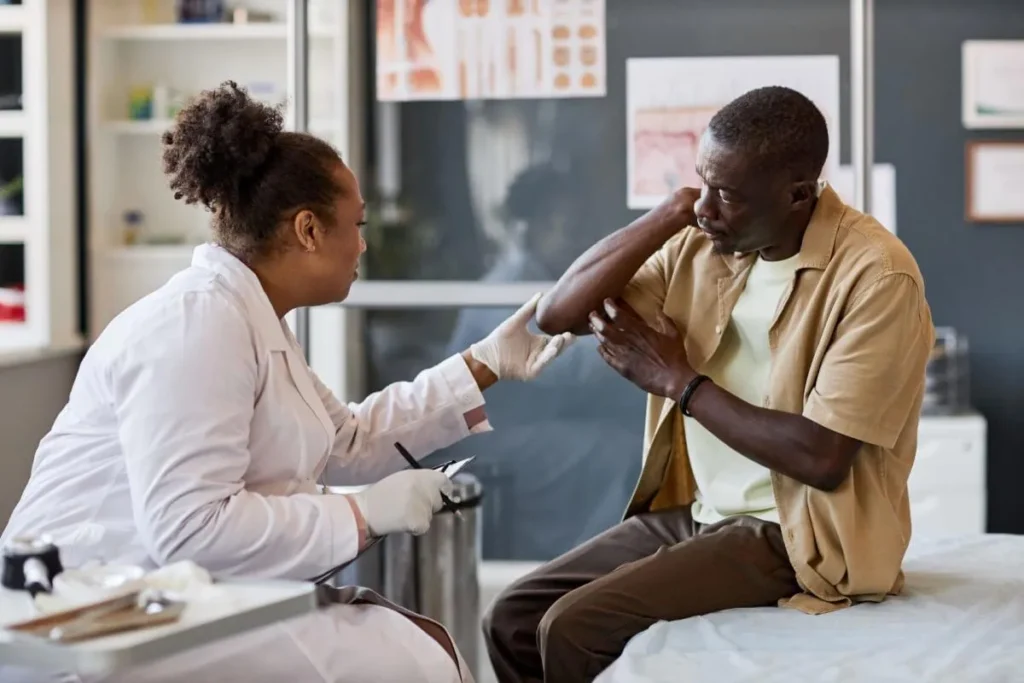
It’s important to know how rashes look on darker skin to get the right treatment. Many doctors don’t know enough about skin conditions on darker skin. This can lead to wrong diagnoses and delayed treatment.
Manage a black skin rash with this best amazing treatment guide. Discover powerful ways to achieve an incredible and clear skin tone.
Rashes on darker skin can look purple, gray, or brown, not just red. This makes it harder to figure out what’s wrong. This guide will help you understand, diagnose, and treat rashes on darker skin. It stresses the need for accurate diagnosis.
We want to give you the knowledge to deal with skin care for darker skin tones. This guide offers proven ways to treat rashes on darker skin. It also talks about the problems of diagnosing rashes on darker skin.
Belangrijkste opmerkingen
Understanding the unique presentation of rashes on darker skin tones is key.
Differentiating rashes on darker skin can be tough because of how they look.
Getting the right diagnosis is essential for good treatment.
Knowing more helps you handle skin care issues better.
Using proven treatment methods is vital for rashes on darker skin.
Understanding Rashes on Dark Skin

Rashes on black skin look different from those on lighter skin. This is important for treatment to work well.
How Rashes Present Differently on Black Skin
Rashes on darker skin can show up in unique ways. For example, eczema and psoriasis might cause more pigmentation changes. This makes it harder to diagnose.
These conditions can change the skin’s texture and color. But, the changes might not be as obvious as redness on lighter skin.
It’s key to understand these differences for proper care. For instance, a rash from poison ivy on black skin might not look like the usual red or blistering. This makes it tough to spot without a close look.
The Importance of Proper Diagnosis
Getting a proper diagnosis from a dermatologist is critical for dark skin rashes. A doctor can correctly identify and treat the rash. This avoids misdiagnosis and complications.
A dermatologist can give care that fits your skin tone. This personalized approach is essential for effective treatment and avoiding long-term skin harm.
Common Types of Black Skin Rash Conditions
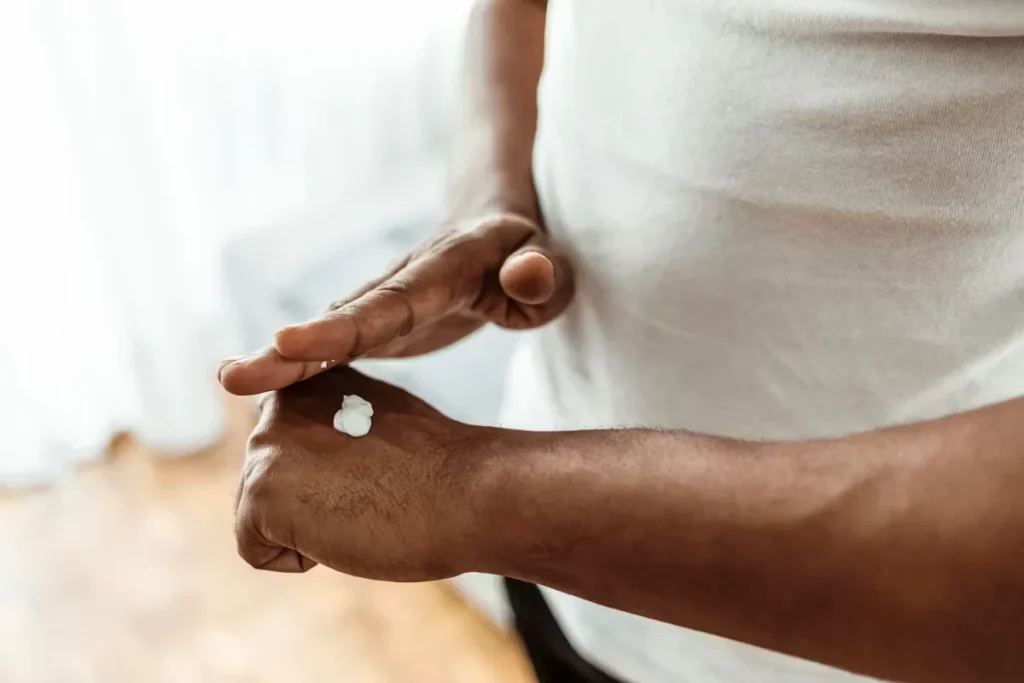
It’s important to know about the different rashes that can affect black skin. This knowledge helps in getting the right treatment. Rashes on black skin can look different because of the skin’s unique color.
Atopic Dermatitis and Eczema
Eczema, or atopic dermatitis, is a long-term skin condition. It causes inflammation and irritation. On black skin, eczema might show up as darker brown or ashen gray coloring. This can make it harder to spot.
Symptoms include intense itching, redness, and dry, scaly patches. It’s key to notice these signs for the right treatment.
Psoriasis on Dark Skin
Psoriasis is an autoimmune disease that makes skin cells grow too fast. On darker skin, it can look like red or violet patches with silver or gray scales. It’s vital to spot these signs to get the right care.
Fungal Infections: Ringworm and Tinea
Fungal infections like ringworm and tinea are common on black skin. They cause itchy, scaly circular patches. Prompt antifungal treatment is needed to stop them from spreading and coming back.
Viral Rashes: Shingles and Hives
Viral infections can lead to rashes like shingles and hives. Shingles are painful with blisters, while hives are itchy welts. Knowing the cause is key for effective treatment.
By understanding the different rashes and their signs on black skin, people can get the right help. This leads to better skin health and overall well-being.
Effective Treatment Methods for Black Skin Rash
Dealing with black skin rashes needs a mix of medical help and self-care. Knowing what caused the rash is key to finding the right treatment.
Medische behandelingen en wanneer naar de dermatoloog gaan
For serious or lasting rashes, you might need medical help. Creams and pills can ease symptoms. Seeing a dermatologist is important for a correct diagnosis and treatment plan.
A dermatologist can tell you the best treatments. This includes:
Corticosteroid creams to reduce inflammation
Antihistamines to relieve itching
Antibiotics if the rash is caused by a bacterial infection
Home Remedies and Self-Care Strategies
Along with medical treatments, home remedies and self-care can help. These include:
Keeping the affected area clean and dry
Avoiding irritants and allergens
Using gentle, fragrance-free skin care products
Applying cool compresses to reduce itching and inflammation
Moisturizing the skin is also key to avoid dryness and aid healing.
Preventing Post-Inflammatory Hyperpigmentation
One big worry with skin rashes on darker skin is post-inflammatory hyperpigmentation (PIH). To stop PIH, you should:
Avoid scratching or picking at the rash
Use sunscreen with at least SPF 30 daily
Apply topical treatments as directed by a dermatologist
By doing these things, you can lower the chance of PIH and get a more even skin tone.
Conclusie
Treating black skin rashes needs a full plan. This includes knowing about darker skin, getting the right diagnosis, and using the right treatments. By using the tips from this article, people can take better care of their skin. This helps avoid problems linked to rashes on dark skin.
Good skin care is key for healthy black skin. Use soft, non-drying cleansers and moisturizers made for black skin. Stay away from harsh chemicals and wear clothes that breathe. These steps help keep your skin healthy and glowing.
For the best advice on treating black skin rashes, talk to a dermatologist who knows about different skin types. With the right care, you can make your skin look its best. Enjoy healthy, beautiful skin for a long time.
FAQ
What are the common causes of rashes on black skin?
Rashes on black skin can come from many sources. These include atopic dermatitis, psoriasis, and fungal infections like ringworm. Viral rashes such as shingles and hives can also cause them. Knowing the cause is key to treating it right.
How do rashes present differently on black skin compared to lighter skin tones?
Rashes on black skin can look different because of skin color changes. They might not show the usual redness seen in lighter skin. Instead, they could look darker or lighter, or feel different to the touch.
Why is proper diagnosis important for treating black skin rashes?
Getting the right diagnosis is vital. It helps find the real cause of the rash. This ensures the treatment works. Without it, the rash might get worse, leading to more problems like dark spots.
What are some effective home remedies for relieving black skin rashes?
Home remedies can help. Try cool compresses, gentle skincare, and good hygiene. Moisturizing and avoiding things that irritate the skin can also help manage symptoms.
How can post-inflammatory hyperpigmentation (PIH) be prevented or treated?
To prevent PIH, treat the rash quickly and avoid more irritation. For PIH, use creams, peels, or laser therapy. These can lessen dark spots.
When should I see a dermatologist for a black skin rash?
See a dermatologist if the rash doesn’t get better, gets worse, or has other symptoms. They can diagnose and treat it properly.
Can poison ivy cause a rash on black skin, and how does it appear?
Yes, poison ivy can cause rashes on black skin. It might look darker or more inflamed than on lighter skin. Treat it by washing the area and using creams to reduce swelling.
Are there specific skincare routines that can help manage black skin rashes?
Yes, gentle, fragrance-free products and a consistent routine can help. Keeping the skin moisturized and avoiding harsh products can prevent irritation and flare-ups.
Referenties
Managing atopic dermatitis in patients with skin of color. Journal of Allergy and Clinical Immunology: In Practice, . https://doi.org/10.1016/j.jaip.2023.03.041