When you notice balding progression beginning to affect your appearance, it can feel unsettling. This article explains how hair loss develops over time, what factors influence its speed, and which interventions can help you maintain a fuller look.
According to recent dermatology studies, up to 70% of men will experience some degree of balding by age 35, while many women notice thinning hair in their late 20s. Recognizing early signs and understanding the underlying mechanisms are essential steps in managing hair health.
We’ll cover the biology of hair follicles, the typical stages of hair loss, lifestyle and genetic contributors, and the range of medical and cosmetic options available at Gold City Medical Center.
The Biology Behind Hair Loss and Balding Progression
Hair follicles operate in cycles of growth (anagen), transition (catagen), and rest (telogen). Disruption of this cycle, often driven by hormonal changes, leads to the gradual thinning known as balding progression. The hormone dihydrotestosterone (DHT) binds to androgen receptors in susceptible follicles, shortening the anagen phase and accelerating entry into telogen, a process called androgenetic alopecia.
Genetic predisposition plays a central role: individuals with a family history of male or female pattern baldness are more likely to experience rapid follicular miniaturization. However, other factors such as inflammation, scalp microcirculation, and nutritional deficiencies can also impact hair health.
Understanding the interplay of these elements helps clinicians tailor treatment plans. For example, patients with elevated DHT levels may benefit from finasteride, while those with inflammatory scalp conditions may require topical steroids or anti‑inflammatory agents.
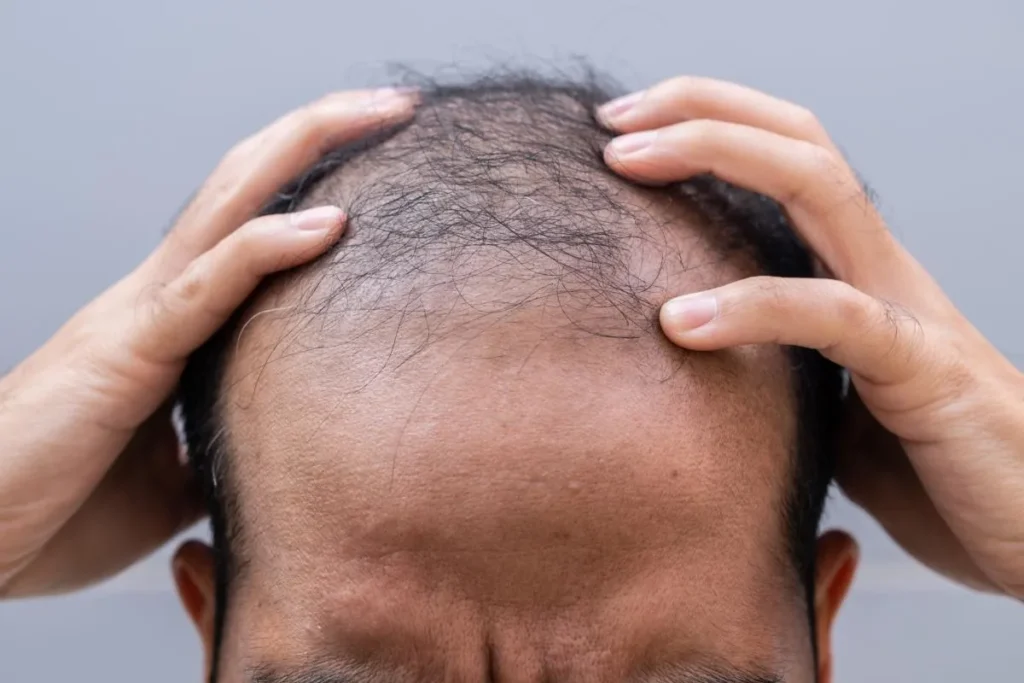
Stages of Balding: From Early Thinning to Advanced Hair Loss
The progression of balding typically follows recognizable patterns, often mapped by the Norwood Scale for men and the Ludwig Scale for women. Early-stage thinning may appear as a subtle reduction in density along the frontal hairline, while later stages involve distinct bald spots and extensive scalp exposure.
Below is a concise overview of the most common stages:
- Stage 1 – Early Thinning: Minimal recession, often limited to the temples.
- Stage 2 – Moderate Recession: Noticeable hairline retreat, beginning of the “M” shape.
- Stage 3 – Advanced Recession: Deepening of the “M” shape, possible emergence of a bald spot on the crown.
- Stage 4 – Extensive Baldness: Significant loss on the top of the head, with only the sides and back remaining.
- Stage 5 – Complete Baldness: Minimal hair remains, usually limited to the hairline and sideburns.
Women experience a slightly different pattern, often characterized by diffuse thinning across the crown while preserving the frontal hairline. Recognizing these stages enables a more precise assessment of treatment urgency and suitability.
Factors Influencing the Rate of Balding Progression
While genetics set the baseline, several modifiable factors can accelerate or decelerate balding progression. Understanding these influences empowers patients to adopt proactive measures.
| Factor | Impact on Hair Loss | Management Strategies |
|---|---|---|
| Hormonal Imbalance (e.g., high DHT) | Speeds up follicle miniaturization | Medications like finasteride or topical anti‑androgens |
| Nutritional Deficiencies (iron, zinc, biotin) | Weakens hair shaft strength | Balanced diet, supplements under medical guidance |
| Stress and Telogen Effluvium | Triggers premature entry into telogen phase | Stress‑reduction techniques, adequate sleep |
| Scalp Health (seborrheic dermatitis, fungal infections) | Causes inflammation, disrupts follicle function | Regular cleansing, medicated shampoos, dermatologist care |
| Smoking and Poor Circulation | Reduces blood flow to hair follicles | Smoking cessation, cardiovascular‑friendly lifestyle |
Patients often ask, “why is my hair falling out?” The answer usually lies in a combination of these elements. A thorough evaluation—including blood tests, hormone panels, and scalp analysis—helps pinpoint the primary drivers of an individual’s balding progression.
Treatment Options to Slow or Reverse Balding
Modern medicine offers a spectrum of interventions that can halt or even reverse certain phases of balding progression. The choice of therapy depends on the stage of hair loss, underlying cause, and patient preferences.
Key treatment categories include:
- Pharmacological Therapies: Finasteride, minoxidil, and dutasteride are widely used to reduce DHT activity and stimulate follicular growth.
- Low‑Level Laser Therapy (LLLT): Devices such as laser combs and caps improve scalp circulation and promote cellular activity.
- Platelet‑Rich Plasma (PRP): Autologous platelet injections deliver growth factors that can rejuvenate dormant follicles.
- Hair Transplant Surgery: Follicular unit extraction (FUE) and strip harvesting relocate healthy follicles to balding zones.
- Cosmetic Solutions: Microneedling, scalp micropigmentation, and specialized hair fibers provide immediate visual improvement.
For patients with alopecia areata or other autoimmune forms of hair loss, immune‑modulating therapies may be indicated. Combining treatments—such as finasteride with PRP—often yields synergistic benefits, especially in early‑stage thinning.
Gold City Medical Center’s multidisciplinary team conducts individualized assessments to recommend the most appropriate blend of therapies, ensuring optimal outcomes while minimizing side effects.
Monitoring and Managing Expectations During Treatment
Successful management of balding progression requires realistic expectations and ongoing monitoring. Hair growth cycles mean that visible results typically appear after three to six months of consistent therapy.
Patients should schedule regular follow‑up appointments to assess progress, adjust dosages, and address any side effects. Objective measures—such as standardized photographs, trichograms, and scalp dermoscopy—provide clear evidence of improvement or stability.
It is also important to address the emotional impact of hair loss. Counseling, support groups, and personalized styling advice can help individuals maintain confidence while treatments take effect.
Why Choose Gold City Medical Center
Gold City Medical Center combines cutting‑edge medical expertise with a personalized, integrative approach to hair restoration. Our team of dermatologists, surgeons, and aesthetic specialists collaborates to design treatment plans that address both the physiological and emotional aspects of balding progression. With state‑of‑the‑art facilities and a commitment to patient education, we ensure each individual receives safe, effective, and sustainable solutions for hair loss.
Ready to take control of your hair health? Contact Gold City Medical Center today to schedule a comprehensive consultation and discover the most effective strategies for your unique situation.
FAQ
What causes balding progression?
Balding progression is mainly driven by genetics, hormonal changes (especially DHT), inflammation, and lifestyle factors.
How can I assess my hair loss using the Norwood scale?
The Norwood scale grades male pattern baldness from Stage 1 (minimal recession) to Stage 7 (extensive hair loss).
What factors can accelerate balding?
Genetics, high DHT levels, poor nutrition, stress, scalp disorders, and smoking can speed up balding.
What treatment options are available to slow or reverse balding?
Options include finasteride, minoxidil, low‑level laser therapy, PRP, hair transplant surgery, and cosmetic solutions.
How long does it take to see results from hair loss treatments?
Visible improvements typically appear after three to six months of consistent therapy.
Can lifestyle changes affect balding progression?
Yes, improving diet, reducing stress, quitting smoking, and maintaining scalp health can positively influence hair loss.





