
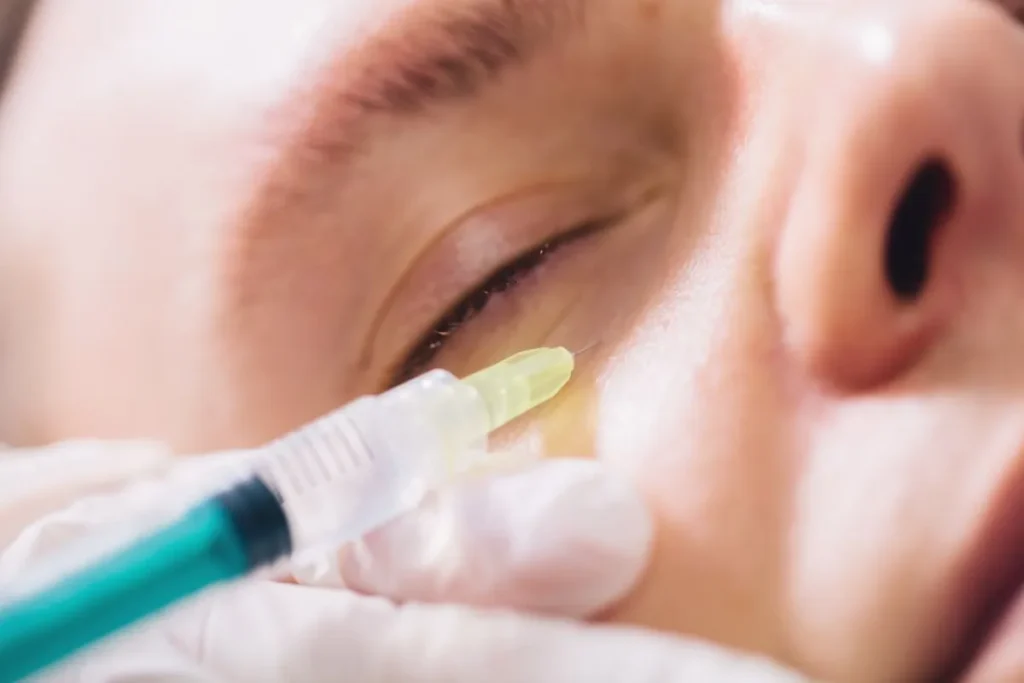
Under-eye fillers are popular for a radiant glow and to hide dark circles. But, if something goes wrong, patients might face serious issues. These include lumps, swelling, and even rare but dangerous vascular occlusion.
Understand the complications with tear trough fillers before your visit. Get the honest truth about risks and how to ensure a safe procedure.
Hyaluronic acid fillers under the eyes can change your look for the better. Yet, it’s important to know the risks. Swelling and lumps are common problems, showing the need for a skilled doctor.
Choosing the right doctor can help avoid these risks. A focus on the patient is key to a safe and successful treatment.
Key Takeaways
Under-eye fillers can cause serious complications if not done correctly.
Swelling and lumps are common delayed complications.
A qualified practitioner is key in avoiding risks.
Knowing the anatomy is vital for safe treatment.
Putting the patient first leads to better results.
Understanding Tear Trough Fillers and Their Purpose

Dermal fillers, like those for the tear trough area, are a non-surgical way to fix under-eye issues. They help restore volume, smooth out the under-eye area, and make the face look younger.
What Are Tear Trough Fillers?
Tear trough fillers are a special kind of dermal filler for the area under the eyes. They’re made of hyaluronic acid, a natural body substance that keeps moisture and adds volume. By injecting this filler, the area under the eyes gets filled, making it look more rested and youthful.
Expected Results and Duration
The effects of tear trough fillers are seen right away, giving a brighter and younger look without surgery. How long they last varies based on the filler type, skin, and lifestyle. Generally, they last 6 to 12 months. For more details, check out Healthline’s article on undereye tear trough.
Ideal Candidates for the Procedure
People with under-eye hollows, dark circles, or a tired look are good candidates. They should be healthy, have realistic hopes, and know the risks and benefits. It’s also key to talk to a skilled practitioner to see if these fillers are right for you.
Some main advantages of tear trough fillers include:
Minimally invasive procedure
Quick recovery time
Reversible with hyaluronidase if needed
Natural-looking results
Common Complications with Tear Trough Fillers

Tear trough fillers can make the under-eye area look better. But, they also have risks that patients should know about. It’s important to understand these risks before deciding to get the treatment.
Temporary Side Effects vs. Serious Complications
Using tear trough fillers can cause both short-term and serious problems. Short-term issues like bruising, swelling, and redness usually go away by themselves. But, serious issues like vascular occlusion, infection, and allergic reactions need quick medical help.
Vascular occlusion is a serious risk that can cause tissue damage if not treated fast. It’s key for patients to know the signs of vascular occlusion, like severe pain, skin color changes, or vision problems.
Swelling and Lumps: Affecting 42.3% and 25% of Cases
Swelling and lumps are common problems after tear trough fillers. About 42.3% of people experience swelling, and 25% get lumps. These issues can be upsetting and might need extra treatment to fix.
The Tyndall Effect and Visible Asymmetry
The Tyndall effect makes the filler look blue or gray under the skin. This is because light scatters off the particles in the filler. Visible asymmetry, where the filler looks uneven, is another problem. This can make the area look unbalanced.
Fixing the Tyndall effect or asymmetry might mean dissolving the filler or adding more to balance it out. It’s important to pick a qualified provider to lower these risks.
Vascular Occlusion and Tissue Damage
Vascular occlusion happens when the filler blocks a blood vessel. This can cause tissue damage or even death of the tissue if not treated quickly. Choosing a skilled and experienced doctor is key to avoid this risk.
Recognizing and Addressing Tear Trough Fillers Gone Wrong
Botched tear trough filler treatments can cause swelling and visible lumps. It’s key to know the risks and how to spot and fix problems.
Normal Recovery vs. Warning Signs
After getting tear trough fillers, some swelling and bruising is normal. But, it’s important to tell the difference between usual recovery and signs of trouble. Normal symptoms usually go away in a few days. But, complications can last longer or get worse.
Warning signs to watch out for include:
Persistent swelling that doesn’t improve with time
Visible lumps or asymmetry under the eyes
Severe pain or tenderness in the treated area
Changes in vision or difficulty moving the eyes
Timeline for Identifying Complications
Complications from tear trough fillers can show up at different times. Some, like swelling or bruising, happen right away. Others, like the Tyndall effect or vascular occlusion, might appear days or weeks later.
Corrective Measures for Botched Treatments
If problems arise, getting help from a skilled practitioner is important. For hyaluronic acid-based fillers, hyaluronidase can dissolve the filler and fix the issue.
Other corrective measures may include:
Massage to help distribute the filler more evenly
Additional fillers to correct asymmetry
Topical treatments to reduce swelling or inflammation
In severe cases, more medical help might be needed. Working with a skilled practitioner is key to getting the right treatment.
Understanding risks and knowing how to handle complications helps make informed choices about cosmetic treatments. This way, you can get the best results.
Conclusion: Preventing Complications and Finding Qualified Providers
To avoid risks with tear trough fillers, pick a qualified healthcare expert. They should know facial anatomy well and have experience with these fillers. Look up their credentials and read reviews to ensure a safe treatment. For more info on side effects and how to handle them, check out Belle Clinic’s guide on tear trough
Choosing a skilled injector helps you look radiant and youthful. Knowing about possible complications, like under eye filler issues, is important. This way, you can have a successful treatment and a beautiful look.
Start your journey to a glowing complexion by picking a qualified provider. With the right help, you can enjoy tear trough fillers’ benefits safely.
FAQ
What are tear trough fillers and how do they work?
Tear trough fillers are a type of dermal filler. They help restore lost volume under the eyes. This reduces dark circles, hollows, and fine lines. They contain hyaluronic acid, which gives a natural look and can be reversed if needed.
What are the benefits of using hyaluronic acid-based tear trough fillers?
These fillers look natural, are reversible, and have a low risk of complications. This is when a qualified provider administers them.
What are the common complications associated with tear trough fillers?
Common issues include swelling and bruising. More serious problems are vascular occlusion, tissue damage, and the Tyndall effect. This can cause visible asymmetry and discoloration.
How can I recognize if my tear trough filler treatment has gone wrong?
Look out for excessive swelling, lumps, or asymmetry. Also, watch for signs of vascular occlusion like severe pain, skin discoloration, or vision changes. If you see these, get medical help right away.
What are the corrective measures for botched tear trough filler treatments?
To fix issues, hyaluronidase might be used to dissolve the filler. Additional treatments can address asymmetry or scarring. Always talk to a qualified provider for the best plan.
Can tear trough filler lumps be treated?
Yes, lumps from tear trough fillers can be treated. This might involve hyaluronidase or other corrective steps. The treatment depends on the cause and severity of the lumps.
How can I minimize the risks associated with tear trough fillers?
Choose a skilled and experienced provider. Follow all pre- and post-treatment instructions carefully. Also, know the possible complications and warning signs.
Are under eye fillers safe?
Under eye fillers, like tear trough fillers, can be safe. But, they come with risks and complications. Always get them from a qualified provider.
What is the timeline for identifying complications after tear trough filler treatment?
Complications can happen right away or later. Always watch for unusual symptoms. Seek medical help if you notice anything concerning.
References
National Center for Biotechnology Information. Evidence-Based Medical Insight. Retrieved from https://pmc.ncbi.nlm.nih.gov/articles/PMC11311355/





