
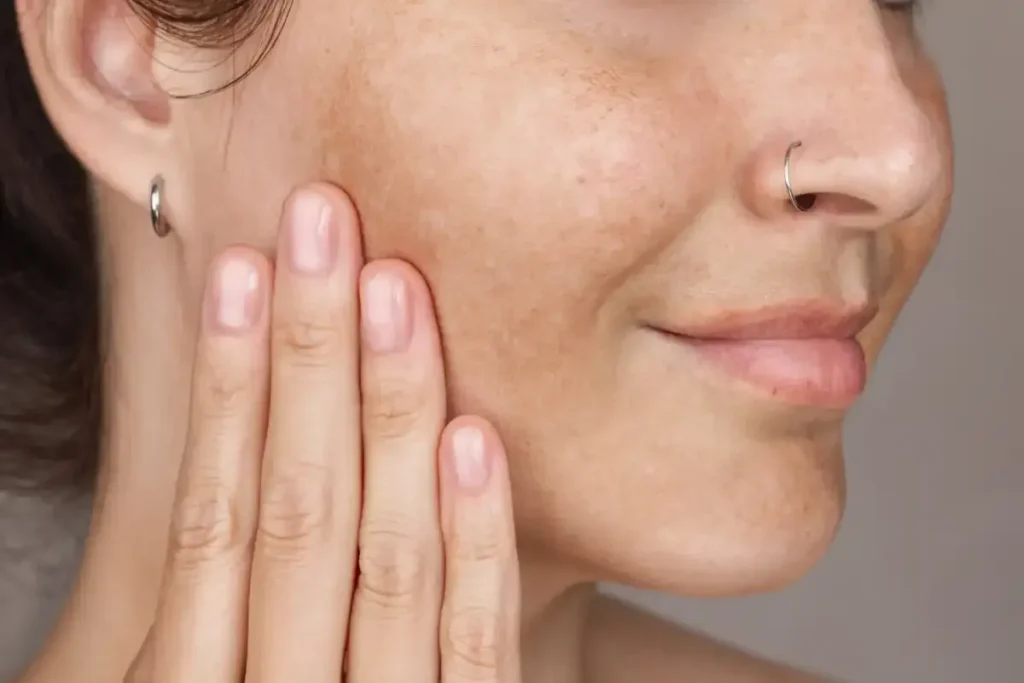
Unlock your radiant glow by understanding the causes of unwanted skin discoloration. Dark spots, a common issue affecting 48% of U.S. consumers, can significantly impact one’s confidence. These spots result from an overproduction of melanin, often triggered by excessive sun exposure, hormonal changes, or skin injuries.
At Liv Hospital, our experienced dermatology team combines cutting-edge treatments with a patient-centered approach to help you achieve clear, even-toned skin. By understanding the root causes of these spots, you can take the first step towards a luxury transformation of your skin.
Treat a sudden dark spot on face with amazing best fixes. Use powerful methods for an incredible and radiant skin transformation.
Key Takeaways
Dark spots are caused by an overproduction of melanin.
Common triggers include sun exposure, hormonal changes, and skin injuries.
Understanding the causes is key for effective removal.
Liv Hospital offers cutting-edge treatments for clear skin.
A patient-centered approach ensures personalized care.
Understanding Dark Spots on the Face
It’s important to know why dark spots appear and how to treat them. These spots, or hyperpigmentation, can be caused by many things. One reason is when the skin makes too much melanin.
What Are Dark Spots and Melanin Production
Melanin is what makes our skin color. It’s made by cells in the skin. If melanin is made too much or unevenly, dark spots can form.
Overproduction of melanin can happen for many reasons. This includes too much sun, hormonal changes, and skin injuries.
Melanin gives skin its unique tone. It’s affected by genetics, the environment, and health. Knowing how melanin works is key to fixing dark spots.
Common Types of Black Dots and Dark Spots
There are several kinds of dark spots. Sunspots come from too much sun. Melasma is linked to hormonal changes and shows up as big patches. PIH happens after skin gets inflamed or injured, like from acne or cuts.
Sunspots: Caused by UV exposure, often appearing on sun-exposed areas.
Melasma: Linked to hormonal fluctuations, typically on the face.
Postinflammatory Hyperpigmentation (PIH): Results from skin inflammation or injury.
These spots can show up not just on the face. They can also appear on the back and shoulders. Here, you might see black little spots on skin or dark specks.
What Causes Sudden Dark Spots on Face?
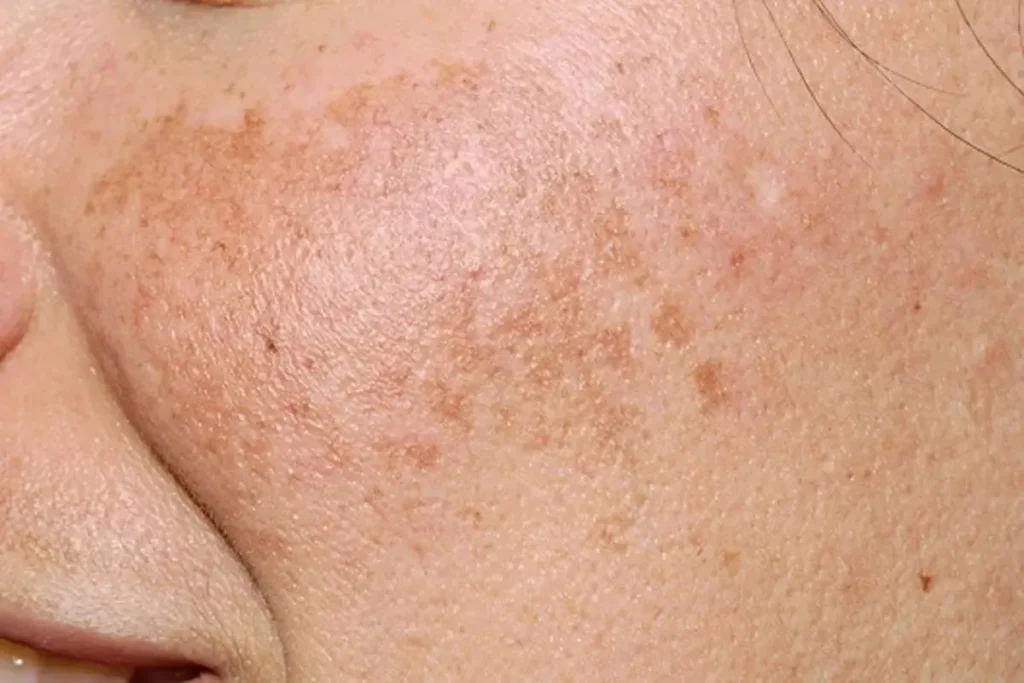
Dark spots on the face, also known as hyperpigmentation, can appear suddenly. There are several reasons why this happens. Knowing these causes is key to preventing and treating them.
Sun Exposure and UV Damage
Sun exposure and UV damage are major causes of dark spots. When your skin is in the sun, it makes more melanin to protect itself. This can cause dark spots, mainly in sun-exposed areas.
To avoid UV damage, use a broad-spectrum sunscreen with high SPF every day. Reapply it every two hours or right after swimming or sweating.
Hormonal Changes and Melasma
Hormonal fluctuations can also lead to dark spots. Melasma, or the “mask of pregnancy,” is a condition with dark patches on the face. It can happen during pregnancy, with birth control, or hormone therapy.
Postinflammatory Hyperpigmentation from Acne and Injuries
Postinflammatory hyperpigmentation (PIH) is another cause of dark spots. It happens after acne, injuries, or other skin issues. Inflammation leads to excess melanin, causing dark spots.
Treating the root cause and using gentle skincare can reduce PIH risk.
Other Contributing Factors
Other factors can also cause dark spots. These include genetic predisposition, certain medications, and pollution.
Keeping a healthy skincare routine, protecting your skin from the sun, and managing stress can help fight these factors.
Conclusion: Effective Treatments for Dark Spots
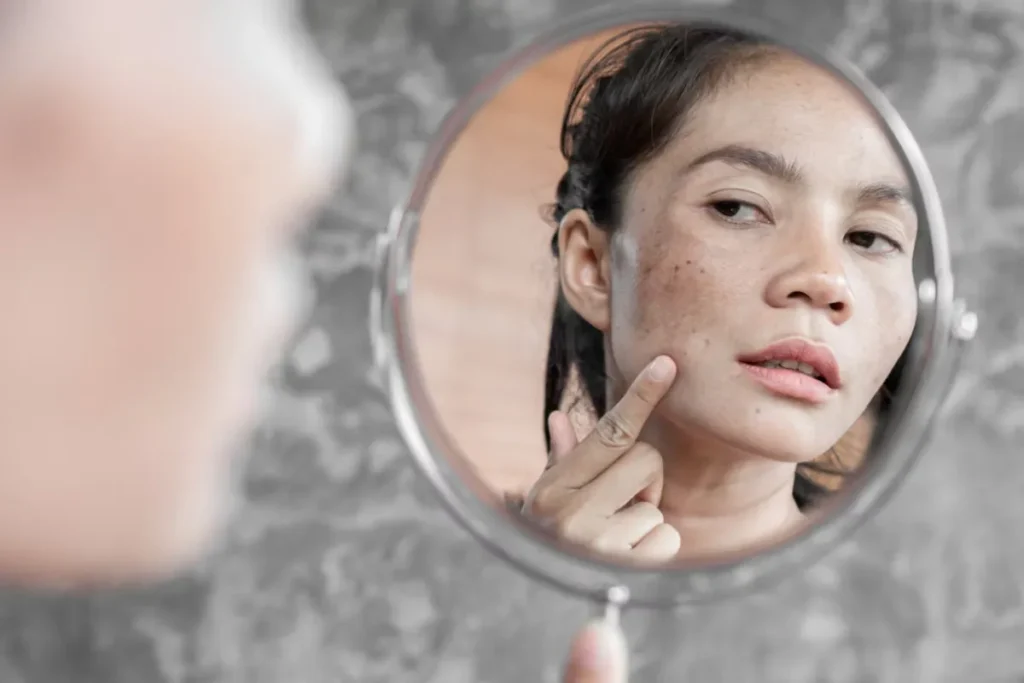
Dark spots on the face can be a big worry for many. Knowing what causes them and how to treat them is key to a bright glow. Topical creams with hydroquinone or retinoids are often used to lessen dark spots.
For spots that don’t go away, things like chemical peels and laser therapy work well. It’s important to prevent dark spots too. Using sunscreen with SPF ≥30 daily helps stop spots from getting darker and protects against UV damage.
If dark spots come from acne or injuries, treating the cause is vital. Chemical exfoliants and retinoids can help. For more tips on removing dark spots, check out Medical News Today.
With the right treatment, you can see a big drop in dark spots. Enjoy a more even and bright complexion. Get radiant skin and show off your inner glow.
FAQ
What are dark spots on the skin?
Dark spots are areas where the skin gets darker. They can happen from sun damage, hormonal changes, or skin inflammation. You might see them as black dots, dark specks, or patches on your face, back, and shoulders.
What causes black dots on the face?
Black dots on your face can come from sun damage, hormonal changes, or skin issues after acne. These can lead to dark spots.
How does sun exposure contribute to dark spots?
Sun exposure plays a big role in dark spots. UV rays make melanin, causing your skin to darken.
Can hormonal changes cause dark spots on the skin?
Yes, hormonal shifts can lead to dark spots, like melasma, or the “mask of pregnancy.” These changes make melanin, causing spots.
What is postinflammatory hyperpigmentation?
Postinflammatory hyperpigmentation happens when skin gets inflamed, like from acne. This leads to dark spots or hyperpigmentation.
How can I remove dark spots on my face?
To get rid of dark spots, use sunscreen, topical creams, and try treatments like chemical peels and laser therapy. These can help make your skin look even and bright.
What are the most effective treatments for dark spots?
Topical creams, chemical peels, and laser therapy are great for dark spots. They can make your skin look more even and radiant.
How can I prevent dark spots from forming?
Prevent dark spots by using sunscreen, sticking to a skincare routine, and avoiding too much sun.
Are dark spots on the back and shoulders the same as those on the face?
Dark spots on the back and shoulders can be caused by the same things as on the face, like sun exposure and hormonal changes. But, the skin on your back and shoulders might be more prone to certain issues, like keratosis pilaris.
Can I get rid of black spots on my skin?
Yes, you can reduce black spots with the right treatment. Understanding the causes and using effective treatments can help you get a brighter complexion.
References
National Center for Biotechnology Information. Evidence-Based Medical Insight. Retrieved from https://pmc.ncbi.nlm.nih.gov/articles/PMC9165630/





