

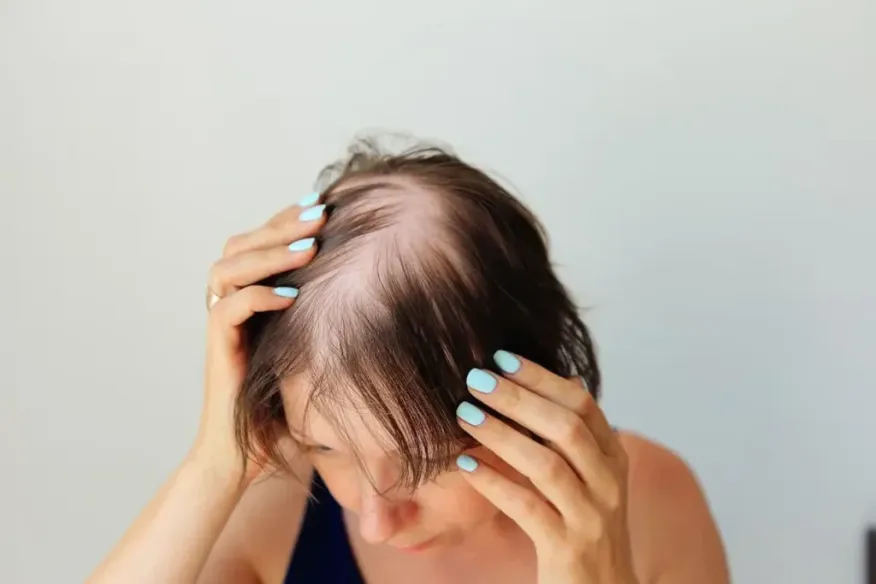
Millions of men worldwide face male pattern baldness. It’s not just about looks; it’s about feeling confident. If you’re losing hair and wondering if finasteride can help, you’re in good company.
Studies show finasteride works well. It helps grow hair back and stops more loss. At GoldCity Center, we know how much hair loss affects self-esteem. That’s why we offer proven treatments.
Finasteride helps 85% of men stop losing hair. And 65% see hair growth in 3-6 months. It’s a way to regain confidence and look better.
Key Takeaways
Finasteride promotes hair regrowth in bald spots.
Clinical studies show sustained effectiveness with consistent use.
Results are visible within 3-6 months of daily treatment.
Finasteride stops hair loss in 85% of men.
65% of men experience hair regrowth with finasteride.
Understanding Finasteride and Hair Loss
Finasteride fights hair loss by affecting dihydrotestosterone (DHT), a hormone that causes balding. To understand how Finasteride works, we need to know its role in hair loss and how it helps hair grow back.
What is Finasteride (Propecia)?
Finasteride, also known as Propecia, is a pill for male pattern baldness. It stops DHT production, a strong form of testosterone that shrinks hair follicles. By lowering DHT, Finasteride slows down hair loss and may help hair grow back.
For more info on Finasteride for hair loss, check out Advanced Hair. They offer detailed insights into its effectiveness.
How DHT Causes Hair Follicle Miniaturization
DHT binds to androgen receptors in hair follicles, causing them to shrink. This miniaturization makes hairs thinner and shorter, eventually stopping hair growth. Finasteride blocks testosterone from turning into DHT, reducing scalp DHT by up to 70%. This protects hair follicles from shrinking further.
Knowing how DHT causes hair loss helps us see how Finasteride works. It targets the main cause of balding, making it a scientifically-backed solution for hair loss.
The Science Behind Finasteride Regrowth

Finasteride helps grow hair by affecting dihydrotestosterone (DHT) levels. DHT is a strong form of testosterone that causes hair loss by shrinking hair follicles.
How Finasteride Blocks DHT Production
Finasteride stops the enzyme 5-alpha-reductase from turning testosterone into DHT. Lower DHT levels slow hair loss and help hair grow back. This is key to understanding how Finasteride can help hair regrow.
Reversing Follicle Miniaturization Process
With less DHT, Finasteride reverses hair follicle shrinkage. This leads to thicker, healthier hair over time. This reversal is a major reason Finasteride works well for hair growth.
Timeline: When to Expect Results
People usually see hair growth improvements in 3 to 6 months on Finasteride. Best results come after 12 months of use. Being patient and consistent is key to getting the best results.
Knowing how Finasteride works helps people decide if it’s right for them. It’s effective in blocking DHT and reversing hair follicle shrinkage. This makes Finasteride a good choice for treating male pattern baldness.
Clinical Evidence of Regrowth in Bald Areas
Finasteride has been studied a lot for hair growth. The results show it works well. It’s a good choice for men losing their hair.
Research Statistics: 16% Improvement in Hair Density
Finasteride 1 mg daily boosts hair density by 16%. This is a big deal for treating hair loss. More hair density means fuller hair and less balding.
Success Rates: 65-83% of Men Experience Benefits
About 65 to 83 percent of men see no more hair loss or even growth with Finasteride. This shows it can stop and even reverse balding. It’s a reliable option for hair loss.
Crown vs. Hairline: Where Finasteride Works Best
Finasteride works best in the crown area of the scalp. It can also help the hairline, but the crown shows more results. Knowing this helps set the right expectations.
Finasteride is a proven way to improve hair density and grow new hair. It’s a top choice for fighting baldness.
Conclusion: Weighing the Benefits and Considerations
Finasteride, known as Propecia and Proscar, is a proven treatment for male pattern baldness. It helps men regain confidence by growing their hair back. By stopping DHT production, Finasteride reverses hair follicle shrinkage, leading to more hair.
Studies show Finasteride can increase hair density by 16%. Also, 65-83% of men see improvements. It works well for hair loss at the crown or hairline, making hair grow back. Yes, Finasteride can regrow hair and stop more loss.
Thinking about Finasteride for hair growth? It’s important to look at the good and the bad. Finasteride is a solid choice for those wanting more hair. It boosts confidence and makes you feel more radiant.
FAQ
Does Finasteride really regrow hair in bald spots?
Yes, Finasteride has been clinically proven to regrow hair in bald spots. It works by stopping DHT production, which causes hair follicles to shrink.
How long does it take to see results with Finasteride?
Seeing results with Finasteride can take several months to a year or more. It works slowly to reverse hair follicle shrinkage and promote new hair growth.
Can Finasteride regrow hair in all areas of the scalp?
Finasteride works best in the crown area. It can also help in other areas, like the hairline, but results can vary.
Will I lose my regrown hair if I stop taking Finasteride?
Yes, stopping Finasteride can cause you to lose the hair you regrew. This is because the cause of hair loss is not fully addressed.
Is Finasteride effective for everyone experiencing hair loss?
Finasteride works for most men with male pattern baldness. About 65-83% see some benefits, but results can differ.
Can Finasteride be used in conjunction with other hair loss treatments?
Yes, Finasteride can be used with other hair loss treatments. This can make it more effective and help grow more hair.
Does Finasteride have any side effects that could impact its use?
Finasteride can have side effects, though they are rare and mild. These might include decreased libido or erectile dysfunction.
Can women use Finasteride for hair loss?
No, Finasteride is not approved for women, including those who are pregnant or breastfeeding. There are risks to the fetus.
How does Finasteride compare to other hair loss treatments in terms of effectiveness?
Finasteride is a top choice for male pattern baldness. It has a strong record of promoting hair growth and slowing loss, but results can vary.
References
National Center for Biotechnology Information. Evidence-Based Medical Insight. Retrieved from https://pubmed.ncbi.nlm.nih.gov/9777765/

