
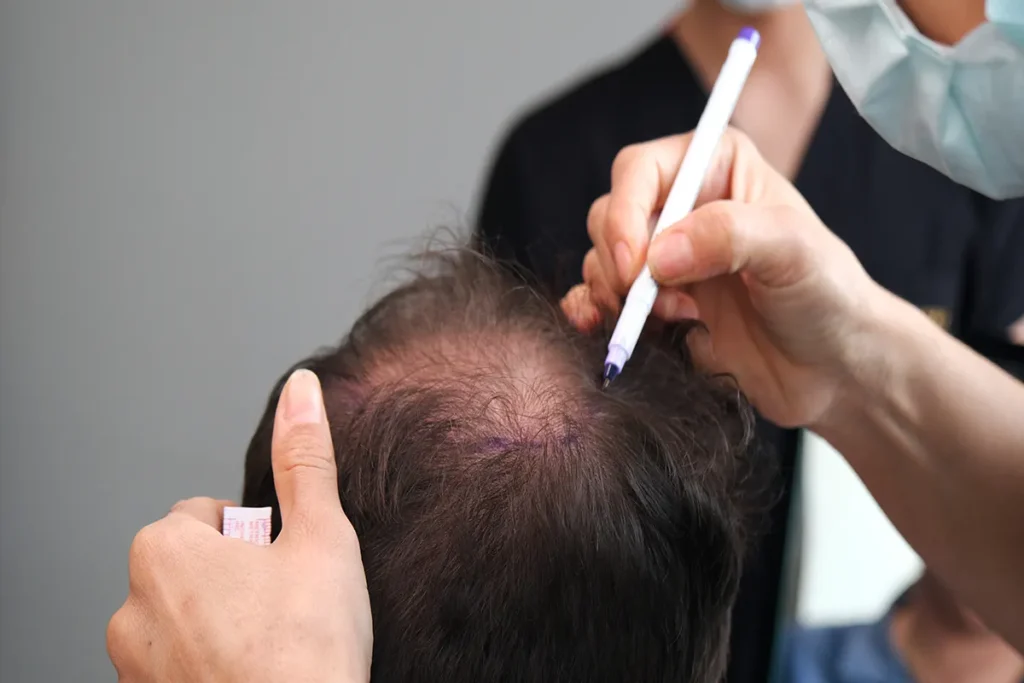
People thinking about follicular unit extraction (FUE) for hair restoration often wonder if hair regrows in the donor area after the transplant. FUE takes out individual hair follicles from the back and sides of the head. Then, it moves them to spots where hair loss is a problem.
Skilled surgeons use special methods to lessen the effect on the donor area. This makes sure the results look natural. At GoldCity Center, we focus on patient-centered care and top medical standards. We aim for your hair transplant to be a luxury transformation.
Key Takeaways
FUE involves the permanent removal of individual hair follicles from the donor area.
Experienced surgeons use techniques to minimize the impact on the donor area.
The donor area is a limited resource, and poor technique can cause permanent damage.
Understanding FUE and its impact on the donor area is key for managing expectations.
Achieving good results needs a skilled and strategic approach.
Understanding the FUE Hair Transplant Procedure
Follicular Unit Extraction (FUE) is a modern hair transplant method. It gives natural-looking results with little scarring. This method is popular because it works well and has a quick recovery time compared to older methods.
In the FUE procedure, a micro-punch tool is used to take out individual follicular units from the donor area. This area is usually at the back and sides of the scalp. The units are then moved to the balding spots, where they grow naturally. This offers a lasting fix for hair loss.
What Happens to Hair Follicles During Extraction
During FUE, the whole hair follicle is taken from the donor area, not just the hair you see. This means the follicles won’t grow back where they were taken from. The process is very careful, with each follicle removed one by one. This leaves tiny, almost invisible scars, even with short hair.
The FUE method is precise, which helps avoid damage to the area around the follicles. This leads to faster healing and less chance of problems. Experts say FUE is great because it has little scarring, quick recovery, less pain, and looks natural, when done right.
Differences Between FUE and Other Hair Transplant Methods
FUE is different from older methods like strip harvesting, or Follicular Unit Transplantation (FUT). FUT takes a strip of hair-bearing scalp, while FUE takes individual follicular units directly. This difference leads to different results in terms of scarring, recovery time, and how the hair looks after the procedure.
For more details on FUE and its results, check out Chandra Hair Clinic’s blog. It has lots of information on the hair transplant process and what you can expect.
Does Hair Regrow in Donor Area After FUE?
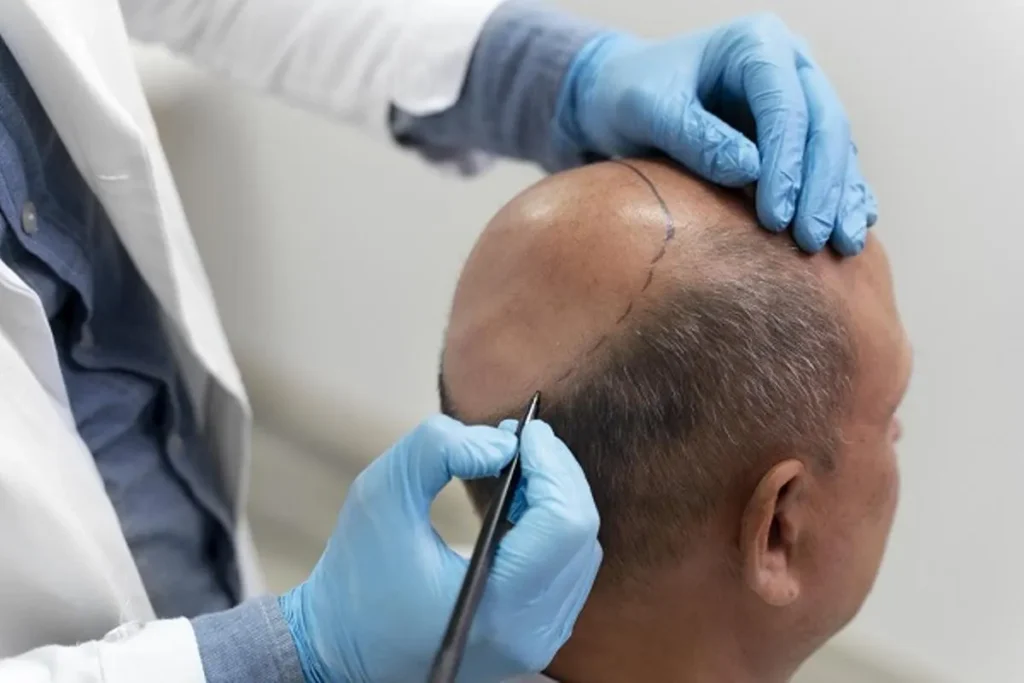
Many people wonder if hair grows back in the donor area after a FUE hair transplant.
Before getting a FUE hair transplant, it’s important to know about the donor area. This area, at the back and sides of the head, is chosen because it doesn’t usually go bald. The hair follicles taken from here are permanent.
The Permanent Nature of Follicle Extraction
Studies show that the hair follicles taken out in FUE don’t come back. These follicles are moved to areas where hair is thin or missing. Surgeons pick the healthiest follicles to make the transplant work best.
This careful selection helps keep the donor area looking good. The hair around the transplanted area keeps growing, keeping the area looking full.
Why Extracted Follicles Don’t Regenerate
FUE works because the follicles are taken out completely. They won’t grow back where they were taken from. This is why FUE is a good choice for hair restoration.
To show how well FUE works, let’s compare it to other methods:
Knowing how FUE works helps people choose the best hair restoration option for them.
Donor Area Healing and Long-Term Appearance
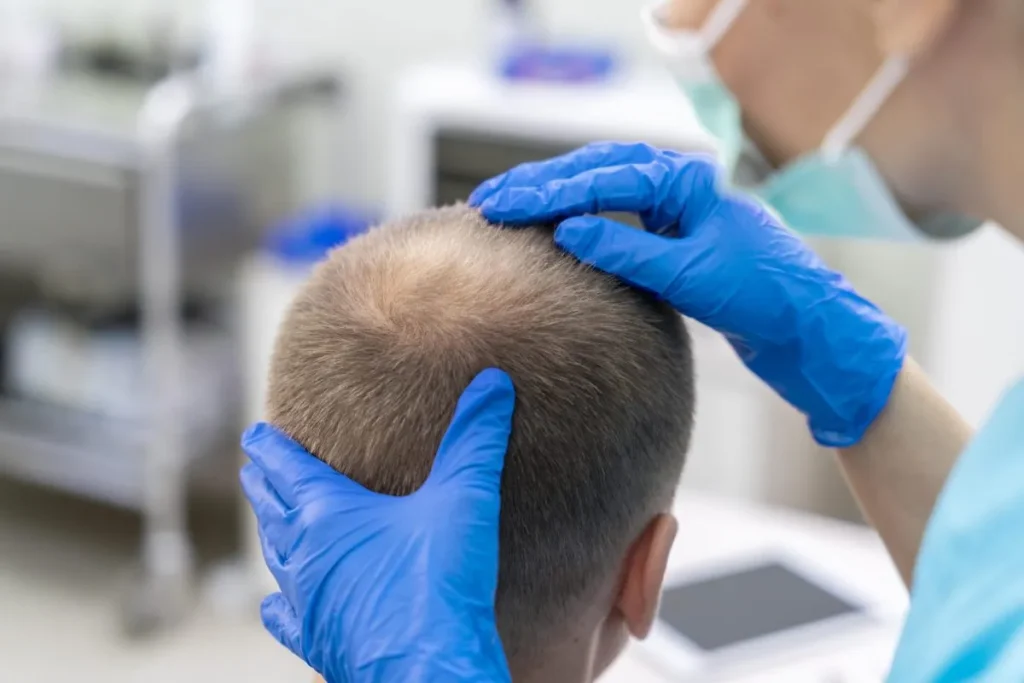
When thinking about FUE hair transplant, the healing of the donor area is key. Right after the procedure, the area will have many small wounds. These scab over in a few days and heal fast.
The “Cherry-Picking” Method and Distributed Extraction
Skilled surgeons use the “cherry-picking” method to make the donor area look natural. They take follicles from random spots to avoid thinning. This method, along with distributed extraction, keeps the area looking natural.
For more details on FUE and the donor area, check out Shapiro Medical Blog.
Healing Timeline for the Donor Area
Healing times vary, but most see big improvements in a few weeks. The donor area usually heals in 5 to 7 days. Scabs fall off by the second week. Here’s a healing timeline:
Visual Appearance After Complete Recovery
After healing, the donor area looks natural and unnoticeable. The “cherry-picking” method and careful techniques help. They ensure the area looks natural.
Knowing how the donor area heals and looks after FUE is important. With the right care and techniques, it heals fast. This lets people enjoy their hair transplant with confidence.
Conclusion
Understanding FUE hair transplant helps people make smart choices for their hair. FUE is precise, keeping the donor area healthy and looking normal after the procedure.
After a month, the donor area fully recovers. With the right care and planning, it looks natural. This makes the donor area ready for future needs.
The method’s success comes from its natural-looking, lasting results. It boosts confidence and refreshes one’s look.
FUE hair transplant is a top choice for hair restoration. It lets people take control of their beauty and shine. Choosing FUE means getting a glowing, youthful look, improving their beauty routine and starting their glow-up journey.
FAQ
Does hair grow back in the donor area after FUE hair transplant?
The hair follicles taken out don’t grow back. But, the hair around them keeps growing. This keeps the area looking full.
What happens to the donor area after FUE hair transplant?
The area heals fast. Small wounds scab over in a few days. Within a couple of months, it looks normal and you can’t tell it’s been done.
Does donor hair grow back after extraction?
The hair follicles taken out don’t come back. But, the hair around them keeps growing. This keeps the area looking natural.
What is the “cherry-picking” method in FUE hair transplant?
This method means taking hair from different spots in the donor area. It helps hide thinning spots.
How long does it take for the donor area to heal after FUE?
Healing times vary. But most people see big improvements in a few weeks.
Will transplanted hairs grow naturally?
Yes, the transplanted hairs grow naturally. They come from areas that don’t usually go bald.
Where do they take hair from for hair transplant?
Hair is usually taken from the back and sides of the head. These areas are less likely to go bald.
Does hair transplant hair grow?
Yes, the transplanted hair grows naturally. It’s taken from areas that don’t usually go bald.
Can transplanted hair grow?
Yes, the transplanted hair is expected to grow naturally. This gives a lasting fix for hair loss.
Do hair transplants grow?
Yes, hair transplants are made to grow naturally. They help restore a natural look and boost confidence.
References
National Center for Biotechnology Information. Evidence-Based Medical Insight. Retrieved from https://pmc.ncbi.nlm.nih.gov/articles/PMC3884886/





