

Seeing your hairline recede or noticing thinning at the temples can be upsetting. Millions worldwide face temple hair loss, affecting their looks and self-esteem. Thankfully, modern dermatology has effective treatments for this common issue.
By age 50, over 85% of men and 40% of women experience hair loss. Knowing the causes and treatments is key. Trusted healthcare providers offer complete, ethical, and innovative care. They aim to help people regrow hair on temples and regain their confidence.
Key Takeaways
Temple hair loss is a common condition affecting both men and women.
Understanding the causes is key for effective treatment.
Modern dermatology offers various solutions to regrow hair on temples.
Comprehensive care from trusted healthcare providers is essential.
Restoring confidence through hair regrowth is achievable.
Understanding Hair Loss in Corner of Forehead and Temples
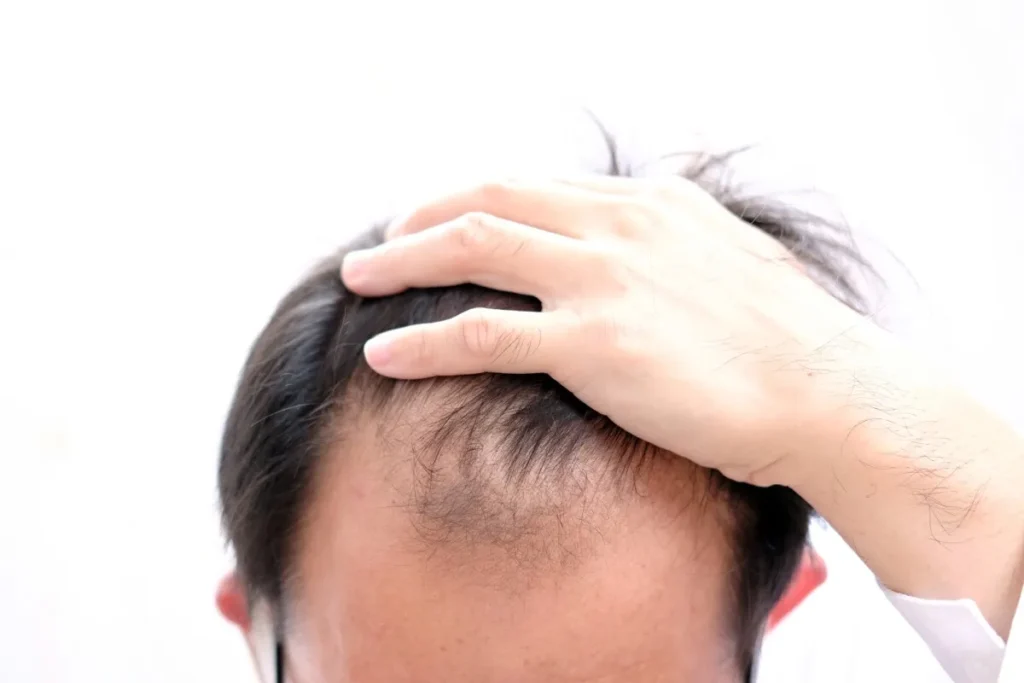
It’s important to know why hair loss at the temples happens. This type of hair loss can make your hairline recede. This change can affect how you look a lot.
Causes of Temple Hair Loss
The main reason for temple hair loss is androgenetic alopecia. This makes hair follicles at the temples sensitive to DHT. This sensitivity causes hair to thin and eventually fall out. Genetics play a big role in this, with some genes making you more likely to get it.
Other things like hormonal changes, stress, and certain health issues can also cause hair loss at temples. Changes in hormones, like androgens, can make hair loss worse. Stress, whether it’s physical or emotional, can also make hair loss happen or get worse.
The M-Shaped Pattern: How Temple Recession Progresses
As temple hair loss gets worse, it often looks like an M or V shape. This is because the hair follicles at the temples are very sensitive to DHT. This makes the hairline move back over time. As it gets worse, the hair loss can get more noticeable, leading to a lot of balding.
Knowing how temple balding gets worse is key to finding the right treatment. Starting treatment early can help slow down or stop hair loss.
Differentiating Between Male and Female Temple Hair Loss
Men and women both lose hair at the temples, but in different ways. Men often see their hairline recede in an M shape. Women usually see hair thinning all over, but more at the crown and temples.
It’s important to know these differences to get the right treatment. Whether you’re a man or a woman, knowing why you’re losing hair is the first step to finding a solution.
Natural Remedies to Regrow Temple Hair

Natural remedies can help regrow hair on temples by addressing the main causes of hair loss. These methods not only encourage hair growth but also improve scalp health.
Scalp Massage and Microneedling Techniques
Scalp massage is a simple yet effective way to stimulate hair growth. It increases blood flow to the hair follicles, strengthening the roots and promoting regrowth. Microneedling uses tiny needles to create micro-injuries in the scalp, starting the body’s natural healing process and encouraging hair growth.
Regular scalp massage and microneedling sessions can lead to noticeable improvements in hair density and thickness over time.
Essential Oils and Natural Topical Treatments
Certain essential oils can promote hair growth and improve scalp health. Oils like rosemary and peppermint stimulate the scalp, while coconut and olive oil nourish the hair follicles.
Applying these oils directly to the temples and gently massaging them in can enhance their effectiveness. It’s also beneficial to combine essential oils with carrier oils to avoid irritation.
Nutrition and Supplements for Hair Follicle Health
A balanced diet rich in vitamins and minerals is key for hair health. Foods high in omega-3 fatty acids, zinc, and biotin support hair growth and strengthen hair follicles.
Supplements can also help promote hair regrowth. Biotin supplements, for example, are known to improve hair thickness and reduce shedding.
Medical Treatments for Temple Hair Regrowth
For those dealing with hair loss around the temples, medical treatments can help. Temple hair loss is common and can be treated with different medical options.
Topical Medications: Minoxidil and Beyond
Topical medications are often the first choice for temple hair loss. Minoxidil is a well-known treatment that stimulates hair growth. It’s applied to the scalp to increase blood flow to hair follicles, promoting regrowth.
Other treatments include natural ingredients and essential oils. These can work together with minoxidil to improve results.
Oral Treatments: Finasteride and DHT Blockers
Finasteride is an oral treatment for hair loss, including balding around temples. It blocks DHT, a hormone that causes hair loss. This helps slow down hair loss and promote growth.
Other DHT blockers may be prescribed based on individual needs and medical history.
Advanced Procedures: PRP Therapy and Hair Transplantation
For severe temple hair loss, PRP therapy and hair transplantation are options. PRP therapy uses platelet-rich plasma to stimulate hair growth. It’s known for its ability to promote natural hair regrowth.
Hair transplantation moves healthy follicles to balding areas. This surgical method offers a lasting solution to temple hair loss.
Both PRP therapy and hair transplantation have shown good results for hair loss temples male and temple hair loss men. Talking to a healthcare professional or dermatologist can help find the best treatment.
Conclusion: Creating Your Temple Hair Restoration Strategy
Restoring hair on the temples needs a detailed plan. This plan should tackle the reasons for hair loss and use effective treatments. Understanding what causes temple balding and trying natural and medical options can help you create a plan to grow back your hair.
If you’re losing hair on your temples, a custom plan can help. This plan can make your hairline look fuller and more natural. Talking to a hair restoration expert can help find the right treatment for you, like temple point reconstruction.
With the right treatments, you can fight hair loss on temples for both men and women. This can make you look more radiant and confident. Taking action to restore your temple hair can make you look younger and more confident.
FAQ
What are the primary causes of hair loss at the temples?
Hair loss at the temples is often due to genetics, hormonal changes, and stress. In men, it’s linked to male pattern baldness. Women may experience it due to hormonal shifts and other factors.
How does the M-shaped pattern of hair loss progress?
The M-shaped pattern starts with thinning hair at the temples. It gradually gets worse, leading to more noticeable balding.
Can scalp massage and microneedling really help regrow hair on temples?
Yes, they can. Scalp massage boosts blood flow. Microneedling helps with collagen and makes treatments work better.
What are some natural topical treatments for temple hair loss?
Rosemary, lavender, and peppermint essential oils can help. So can saw palmetto, biotin, and keratin products.
How do medical treatments like minoxidil and finasteride work for temple hair regrowth?
Minoxidil increases blood flow to the scalp. Finasteride blocks DHT, a hormone that causes hair loss.
What is PRP therapy, and how can it help with temple hair regrowth?
PRP therapy uses platelet-rich plasma to stimulate hair growth. It boosts collagen, improves blood flow, and enhances scalp health.
Is hair transplantation a viable option for temple hair restoration?
Yes, it’s a surgical option. It moves healthy hair follicles to balding areas, including temples. It can restore a natural hairline.
How can I prevent further hair loss at the temples?
Eat well, reduce stress, and use gentle hair products. Avoid too much heat styling. Try scalp massagers or other growth-promoting methods.
Are there any supplements that can help promote hair growth on temples?
Yes, biotin, vitamin D, and keratin supplements can help. Omega-3 fatty acids, zinc, and iron also support hair health.
Can temple hair loss be reversed?
While there’s no sure cure, treatments can help. Natural remedies, medical treatments, and lifestyle changes can restore hair.
References
National Center for Biotechnology Information. Evidence-Based Medical Insight. Retrieved from https://pubmed.ncbi.nlm.nih.gov/11874164/





