
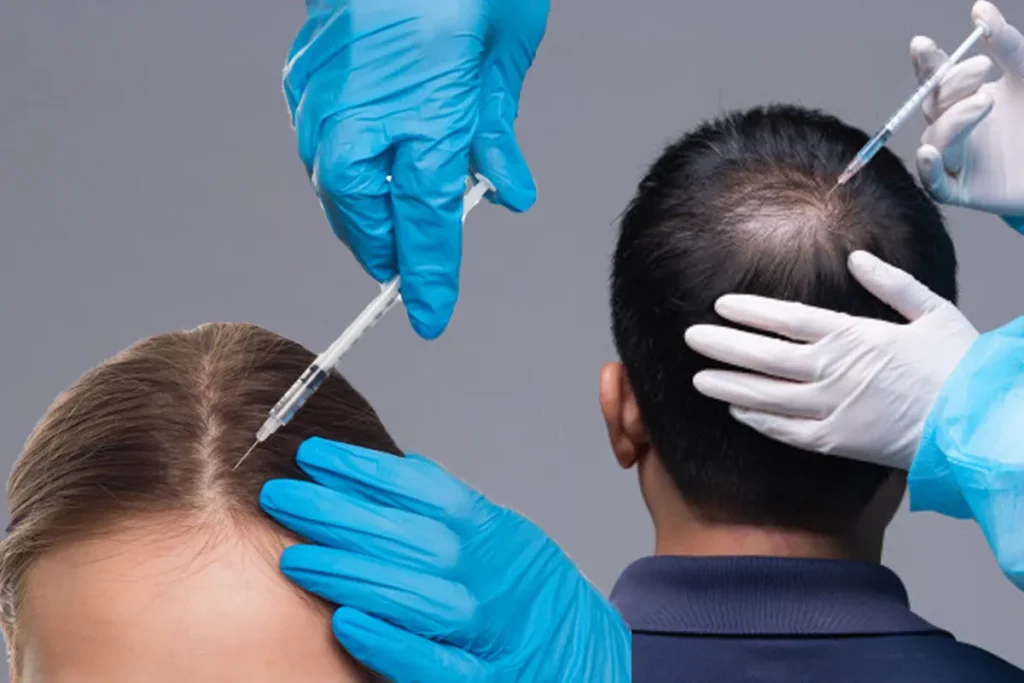
Thinking about hair restoration but worried about scars? Good news: new surgical methods and treatments can help. Now, you can get rid of visible marks and enjoy natural hair growth.
At GoldCity Center, we focus on you. Our team uses top-notch surgical skills and care to tackle scarring worries. Whether you’re dealing with old scars or want to avoid new ones, we have solutions for you.
Key Takeaways
Modern treatments can minimize or eliminate visible scarring.
FUE scar revision, SMP, laser resurfacing, and PRP therapy are effective methods.
A patient-centered approach ensures complete care.
Scar management is key for feeling confident in hair restoration.
Top-notch surgical expertise is vital for the best results.
Understanding Hair Transplant Scars
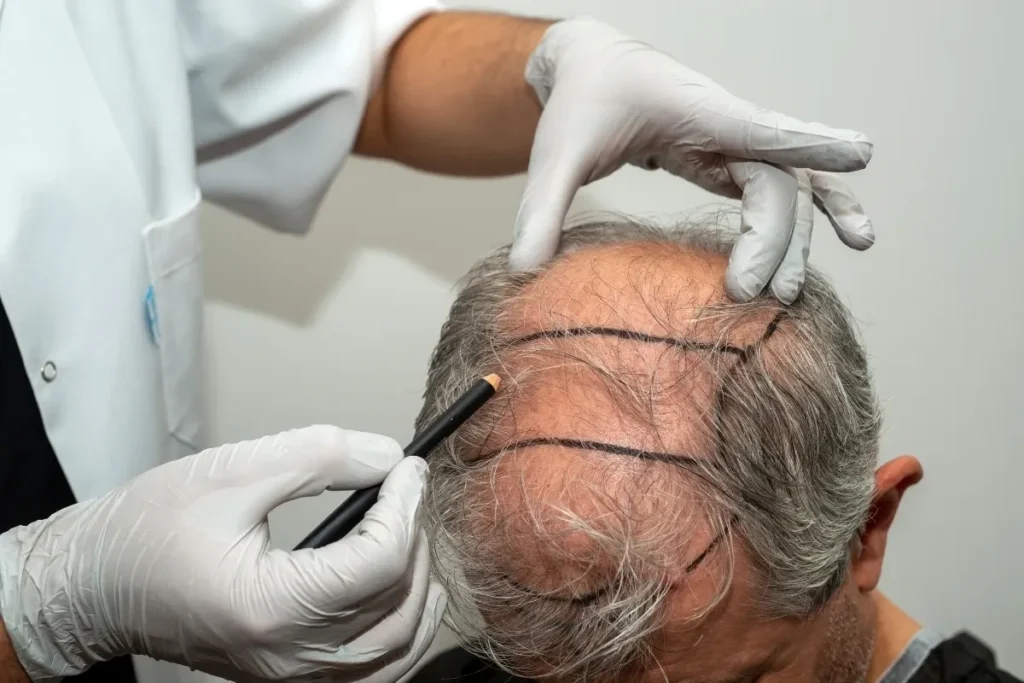
It’s important to know about hair transplant scars if you’re thinking about hair restoration. Scars from hair transplants can look different based on the surgery method. Knowing this can help you understand what to expect.
Types of Hair Transplant Scarring
Scarring from hair transplants can take on various forms. The main methods, Follicular Unit Transplantation (FUT) and Follicular Unit Extraction (FUE), each cause different scars.
FUT Scarring: This method removes a strip of skin from the back of the head, creating a linear scar. This scar might be a concern for those who like to wear their hair short.
FUE Scarring: FUE takes out individual follicles, leaving behind small, dot-like scars. These are usually less visible than FUT’s linear scar.
FUE vs. FUT Scarring Differences
Choosing between FUE and FUT can affect the scarring you get. FUT leaves a clear line, while FUE causes many small dots. The scar’s visibility depends on your hair style and the surgeon’s skill.
For more info on dealing with hair transplant scars, check out Maxwell Hair Clinic.
Why Scarring Occurs After Hair Transplantation
Scarring after hair transplant surgery can happen for several reasons. These include genetics, the surgery method, and how well you care for your scalp after surgery. Knowing these can help reduce scar visibility.
Genetic Predisposition: If you’re prone to keloid or hypertrophic scarring, you might see more noticeable scars.
Surgical Technique: The surgeon’s skill and method greatly affect the scarring.
Post-Operative Care: Following your surgeon’s post-surgery care instructions can help your scars heal better and look less noticeable.
Understanding why and how hair transplant scars form can help you make better choices for your hair restoration.
Hair Transplant Scar Treatment Options
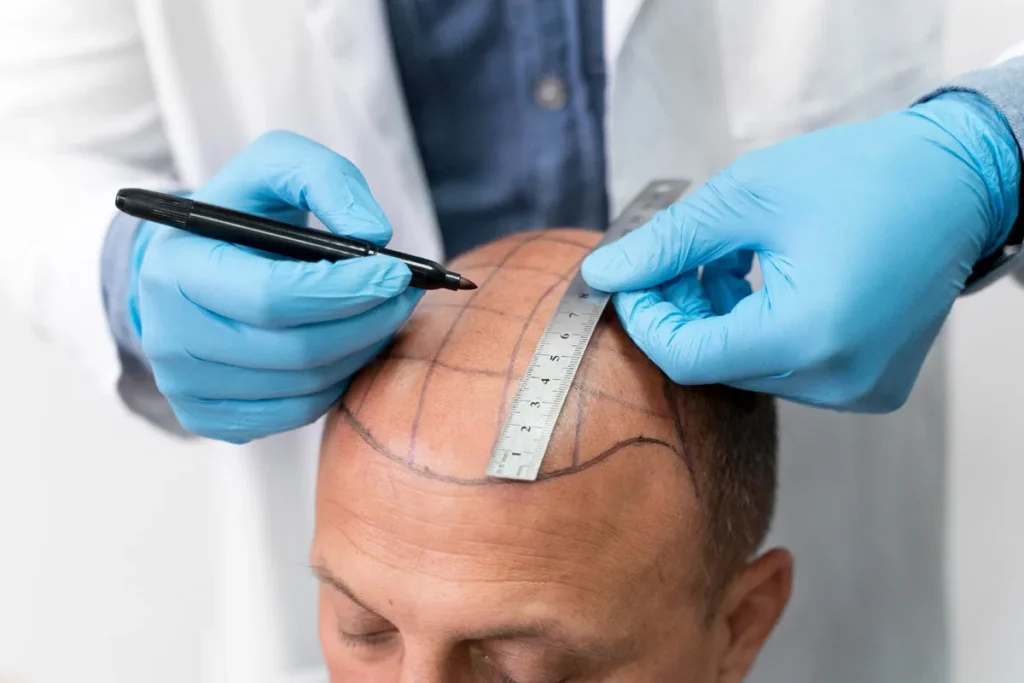
Fixing hair transplant scars is key to a good outcome. There are many treatments, from simple to advanced. Each one aims to make scars less noticeable and improve hair transplant results.
Non-Surgical Treatment Methods
Non-surgical methods are less invasive for scar treatment. Some top options include:
Scalp Micropigmentation (SMP): This method tattoos the scalp with dots to hide scars.
Laser Resurfacing: Uses lasers to boost collagen and smooth out scars.
Topical Treatments: Creams and gels can reduce scar visibility by regenerating skin.
Surgical Revision Techniques
For deeper scars, surgery might be needed. FUE (Follicular Unit Extraction) scar revision moves hair follicles to scars.
Surgical fixes are great for FUT (Follicular Unit Transplantation) scars. These scars need careful planning to look natural.
Advanced Therapies for Hair Transplant Scar Repair
Advanced treatments offer new ways to fix scars. PRP (Platelet-rich Plasma) Therapy uses plasma to heal scars.
Microneedling and stem cell therapy also help. They boost the skin’s repair, making scars less visible.
Exploring these options helps people choose the best scar treatment. This way, they can get a natural and satisfying result from their hair transplant.
Conclusion: Making Informed Decisions About Hair Transplant Scar Correction
Knowing why scars happen and what treatments are out there is key. This knowledge helps you choose what’s best for your beauty goals.
Hair transplant scar removal has come a long way. Now, there are many ways to fix fue transplant scarring and fue hair transplant scars. If you’re worried about scars from hair transplants, there are treatments to help.
Choosing the right treatment can make your hairline look natural again. It can also lessen the look of scars. It’s important to talk to a skilled professional to find the best treatment for you. This way, you can get a look that boosts your confidence and beauty.
Deciding on hair transplant scar correction gives you control over your beauty journey. With the right advice and treatment, you can achieve a beauty that lasts. It’s all about finding what makes you shine.
FAQ
What are the most common types of scars resulting from hair transplantation?
Scars from hair transplants can be linear or dot-like. Linear scars come from FUT, while dot scars come from FUE. Knowing the type of scar helps find the best treatment.
Can hair transplant scars be completely removed?
It’s hard to remove hair transplant scars completely. But, treatments like FUE scar revision and SMP can make them less visible. Laser resurfacing and PRP therapy also help.
What is the difference between FUE and FUT scarring?
FUE scars are small dots, while FUT scars are linear. The choice between FUE and FUT affects the scarring.
How does SMP work for hair transplant scar treatment?
SMP tattoos the scalp to look like hair follicles. It hides scars well, making it great for covering up hair transplant scars.
Are there any non-surgical methods for treating hair transplant scars?
Yes, SMP, laser resurfacing, and PRP therapy are non-surgical options. They can make scars look better without surgery.
Can PRP therapy help with hair transplant scar repair?
PRP therapy uses platelet-rich plasma to heal scars. It’s a promising method for improving hair transplant scar correction.
What are the benefits of laser resurfacing for hair transplant scars?
Laser resurfacing boosts collagen and improves skin texture. It’s a flexible treatment that works well with other therapies.
How can I determine the best treatment for my hair transplant scars?
Talking to a qualified professional is key. They’ll assess your scars and suggest the best treatment for you.
Will my hair transplant scars be noticeable after treatment?
The right treatment can make scars less visible. While some scars might remain, they’ll look much better, giving you confidence.
Does FUE hair transplant leave scars?
FUE can leave small, dot-like scars. These are less noticeable than FUT’s linear scar. Scarring varies based on skin type and care after surgery.
References
National Center for Biotechnology Information. Evidence-Based Medical Insight. Retrieved from https://pmc.ncbi.nlm.nih.gov/articles/PMC9822907/





