
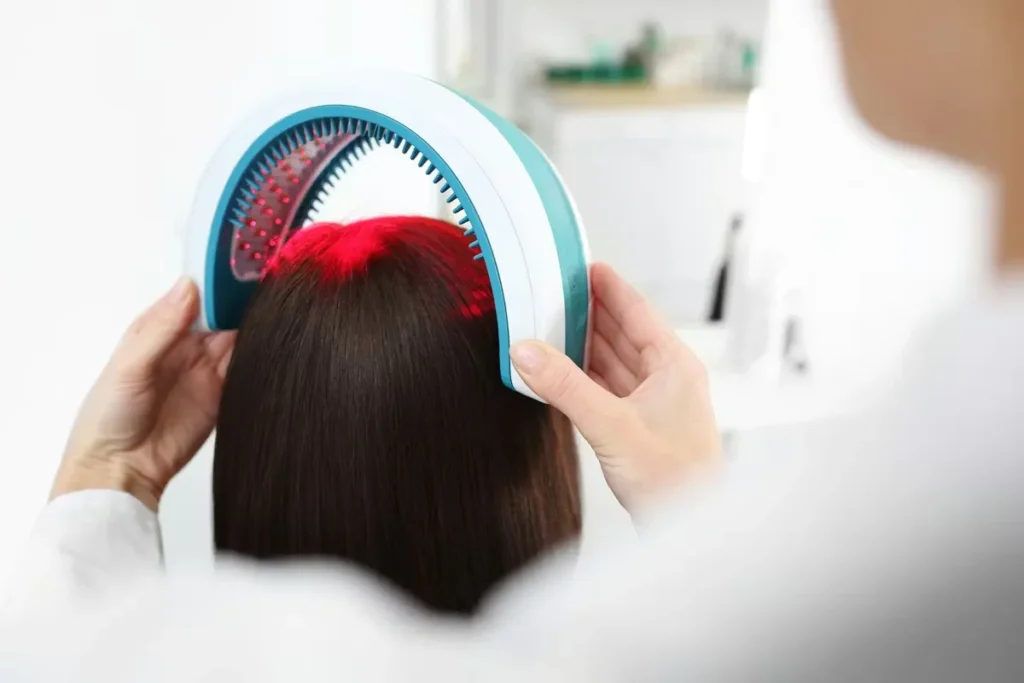
Discover the secret to a fuller head of radiant hair with laser caps for hair growth. Low-level laser therapy (LLLT) is a new way to fight hair loss. It uses red light to help your hair grow naturally, boosting your confidence.
Laser hair growth caps have been cleared by the FDA and backed by research. They can increase hair count by up to 43%. This technology helps your hair grow longer and healthier, making your scalp look great.
Key Takeaways
LLLT stimulates natural hair regrowth
Red light therapy promotes hair follicle proliferation
Clinically proven results with up to 43% improvement in hair count
FDA clearance for safety and efficacy
Non-invasive solution for pattern hair loss
Understanding Your Laser Hair Growth Cap
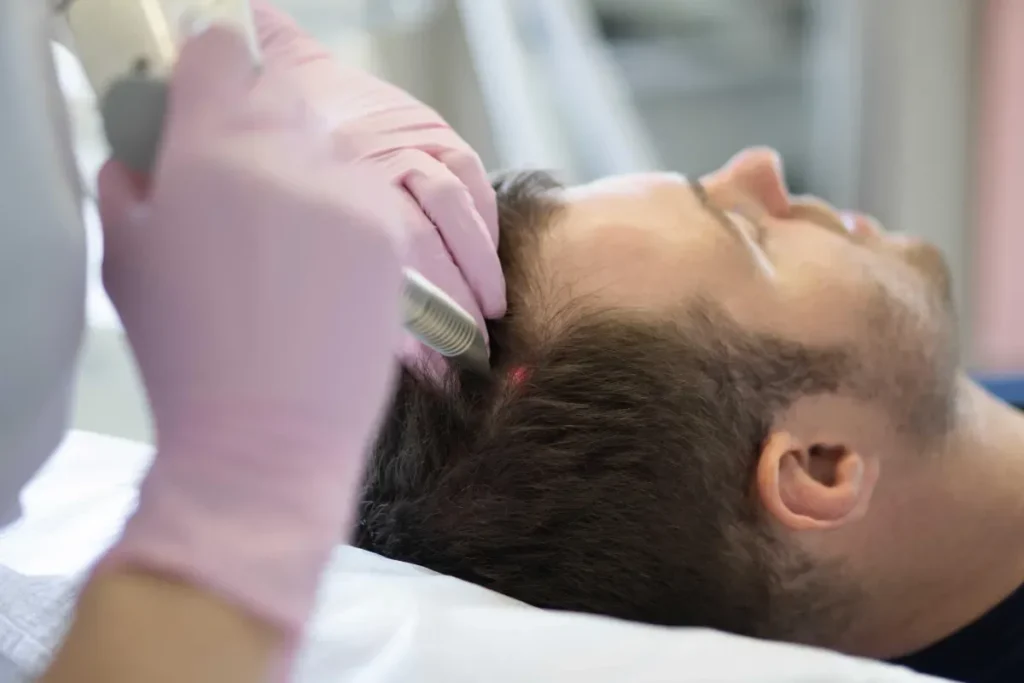
Laser hair growth caps work thanks to Low-Level Laser Therapy (LLLT). This method is safe and has been shown to help hair grow and strengthen.
The Science Behind Low-Level Laser Therapy (LLLT)
LLLT sends low-level laser light to your scalp. This light makes hair follicles grow hair faster and stronger. It also makes the hair growth phase longer, leading to thicker, healthier hair.
Key benefits of LLLT include:
Increased hair density
Improved hair texture
Enhanced hair growth rate
How 650nm Red Light Stimulates Hair Follicles
The 650nm red light from laser caps targets your scalp to stimulate hair follicles. This light is absorbed by scalp cells, boosting blood flow and nutrient delivery. This helps hair grow.
The science is straightforward: the red light energy boosts cell activity, leading to hair growth.
Clinical Evidence and FDA Clearance
Laser hair growth caps have been tested a lot and are FDA-approved for treating hair loss. Studies show they improve hair growth and density.
With solid clinical evidence and FDA approval, laser hair growth caps are a trusted way to regrow hair and feel more confident.
Step-by-Step Guide to Using a Laser Hair Growth Cap
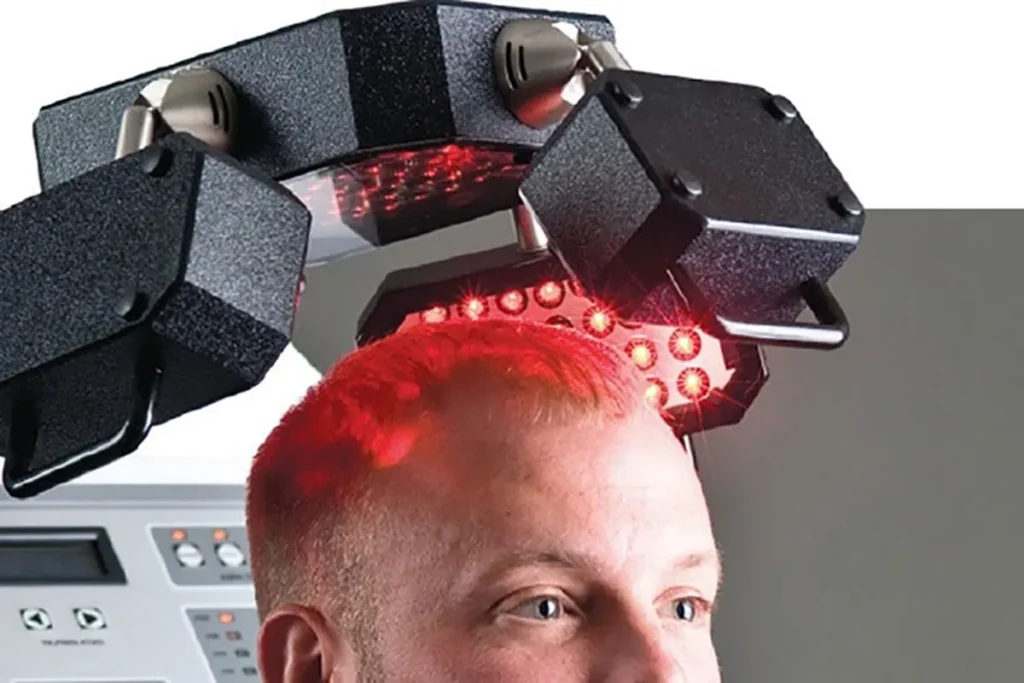
Learn how to use your laser hair growth cap with our easy guide. It’s simple to use and can really help your hair grow thicker and healthier.
Preparing for Your First Treatment
Before you start, make sure your scalp is ready. Wash your hair with a gentle shampoo to clean it. Then, dry your hair completely. The laser cap works best on a dry scalp.
Take off any hair products like styling creams or serums. They might block the laser’s effect. Also, check the user manual for any special prep steps.
Proper Placement and Operation Instructions
Putting the laser hair caps on right is important. Place the cap on your head and adjust it for a comfortable fit. Most caps have straps to keep it tight.
After it’s on, turn on the device and choose your treatment settings. Some caps have different levels or modes.
Recommended Treatment Schedule
Using your laser hair regrowth cap regularly is key. Most say to use it 2-3 times a week for 20-30 minutes. Stick to this schedule for the best results.
Start with the recommended frequency and duration.
Adjust the schedule as needed based on your progress.
Keep track of your sessions to stay consistent.
Maintenance and Care of Your Device
To keep your laser cap to grow hair working well, clean it often. Use a soft cloth and a gentle cleaner as the manual suggests.
Store the cap in a cool, dry spot, out of sunlight. Check it regularly for damage. If you find any issues, contact the maker.
By following these steps and caring for your laser hair regrowth cap, you can get the most out of it. Enjoy thicker, healthier hair.
Conclusion
Using a laser hair growth cap can change your hair game. It uses Low-Level Laser Therapy (LLLT) to wake up your hair follicles. This makes your hair look radiant and healthy.
Laser hair caps are easy to use, safe, and work well. They offer a non-invasive way to grow your hair back. Studies show they really work.
Adding a laser hat to your hair care routine can make a big difference. It helps you grow thicker, fuller hair. It’s great for anyone wanting to grow their hair or make it look better.
Start your journey to better hair with a laser hair growth cap. This technology can make you feel more confident and radiant.
FAQ
What is a laser hair growth cap and how does it work?
A laser hair growth cap is a non-invasive device. It uses Low-Level Laser Therapy (LLLT) to help hair grow. It emits 650nm red light that boosts blood flow and wakes up hair follicles, making hair thicker and fuller.
Is LLLT safe for hair growth?
Yes, LLLT is safe and proven to help hair grow. It’s FDA-cleared and has shown success in many studies.
How often should I use my laser hair growth cap?
For best results, use your cap several times a week. Aim for 20-30 minutes each time. Being consistent is key to seeing changes.
Can I use a laser hair growth cap if I have color-treated or chemically processed hair?
Yes, you can use it even with color-treated or chemically processed hair. The LLLT is safe and won’t harm your hair or affect treatments.
How long does it take to see results from using a laser hair growth cap?
Results can vary, but most see improvements in 12-16 weeks. For the best results, keep using it for at least 6 months.
Can I wear my laser hair growth cap under my regular hat or headgear?
While possible, it’s not recommended to wear it under a hat. It might reduce the treatment’s effectiveness. For best results, use it without any obstructions.
Are laser hair growth caps suitable for both men and women?
Yes, they work for both men and women with hair loss or thinning. The technology is designed for a wide range of hair types and needs.
How do I maintain and care for my laser hair growth cap?
To keep your cap in good shape, just wipe it with a soft cloth. Avoid extreme temperatures or moisture. Check and replace worn-out parts as needed, following the manufacturer’s instructions.
Can I use a laser hair growth cap if I have a pacemaker or other implantable medical device?
If you have a pacemaker or other implantable device, talk to your doctor first. While LLLT is generally safe, it’s important to check with your doctor to ensure safe use with any implantable device.
References
National Center for Biotechnology Information. Evidence-Based Medical Insight. Retrieved from https://pmc.ncbi.nlm.nih.gov/articles/PMC3944668/[1





