

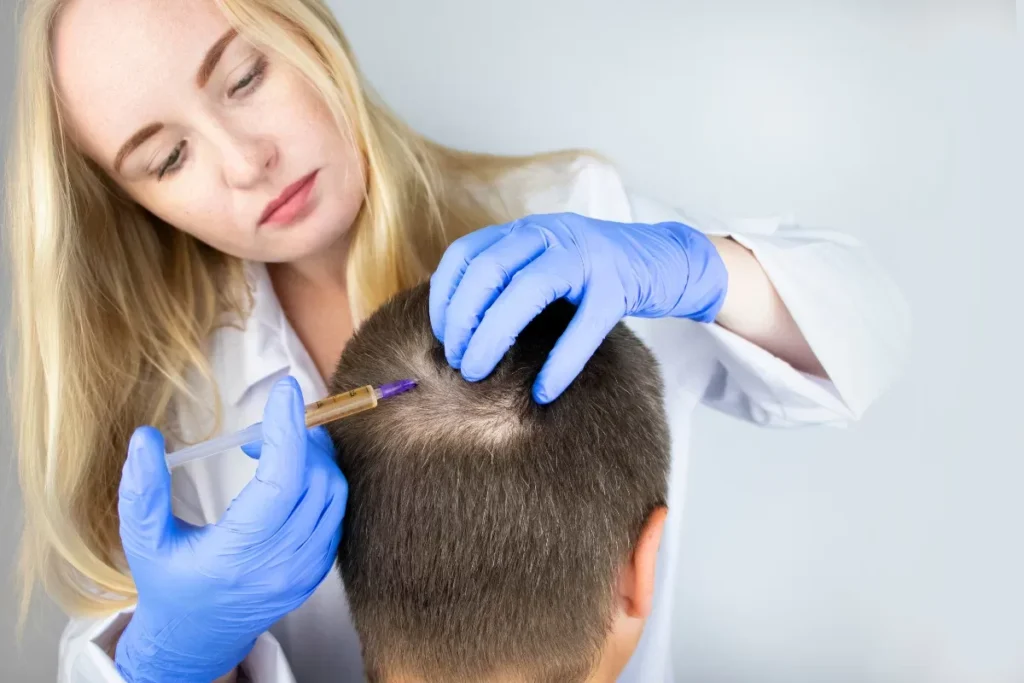
Alopecia areata is an autoimmune condition that affects millions worldwide. It causes sudden and distressing hair loss. This condition can lead to smooth, round bald patches on the scalp, beard, eyebrows, eyelashes, or armpits. It significantly impacts an individual’s confidence and quality of life.
Fortunately, groundbreaking advances in dermatological treatment now offer hope to patients. From targeted topical corticosteroid creams to cutting-edge JAK inhibitors, multiple evidence-based treatment pathways can help restore hair growth. They also help rebuild self-assurance.
Your journey to restoring your hair begins here, with the best creams and solutions for alopecia areata. Discover which treatment options may be right for your specific needs.
Key Takeaways
Understanding alopecia areata and its impact on individuals
Exploring effective treatment options for hair regrowth
The role of topical corticosteroid creams in treatment
Cutting-edge JAK inhibitors as a possible solution
Personalized treatment pathways for restoring confidence
Understanding Alopecia Areata

Learning about alopecia areata is the first step to treating it. It’s an autoimmune disease where the body attacks hair follicles, causing hair loss. This condition is unpredictable and can happen to anyone, at any age or gender.
Causes of Alopecia Areata
The exact reason for alopecia areata is not fully known. But, it’s thought to be caused by autoimmune factors, genetic predisposition, and external triggers. People with a family history of alopecia or other autoimmune diseases are more likely to get it.
Recognizing the Symptoms and Patterns
Alopecia areata shows different symptoms in different people. Common signs include:
Smooth, round patches of hair loss on the scalp or body
Nail changes, such as pitting or brittleness
In some cases, complete hair loss on the scalp (alopecia totalis) or entire body (alopecia universalis)
The condition can progress in various ways. Some people may have just one episode of hair loss. Others may have recurring episodes.
Who Is Most Affected
Alopecia areata can affect anyone, but some groups are more likely to get it. Research shows that:
Knowing these factors can help people cope better and find the right treatment.
What Is the Best Cream for Alopecia
Many people look for effective treatments for alopecia areata. Skincare and beauty technology have made many options available. This includes creams and solutions for treating this condition.
Topical Corticosteroid Creams
Topical corticosteroid creams are a common choice for treating alopecia areata. They reduce inflammation on the scalp, helping hair to grow back. Corticosteroids come in different strengths and types, fitting various needs.
Minoxidil Solutions
Minoxidil is a topical solution approved by the FDA for treating alopecia areata. It boosts blood flow to the scalp, encouraging hair growth. Minoxidil is easy to find and often recommended first.
Stimulates hair regrowth
Increases blood flow to the scalp
Available in various concentrations
Vitamin D Analogs
Vitamin D analogs are another option for treating alopecia areata. They help control the immune system and promote hair growth. Though results can vary, they are a valuable part of treatment plans.
Choosing the right cream for alopecia areata depends on several factors. These include the person’s condition, how severe the hair loss is, and the possible side effects. It’s important to talk to a dermatologist to find the best treatment plan.
Factors Affecting Treatment Success
The success of alopecia areata treatment depends on several key factors. Knowing these can help patients and doctors create better treatment plans.
Age Considerations
Age is a big factor in treatment success. Children under 10 years old tend to have better treatment outcomes than older patients. This is because their immune system and hair growth patterns change with age.
Duration of Hair Loss
The length of hair loss also matters. Patients with less than one year of hair loss duration generally respond better to treatment. Starting treatment early can greatly improve hair regrowth chances.
Combination Therapy Approaches
Using different treatments together can improve success. This might include topical corticosteroids, minoxidil solutions, and vitamin D analogs. Combining treatments can address multiple aspects of alopecia areata, leading to better results.
Consistency and Proper Application
Sticking to the treatment plan is key. Patients must follow their doctor’s instructions closely. Irregular application or stopping treatment can reduce its effectiveness.
Understanding and addressing these factors can help patients achieve better treatment outcomes. It’s important to work closely with a healthcare provider to create a personalized treatment plan.
Conclusion
There’s no cure for alopecia areata, but treatments can help manage it. New FDA-approved treatments offer hope for those affected. These treatments can help promote hair regrowth.
It’s important to understand the treatment options for alopecia areata. Topical corticosteroid creams, minoxidil solutions, and vitamin D analogs are effective. They can help with hair loss.
Consistency and proper application are key to successful treatment. Exploring different treatments and working with a healthcare professional is important. This way, individuals can find a regimen that works for them.
With the right treatment, a fuller head of hair is possible. Staying informed and empowered helps individuals take control of their condition. This unlocks a more confident and radiant self.
FAQ
What is alopecia areata, and how does it affect individuals?
Alopecia areata is an autoimmune condition that causes hair loss. It leads to bald patches on the scalp or body. It can really hurt a person’s self-esteem and confidence. Finding effective treatments is key.
What are the best creams and solutions for treating alopecia areata?
Topical corticosteroids, minoxidil, and vitamin D analogs are top treatments. They help grow hair, reduce inflammation, and slow hair loss.
How do I choose the right treatment for my alopecia areata?
Choosing the right treatment depends on several factors. These include the severity of hair loss, age, and health. A dermatologist or healthcare professional can help find the best treatment.
Can alopecia areata be cured, or is it a lifelong condition?
There’s no cure for alopecia areata yet. But, treatments can manage the condition and promote hair growth. With the right treatment, significant regrowth and less bald patches are possible.
How long does it take to see results from alopecia areata treatments?
Results from treatments vary. It depends on the individual, the severity of hair loss, and the treatment. Consistency and proper application are key to the best results.
Are there any lifestyle changes that can help manage alopecia areata?
A healthy lifestyle can help. This includes a balanced diet, regular exercise, and managing stress. These can support hair growth and overall well-being.
Can I use multiple treatments for alopecia areata simultaneously?
Using multiple treatments together can be effective. But, it’s important to talk to a healthcare professional. They can help find the best combination and avoid side effects.
How can I prevent further hair loss due to alopecia areata?
Early treatment and consistent application are key. A healthy lifestyle and stress management also help. These can slow down hair loss and promote regrowth.
References
What Is The Best Cream For Alopecia: Fix
https://pubmed.ncbi.nlm.nih.gov/30835901/

