
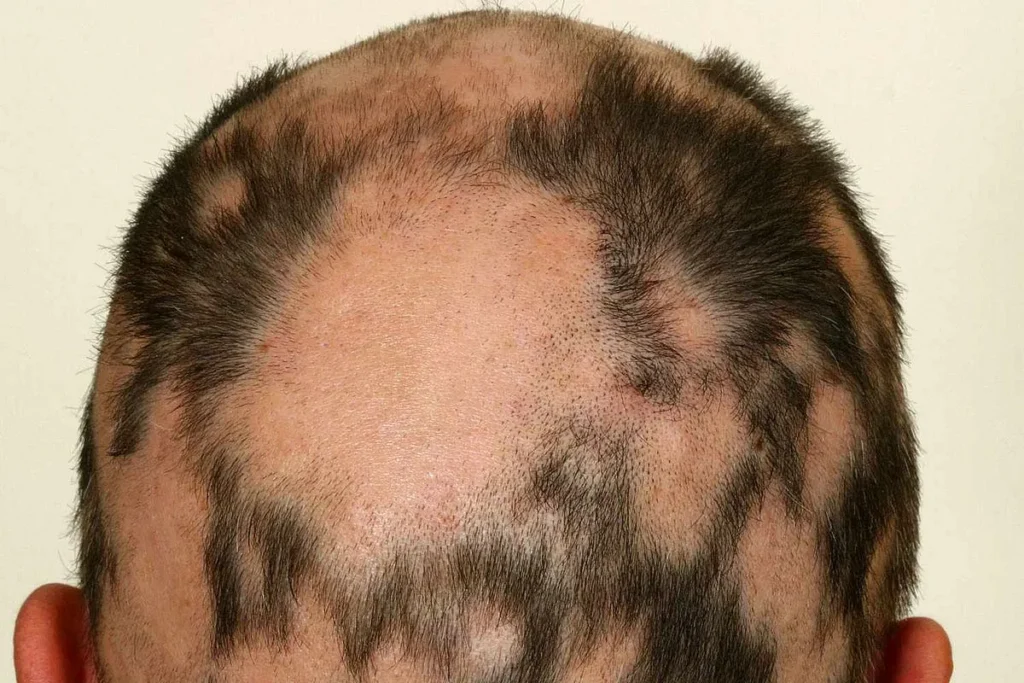
Millions of men lose their hair each year. But can finasteride really help them grow it back? Research shows that this pill works by stopping testosterone from turning into dihydrotestosterone (DHT).
By reducing DHT, finasteride tackles the main reason for hair loss. It encourages hair regrowth and stops more hair from falling out. Studies prove it can boost hair count, slow down hair loss, and even make hair grow faster. This makes it a top pick for men dealing with hair loss.
Belangrijkste opmerkingen
Finasteride is an effective oral medication for treating male pattern hair loss.
It works by blocking the conversion of testosterone to DHT.
Finasteride promotes hair regrowth and prevents further hair loss.
Studies have shown that finasteride can increase hair count and slow hair loss progression.
It is a popular choice among men experiencing hair loss.
How Finasteride Works to Combat Hair Loss
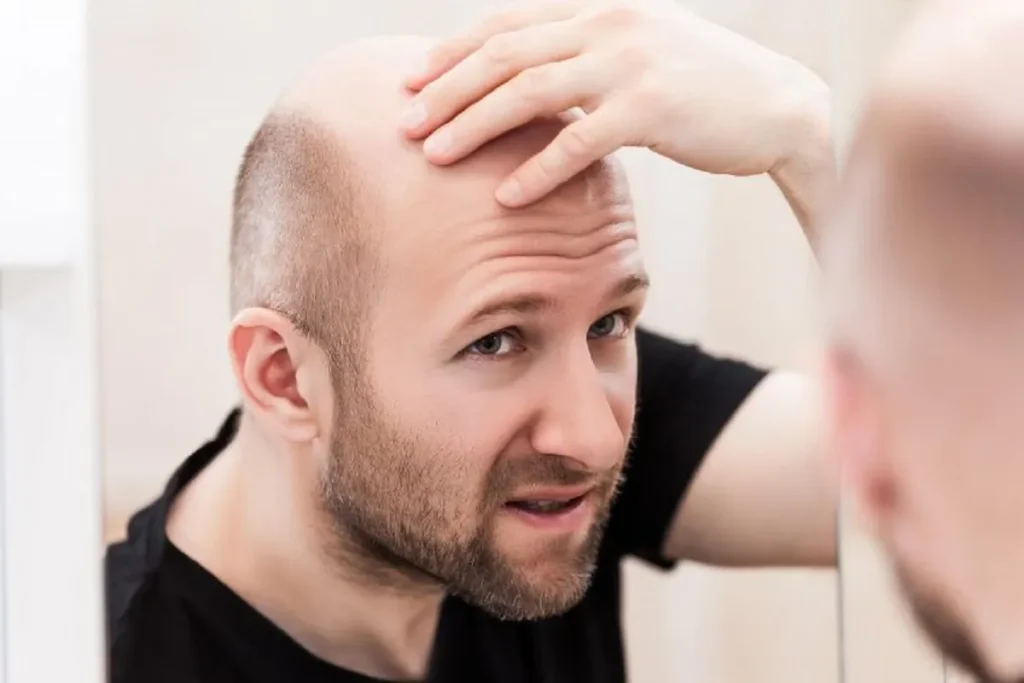
Finasteride is a key player in hair regrowth. It’s been studied a lot for treating male pattern baldness.
Finasteride works by stopping the enzyme 5-alpha reductase. This enzyme turns testosterone into DHT. DHT makes hair follicles shrink, causing hair to thin and fall out.
The DHT Blocking Mechanism
Finasteride blocks the change from testosterone to DHT. This lowers DHT levels in the scalp. A study found that finasteride stops type II 5α-reductase. This blocks DHT, a key player in hair loss.
The DHT blocking is key to finasteride’s action. It stops DHT production. This keeps hair follicles healthy and promotes thicker hair.
Targeting Male Pattern Baldness
Finasteride is great for male pattern baldness. This condition is caused by DHT shrinking hair follicles.
By lowering DHT, finasteride slows hair loss. It also helps hair grow back. This makes it a good choice for treating male pattern baldness.
In summary, finasteride fights hair loss by blocking DHT. This is key in treating male pattern baldness. It’s a valuable option for those losing hair.
Does Finasteride Regrow Hair? Clinical Evidence
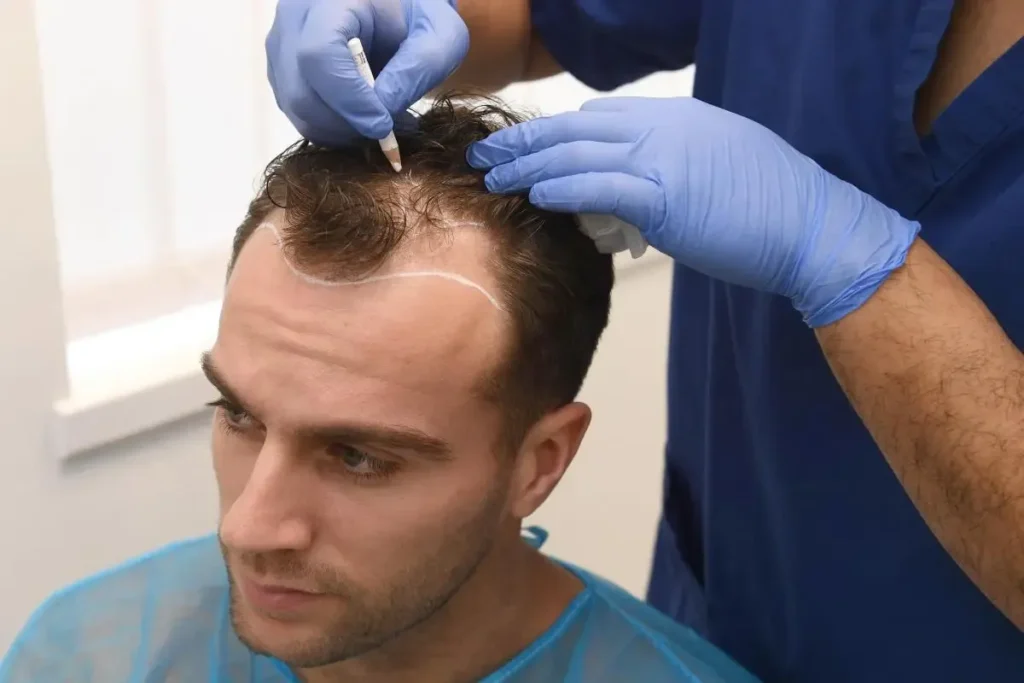
Finasteride’s ability to regrow hair is backed by substantial clinical evidence. Over 1,800 men in clinical studies have shown its effectiveness. Finasteride 1 mg daily promotes hair regrowth and prevents further hair loss in many patients.
Resultaten op korte termijn (1-2 jaar)
In the short-term, finasteride increases hair count and improves hair growth. Studies show men taking finasteride have more hair than those on a placebo after 6 and 12 months.
Measurable improvements were seen. Men on finasteride had 107 more hairs in a 1-inch circle on their scalp after a year.
Measurable Hair Count Improvements
The clinical evidence for finasteride’s efficacy is strong. Studies show an increase of 107-138 additional hairs in a one-inch circular area at the vertex after 1-2 years of treatment.
This evidence supports finasteride’s effectiveness in treating male pattern hair loss. It makes it a good option for those wanting to regrow hair and prevent further loss.
Finasteride’s Effects on Hair Thickness and Quality
Finasteride targets the root cause of hair loss. It promotes thicker, healthier hair and improves scalp appearance. Finasteride’s benefits extend beyond just hair regrowth, as it also improves hair thickness and density. This leads to a more radiant and fuller head of hair.
Improvements in Hair Density
Studies show finasteride can significantly improve hair density. Increases range from 10-20% in cases of androgenetic alopecia (AGA) after one year. This improvement in hair density is key to finasteride’s effectiveness, making the scalp fuller and more vibrant.
For more information on finasteride’s benefits, visit Utah Hair MD. They provide detailed insights into the treatment’s efficacy.
Changes in Overall Scalp Appearance
The overall scalp appearance is also significantly enhanced with finasteride treatment. As hair density improves and hair becomes thicker, the scalp becomes less visible. This leads to a more aesthetically pleasing appearance.
It’s reported that 70-83% of men treated with finasteride experience no further hair loss after one to two years. This shows the treatment’s effectiveness in maintaining a healthy scalp appearance. This transformation can be truly life-changing, boosting confidence and self-esteem.
In conclusion, finasteride’s effects on hair thickness and quality are multifaceted. It leads to improvements in both hair density and overall scalp appearance. By incorporating finasteride into a hair care regimen, individuals can experience significant enhancements in their hair’s overall health and appearance. This leads to a more confident and vibrant self.
Conclusion: Long-Term Efficacy of Finasteride Treatment
Finasteride is a top choice for treating male pattern hair loss. It offers both short-term and long-term benefits. Studies show that it works well over time.
Long-term studies have shown that finasteride keeps working. In fact, 99.1% of users see improvement or stop hair loss after 10 years.
Finasteride helps grow hair, makes it thicker and better quality, and stops more hair loss. This makes it a favorite among men with hair loss. Knowing how finasteride works helps people choose the best treatment for their hair loss.
With finasteride, men can see long-term results and less hair loss. The research backs up its effectiveness. So, finasteride is a reliable option for those wanting to regain their hair and confidence.
FAQ
Does finasteride really regrow hair?
Yes, finasteride helps grow hair back and stops more hair loss in many people. Research shows more hair and better growth.
How does finasteride work to combat hair loss?
Finasteride stops hair follicles from shrinking by blocking DHT. It blocks the enzyme 5-alpha reductase. This slows hair loss and helps hair grow back.
Will finasteride thicken my hair?
Yes, finasteride makes hair thicker and better. It can make hair 10-20% denser in a year. Most people see thicker hair shafts.
Is it too late to start finasteride for hair loss?
Finasteride works best for mild to moderate hair loss. Starting late might affect how well it works. Talk to a doctor to find the right treatment.
Does finasteride grow hair back in bald spots?
Finasteride can fill in bald spots, mainly for male pattern baldness. It lowers DHT, slowing hair loss and promoting growth for fuller hair.
Hoe lang duurt het voordat ik resultaat zie van finasteride?
You’ll see hair count improvements in 1-2 years. Studies show a 107-138 hair increase in a small area after 1-2 years.
Is finasteride effective in the long term?
Yes, long-term studies show it keeps working well. 99.1% of patients saw improvement or stopped disease over 10 years. It’s a reliable choice for hair loss.
Referenties
Nationaal Centrum voor Biotechnologie-informatie. Evidence-Based Medisch Inzicht. Opgehaald van https://pubmed.ncbi.nlm.nih.gov/9777765/





