
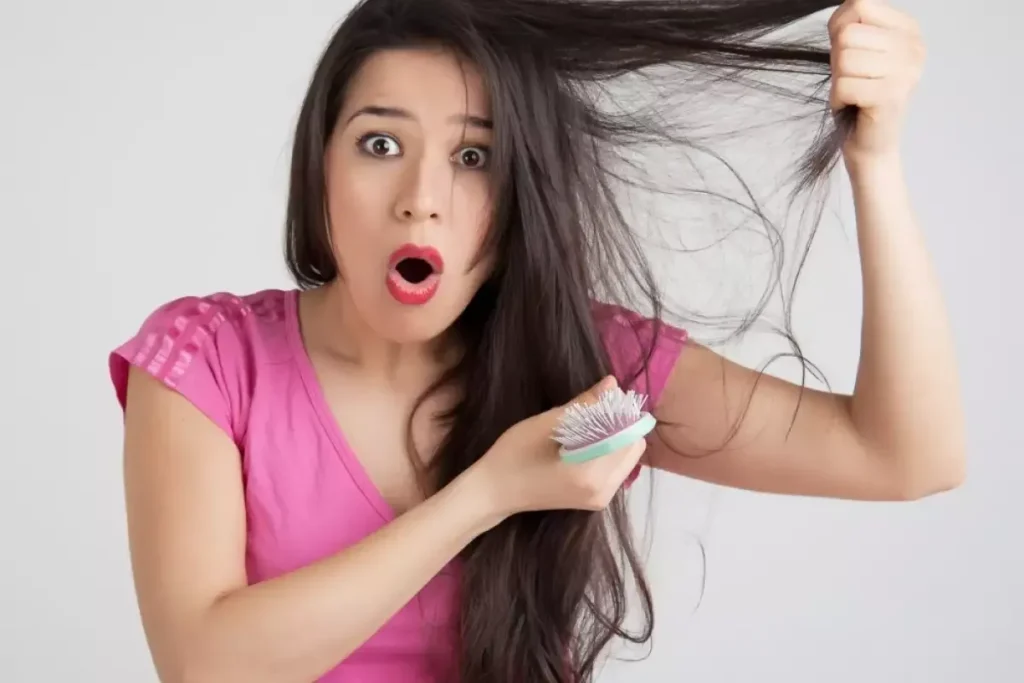
For many women, hair loss is a big worry, often caused by stress. Studies show that about 78% of women face hair loss due to stress, compared to 51.9% of men. This problem messes with hair growth, causing more hair to fall out, wider part lines, and thinner hair.
If you’re seeing these signs, you’re not alone. Hair loss stress women deal with is a common problem that needs medical help. Knowing what causes it and how it affects you is key. It helps women fight back against hair loss.
Belangrijkste opmerkingen
Stress-related hair loss affects nearly 78% of women.
Disrupts the natural growth cycle of hair follicles.
Common symptoms include increased shedding and thinning.
Understanding the causes is key for good solutions.
Empowering women with knowledge to combat hair loss.
Understanding Female Stress Hair Loss Patterns
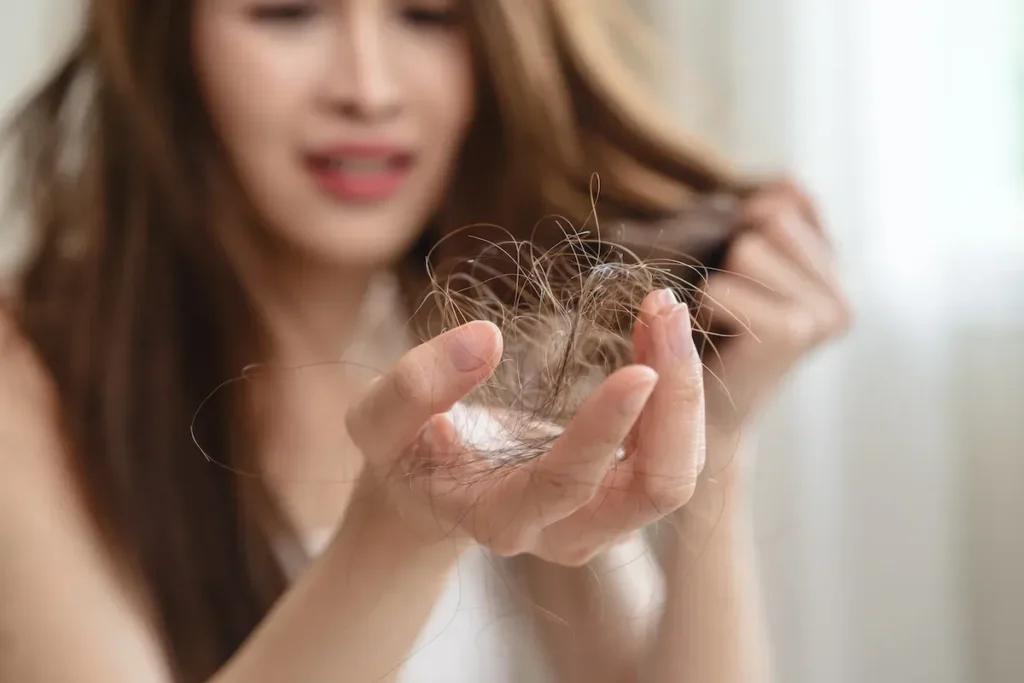
Stress can affect women’s hair in many ways. It can lead to different types of hair loss. This can happen at any age, causing emotional distress.
Types of Stress-Related Hair Loss in Women
Stress can cause several hair loss issues in women. Telogen Effluvium happens when stress makes hair follicles stop growing. This leads to a lot of hair falling out.
Female pattern hair loss (FPHL) is another common issue. It causes hair to thin gradually, mainly on the top of the scalp.
Other hair loss types include Alopecia Areata and Trichotillomania. Alopecia Areata causes patchy hair loss. Trichotillomania is a disorder where people pull their hair out compulsively.
Prevalence Statistics Across Age Groups
Women aged 31-40 face the most hair loss, at 80.6%. Hormonal changes, stress, and lifestyle play big roles in this.
Women of all ages report more stress-related hair loss symptoms than men. This shows the need for specific help and support for women dealing with this issue.
Knowing about these patterns and statistics helps in fighting female stress hair loss. It’s important to understand the types of hair loss and which age groups are most affected. This way, women can find the right treatments and make better hair care choices.
The Science Behind Stress-Induced Hair Loss in Women
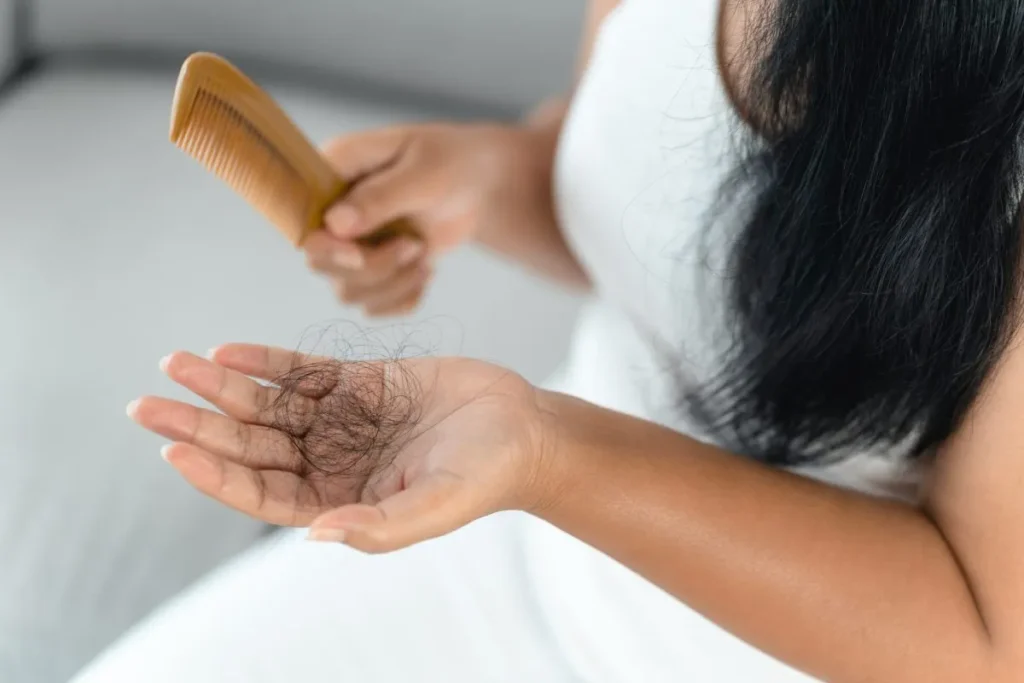
It’s important for women to know how stress affects their hair. Stress can cause hair loss by pushing more hair into a resting phase. This is called telogen effluvium.
Cortisol’s Impact on Hair Follicle Health
Cortisol, or the “stress hormone,” is key in how we handle stress. High levels of cortisol can mess up hair growth. Research shows stress hormones harm hair stem cells, leading to more hair loss.
Increased Hair Shedding: High cortisol levels push more hairs into the resting phase, causing more shedding.
Disrupted Hair Growth Cycle: Cortisol can make the resting phase longer, slowing down hair growth and making hair thinner.
Inflammation: Chronic stress can cause inflammation around hair follicles, making hair growth harder.
Why Women Experience More Stress-Related Hair Loss
Women are more likely to lose hair due to stress because of hormones and genes. Hormonal changes, like those in estrogen and cortisol, play a big role. Also, some women are more likely to lose hair due to their genes.
Knowing these factors helps women manage stress and protect their hair.
5 Proven Solutions to Combat Female Stress Hair Loss
To stop female stress hair loss, a complete plan is needed. This plan should include ways to reduce stress, eat right, and care for your scalp. Knowing why stress causes hair loss and using the right solutions can help women fight hair loss and grow healthy hair.
Technieken voor stressbeheer
Managing stress well is key to fighting female stress hair loss. Activities like meditation, yoga, and deep breathing can lower cortisol levels, which help prevent hair loss. Studies have shown that regular exercise and stress management can protect hair follicles from stress damage.
Here are some stress management tips:
Meditation and mindfulness practices
Yoga and tai chi exercises
Deep breathing exercises and progressive muscle relaxation
Nutritional Interventions for Hair Health
Eating a balanced diet is important for healthy hair. Foods rich in omega-3 fatty acids, zinc, and biotin can boost hair growth and lower hair loss risk. Adding foods like salmon, walnuts, and spinach to your diet can give your hair the nutrients it needs.
Here’s a meal plan for better hair health:
Scalp Care and Topical Treatments
Good scalp care is vital for healthy hair growth. Using gentle shampoos, massaging the scalp, and applying treatments can help stimulate hair growth and reduce loss.
Here are some scalp care tips:
Using gentle, sulfate-free shampoos
Massaging the scalp to stimulate blood flow
Applying topical treatments containing minoxidil or saw palmetto
Medical Treatments and Supplements
In some cases, medical treatments and supplements are needed to fight female stress hair loss. A healthcare professional can help find the best treatment. Options include medications like minoxidil, finasteride, or spironolactone, and supplements like biotin, vitamin B, and fish oil.
Always talk to a healthcare professional before starting any new treatments or supplements. This ensures the best results and avoids side effects.
Conclusie
Understanding stress-induced hair loss is key for women. It helps them take steps to stop it and grow healthy hair. Many women face female pattern hairloss and balding patterns.
To fight hair loss stress, women need a full plan. This includes managing stress, eating right, and using hair treatments. These steps help women control their hair health and feel better overall.
With the right lifestyle and medical help, women can lower hair loss risks. They can also get a healthy, shiny look. Start your journey to a hair loss solution that makes you feel great.
FAQ
What is female stress hair loss, and how does it differ from other types of hair loss?
Female stress hair loss happens when too much stress makes hair fall out. It’s different from female pattern hair loss (FPHL). FPHL is caused by hormones and genetics, leading to permanent hair loss.
What are the common patterns of female stress hair loss?
Women often see hair falling out evenly across their scalp. This is called diffuse hair loss. Another pattern is telogen effluvium, where many hair follicles rest and shed a lot of hair.
How does cortisol affect hair follicle health, and what can be done to manage cortisol levels?
Cortisol, a stress hormone, can mess up hair growth. To control cortisol, try stress-reducing activities like meditation, yoga, or deep breathing.
Are there any nutritional interventions that can help promote hair health and reduce stress-induced hair loss?
Yes, eating well is key. Foods rich in vitamins and minerals, like biotin and omega-3s, help hair grow. Antioxidant-rich foods, like berries, also reduce stress and boost well-being.
What scalp care and topical treatments are effective in reducing female stress hair loss?
Scalp massage and gentle shampooing are good. Topical treatments with saw palmetto, keratin, and glycerin also help hair grow and reduce loss.
Can medical treatments and supplements help combat female stress hair loss?
Yes, treatments like minoxidil and low-level laser therapy (LLLT) can stimulate hair growth. Supplements like biotin and fish oil also support hair health. Always talk to a doctor before trying new treatments or supplements.
How prevalent is female stress hair loss, and what age groups are most affected?
Female stress hair loss affects many women, but it’s most common in women in their 30s and 40s. Studies show up to 30% of women experience hair loss due to stress at some point.
Referenties
Nationaal Centrum voor Biotechnologie-informatie. Evidence-Based Medisch Inzicht. Opgehaald van https://pubmed.ncbi.nlm.nih.gov/26694345/





