
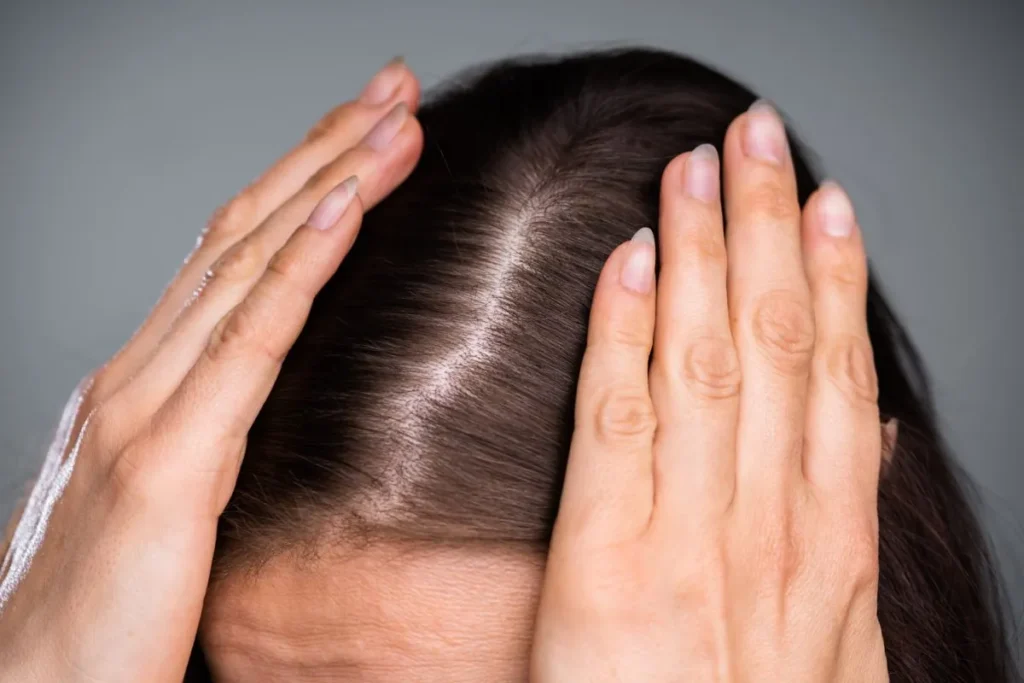
Hair thinning at the crown is a big worry for many women. It can really hurt their confidence and how they feel about themselves. About 50% of women deal with female pattern hair loss at some point in their lives. The crown and front of the scalp are usually the most hit areas.
Why is my hair thinning at the crown female? Discover amazing fixes and powerful, incredible ways to regrow your hair and look beautiful.
Hormonal shifts, stress, and scalp health issues can lead to thinning hair on the crown. Knowing what causes it and finding good solutions is key to getting back a full, healthy head of hair. With the right steps, you can stop thinning hair and help your hair grow strong again.
Belangrijkste opmerkingen
Understand the causes of hair thinning at the crown
Explore effective solutions to address female pattern hair loss
Ontdek hoe je een gezonde haargroei kunt bevorderen
Learn about the importance of scalp health
Regain confidence with a full and healthy head of hair
Why Is My Hair Thinning at the Crown Female? Understanding the Causes
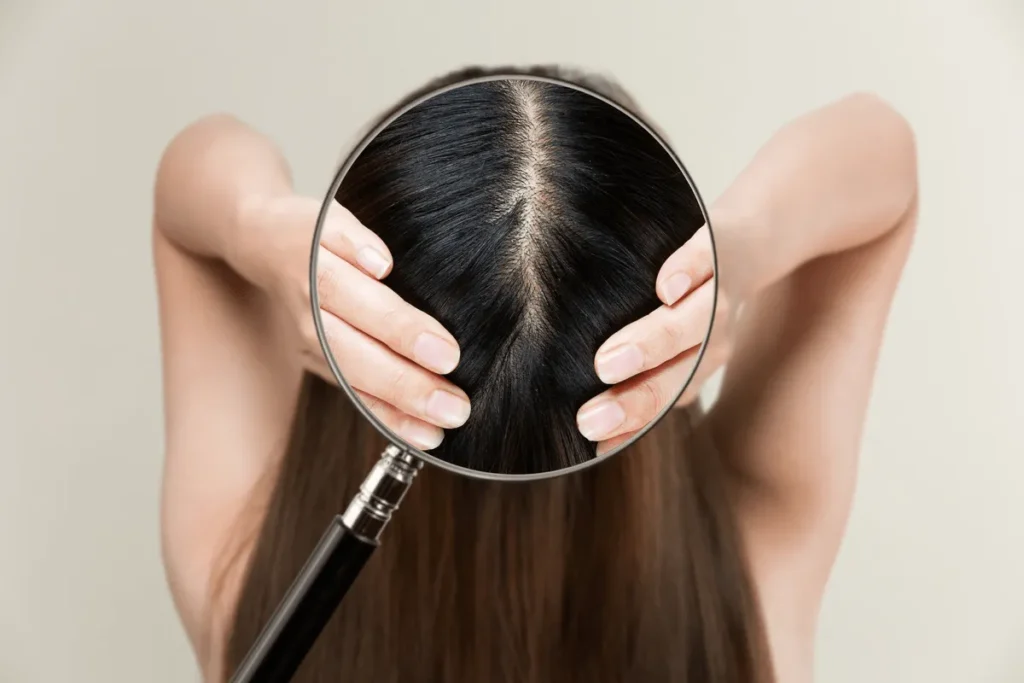
By age 30, about 30% of women start to notice hair thinning at the crown. It’s important to know why this happens. Understanding the causes can help us find solutions.
Hormonal Fluctuations and Menopause
Hormonal changes, like those during menopause, can affect hair growth. Lower estrogen levels can cause hair to thin. Estrogen helps keep hair growing.
During menopause, the balance of hormones changes. This can make hair stop growing and fall out more.
Hormonal fluctuations can also be caused by other things. For example, childbirth, PCOS, and thyroid issues. These can upset hormone levels and lead to hair thinning.
Genetic Factors and Androgen Sensitivity
Genetics play a big role in hair thinning, too. Women with a family history of hair loss are more likely to experience it. Androgen sensitivity is another factor. Androgens can make hair follicles shrink, leading to thinner hair.
Women who are sensitive to androgens may lose hair. This is because their bodies convert testosterone into DHT. DHT is a strong form of testosterone that can cause hair loss.
Bijdragers aan milieu en levensstijl
Environmental and lifestyle factors can also cause hair thinning. Stress is a big one. It can raise cortisol levels, leading to hair loss. Poor scalp health, bad nutrition, and too much heat styling can also damage hair.
Living a healthy lifestyle can help. Eating well, exercising, and managing stress can promote hair growth. It can also lower the risk of hair thinning.
Recognizing the Signs of Female Crown Thinning
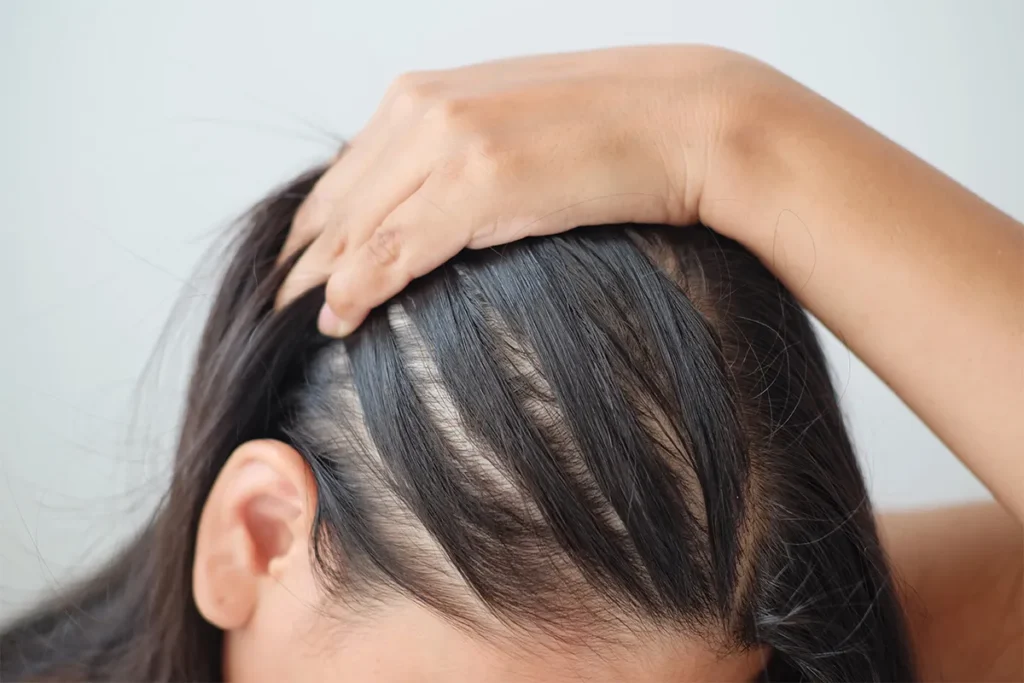
Spotting the signs of female crown thinning is key to finding a solution and boosting confidence. Women with thinning hair at the crown often see small changes that can get worse if ignored. It’s important to notice these changes early to act fast.
Early Warning Symptoms
The first signs of hair thinning include increased scalp visibility and a widening hair part. You might also see short, fine “baby” hairs. These signs can be followed by excess shedding when you wash or comb your hair. Watching for these signs is vital, as they show hair thinning might be starting.
Increased scalp visibility due to thinning hair
Widening of the hair part, making the scalp more noticeable
Appearance of short, fine “baby” hairs, indicating hair follicle miniaturization
Excess shedding during washing or combing
Age-Related Progression Patterns
Hair thinning at the crown can get worse with age. Hormonal changes, genetics, and the environment play a part. As women get older, hair grows slower and becomes thinner and shorter. Knowing how hair thinning changes with age helps women tackle it better.
Hormonal changes, like those during menopause, can cause hair thinning.
Genetics greatly influence how likely and severe hair thinning will be.
Too much heat styling and chemical treatments can damage hair and make it thinner.
When to Seek Professional Evaluation
If you’re dealing with ongoing or severe hair thinning, getting a professional check-up is wise. A dermatologist or hair specialist can look at your hair, find out why it’s thinning, and suggest treatments. Getting help early can make treatments for thin hair in women more effective.
By spotting the signs of female crown thinning and knowing how it progresses, women can take action. There are many ways to manage hair thinning, from medical treatments to changing your lifestyle or how you style your hair. These steps can help keep your hair healthy and fuller.
Effective Solutions for Women’s Thinning Hair at the Crown
Dealing with hair thinning at the crown needs a mix of medical, lifestyle, and styling fixes. Women facing hair loss have many options to choose from, each tailored to their needs.
Medische ingrepen
Medical treatments are often the first step against hair thinning. Minoxidil and finasteride are well-known for helping hair grow and slowing loss. Minoxidil is applied to the scalp to make follicles wider and hair grow longer. Finasteride, taken by mouth, blocks a hormone that causes hair loss.
“Starting minoxidil treatment made a big difference for me,” says Sarah, a 35-year-old woman. “It really boosted my confidence.”
Non-Prescription Approaches
There are also non-medical ways to help hair care routines. Eating foods rich in vitamins and minerals like biotin and vitamin D can help hair grow. Gentle scalp massage and using scalp serums can also improve hair follicles.
Eat a diet full of nutrients good for hair.
Do gentle scalp massages to boost blood flow.
Blijf uit de buurt van agressieve chemicaliën die schadelijk zijn voor het haar.
Styling Strategies and Camouflage Techniques
Styling and camouflage methods can quickly improve thinning hair’s look. Layering, using volumizing products, and smart styling can make hair look thicker. Hair fibers and color sprays can also hide thin spots.
“Finding the right styling technique has made a huge difference in how I feel about my hair,” says Emily, a 28-year-old who uses volumizing products for texture.
By trying these solutions, women can find what works best for their hair. This can help them feel more confident and have a fuller, healthier-looking hairdo.
Conclusie: De gezondheid van uw haar onder controle houden
Starting to fight hair thinning at the crown is a journey. It begins with knowing why it happens and spotting the signs. For women with thinning hair at the front, it’s key to act early for fuller hair.
Learning what causes thinning hair in women helps you find the right solutions. You might need medical help or simple lifestyle changes. Either way, improving your hair health is a journey to beauty.
With the right steps, women can grow healthier hair and stop it from thinning. Start your journey to a fuller, healthier head of hair today. Let your inner glow shine through.
FAQ
What are the main causes of hair thinning at the crown in women?
Hormonal changes, genetics, and environmental factors like stress and diet play a role in hair thinning at the crown.
Is thinning hair at the crown normal in women in their 30s?
Hair thinning is common with age. But for women in their 30s, it’s often due to genetics, hormones, and lifestyle.
How can I identify if I’m experiencing hair thinning at the crown?
Look for a wider part, more shedding, or different hair texture. If worried, see a pro for a check-up.
What are some effective medical interventions for women’s thinning hair at the crown?
Minoxidil and finasteride can help grow hair and slow loss.
Are there any non-prescription approaches to addressing thinning hair?
Yes, eating right, scalp care, and less stress can help hair grow.
How can I style my thinning hair to make it look fuller?
Use layers, volumizers, and hair sprays to make hair look thicker.
Is hair thinning at the crown a sign of an underlying health issue?
Sometimes, thinning hair hints at health problems like hormonal imbalances or nutrient gaps. See a doctor to check.
Kan haaruitdunning ongedaan worden gemaakt?
The right treatment and lifestyle changes can slow or reverse hair thinning.
Referenties
Nationaal Centrum voor Biotechnologie-informatie. Evidence-Based Medisch Inzicht. Opgehaald van https://pmc.ncbi.nlm.nih.gov/articles/PMC2684510/





