
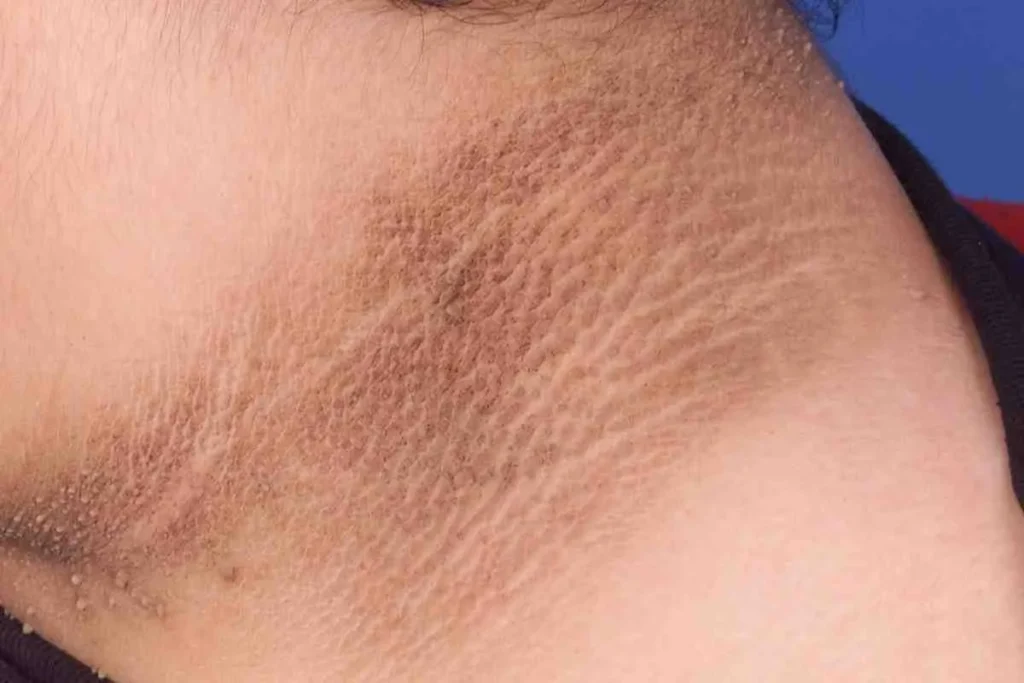
Dark patches on the neck and armpits can be a worrying sign. They often mean there’s something going on inside your body. These patches, called acanthosis nigricans (AN), are usually not serious. But they can show you might have insulin resistance or hormonal changes, so it’s smart to see a doctor.
Erase black marks on stomach with powerful healing tips. Discover amazing ways to achieve an incredible and beautiful skin tone fast.
At GoldCity Clinic, our dermatologists use the latest tech to figure out why these patches appear. We create plans that fix how you look and feel. Knowing about dark patches on the neck and armpits helps people feel better about their skin.
Belangrijkste opmerkingen
Dark patches on the neck and armpits are often associated with insulin resistance or hormonal changes.
Acanthosis nigricans (AN) is a mild skin condition causing dark, velvety patches.
Professional medical evaluation is recommended for proper diagnosis and treatment.
Personalized treatment strategies can address both aesthetic and health concerns.
Understanding the causes and treatments can empower individuals to regain confidence in their skin.
Understanding Acanthosis Nigricans: The Science Behind Dark Patches

Dark patches on the neck and armpits can be a sign of acanthosis nigricans. This condition is linked to insulin resistance. Knowing its causes, how common it is, and how to spot it is key.
What Causes Dark Patches on Neck and Armpits
Insulin resistance is a main reason for these dark patches. When the body makes too much insulin it can’t use, acanthosis nigricans can occur. Other factors include obesity and hormonal imbalances. Studies show a strong link between insulin resistance and dark patches.
Knowing the causes helps in finding the right treatment. It’s important to tackle the root problem, not just the symptoms.
Who Is Most Affected: Prevalence Across Different Populations
Acanthosis nigricans hits different groups in different ways. It’s rare in Caucasians, but more common in diverse groups. For example, it’s seen more in people of African, Caribbean, and Hispanic descent.
How to Identify Acanthosis Nigricans vs. Other Skin Conditions
To spot acanthosis nigricans, look at the patches’ texture and color. They are usually velvety, light brown to black, and found in the neck and armpits.
Look for symmetrical patches
Check the texture: velvety or rough
Consider the patient’s medical history, including diabetes and obesity
Healthcare providers can diagnose and treat acanthosis nigricans accurately. This helps people get healthier, more radiant skin.
7 Common Causes of Dark Patches and Black Marks on Stomach, Neck, and Armpits

It’s important to know why dark patches appear on the stomach, neck, and armpits. These patches are often linked to Acanthosis Nigricans. They can signal health problems that need attention.
Insulin Resistance and Diabetes Connection
Insulin resistance is a big reason for dark patches. It happens when the body’s cells don’t use insulin well. This can raise blood sugar levels, leading to type 2 diabetes. Dark patches can be an early sign of diabetes or prediabetes.
Obesity and Metabolic Syndrome
Being overweight also causes dark patches. People with obesity often face insulin resistance and metabolic syndrome. Losing weight can help reduce these patches.
Hormonal Imbalances and Endocrine Disorders
Hormonal shifts and endocrine issues can cause dark patches. For example, polycystic ovary syndrome (PCOS) and thyroid problems are linked to Acanthosis Nigricans. It’s key to manage these hormonal imbalances to lessen dark patches.
Bijwerkingen van medicijnen
Some drugs, like high-dose niacin, birth control, and corticosteroids, can cause dark patches. If you’re on medication and notice these patches, talk to your doctor. They might suggest other treatments.
Knowing the reasons for dark patches is the first step to fixing them. It could be about managing insulin resistance, obesity, hormonal issues, or changing medications. There are many ways to tackle these patches and improve your health.
Effective Treatments for Dark Patches on Skin
Find the best ways to treat dark patches on your skin and feel confident again. Dark patches, linked to Acanthosis Nigricans, can be upsetting. But, there are many treatments to help.
Medische ingrepen
For serious cases, doctors might suggest certain treatments. These include:
Topical Creams: Creams with retinoids, vitamin D, or salicylic acid can lighten dark spots.
Oral Medications: Sometimes, pills like metformin or retinoids are given to treat insulin resistance.
Laser Therapy: Laser treatments aim at dark patches to make them less noticeable.
Aanpassingen in levensstijl
Changing your lifestyle can also help. Here are some tips:
Maintaining a Healthy Weight: Being overweight can lead to Acanthosis Nigricans. Eating well and exercising can help.
Managing Stress: Stress can make skin problems worse. Yoga or meditation can help reduce stress.
Adequate Sleep: Getting enough sleep is key for healthy skin.
Home Remedies and Self-Care
Home remedies and self-care can also offer relief:
Natural Ingredients: Aloe vera, turmeric, and lemon juice can lighten the skin.
Good Hygiene Practices: Keeping the area clean and dry can prevent irritation.
By using these methods together, you can manage and lessen dark patches. This leads to a brighter and more confident you.
Conclusion: When to Consult a Healthcare Provider
Dark patches on the skin can be a worry. Knowing when to get help is key. If dark patches spread fast or get worse, see a doctor. This is true if they’re linked to diabetes, hormonal problems, or sudden weight gain.
Getting checked early can find the cause of dark patches. A dermatologist can look at your skin and suggest treatments. These might include changing your lifestyle, medical treatments, or both.
Being proactive and getting medical help early can fix dark patches. It helps you get healthy, glowing skin. Take care of your skin and see a doctor when you need to.
FAQ
Wat is Acanthosis Nigricans?
Acanthosis Nigricans is a skin condition. It causes dark, velvety patches on the neck, armpits, and other areas. It’s linked to insulin resistance, obesity, and hormonal issues.
What causes dark patches on the neck and armpits?
Dark patches can come from many things. These include insulin resistance, obesity, hormonal imbalances, and some medicines. Knowing the cause helps find the right treatment.
Are dark patches on the skin a sign of a serious health condition?
Often, dark patches mean there’s an underlying health issue. This could be insulin resistance or hormonal imbalances. Seeing a doctor is key to figuring out the cause and getting treatment.
How can I get rid of dark dry patches on my neck?
To treat dark dry patches on the neck, first tackle the cause. Keep your skin clean and use creams or ointments to moisturize and lighten the area.
Can dark patches under the armpits be itchy?
Yes, armpit dark patches can itch, like with Acanthosis Nigricans. Using gentle products and avoiding irritants can help with itchiness.
Are there any home remedies for treating dark patches on the skin?
Yes, home remedies like turmeric, aloe vera, or coconut oil can help. They can lighten and moisturize dark patches. But, always check with a doctor before trying new treatments.
Can obesity cause dark patches on the neck and armpits?
Yes, obesity can lead to dark patches on the neck and armpits. It causes insulin resistance and hormonal imbalances. Losing weight through diet and exercise can help.
How can I prevent dark patches on my skin?
To prevent dark patches, live a healthy lifestyle. Eat well, exercise regularly, and keep your skin clean. Also, manage health issues like insulin resistance or hormonal imbalances.
Referenties
Nationaal Centrum voor Biotechnologie-informatie. Evidence-Based Medisch Inzicht. Opgehaald van https://pubmed.ncbi.nlm.nih.gov/24630721/





