
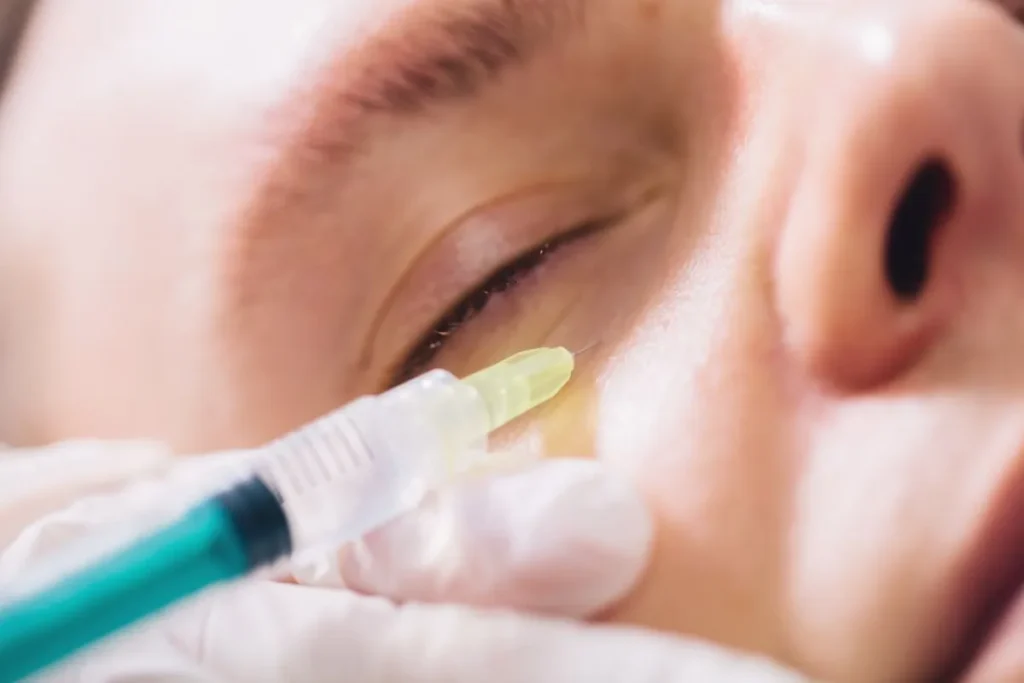
Discover the secret to a radiant and youthful appearance with tear trough fillers. This non-surgical solution has become very popular for facial rejuvenation. The tear trough procedure offers brilliant results for tired eyes. Learn how this safe treatment provides a beautiful, refreshed appearance.
Dermal filler tear trough treatments restore volume and reduce dark circles, hollows, and shadows under the eyes. They offer a minimally invasive tear trough treatment with visible results and little downtime.
High patient satisfaction rates show that about 97% of patients are very happy with the results. It’s a trusted choice for those looking for timeless beauty.
Belangrijkste opmerkingen
Minimally invasive solution for facial rejuvenation
Restores volume and reduces dark circles under the eyes
High patient satisfaction rates with visible results
Non-surgical with minimal downtime
Effective for achieving a youthful appearance
Understanding Tear Trough Fillers

Dermal fillers, like those for the tear trough area, are a modern way to refresh the under-eye area. These fillers are gel-like substances, often made from hyaluronic acid. They are injected into the tear trough area under your eyes.
Wat zijn traanbuisvullers?
Tear trough fillers are hyaluronic acid-based products, like Restylane. They help restore lost volume and smooth out hollows. This makes the under-eye area look more youthful.
The process involves injecting these fillers into the tear trough area. This reduces the depth and adds volume to the infraorbital region.
Benefits of Hyaluronic Acid Fillers
Hyaluronic acid fillers are known for their hydrating properties and natural-looking results. Some key benefits include:
Rejuvenation of the under-eye area
Reduction of dark circles and hollows
Minimally invasive procedure with immediate results
Ideal Candidates for Treatment
Those with under-eye hollows or dark circles are good candidates for tear trough fillers. Looking for a non-surgical fix? It’s key to talk to a professional to see if you’re a good fit.
The Tear Trough Procedure: Step-by-Step
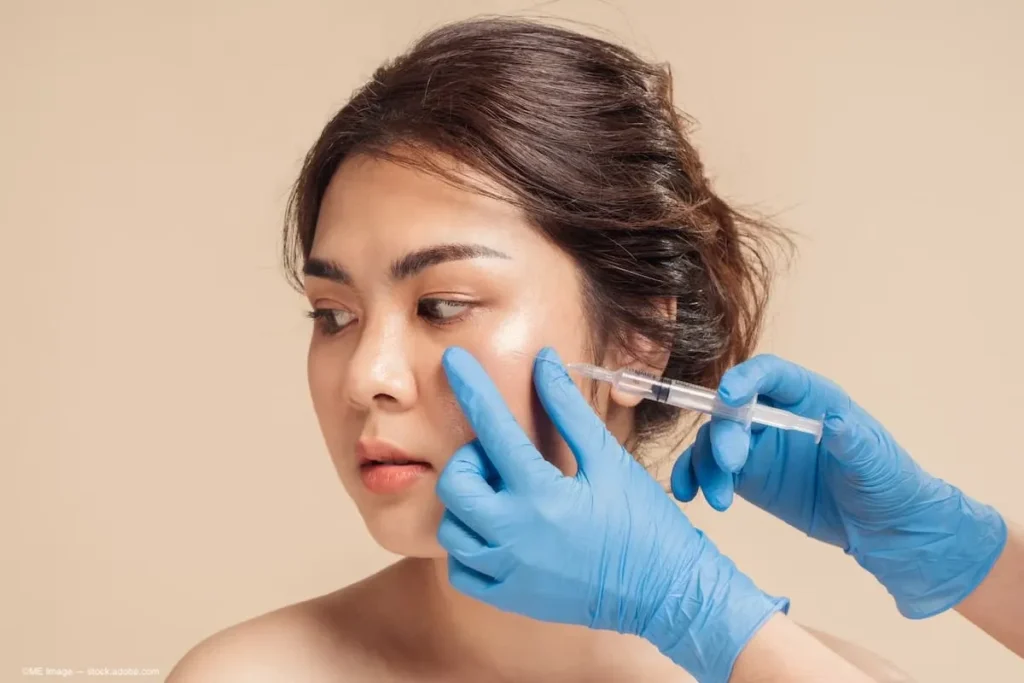
Take your beauty routine to the next level with the tear trough procedure. This advanced treatment offers quick, noticeable results. Follow this guide to get ready for your transformation.
Pre-Procedure Consultation
Start with a detailed consultation with a skilled dermatologist. They will examine your under-eye area and talk about what you want. This ensures the treatment fits your needs perfectly, giving you natural-looking results.
“A thorough consultation is the foundation of a successful tear trough treatment,” highlights the importance of this first step.
Injection Techniques and Materials
The procedure involves injecting hyaluronic acid fillers into the under-eye area. A fine needle or cannula is used to place small amounts of filler. This process usually takes 15-30 minutes, and some may choose numbing cream for comfort.
Hyaluronic acid fillers are the top choice for tear trough treatments. They are safe and effective. An expert says,
Optimal Filler Placement
Getting the best results means knowing the under-eye area well and placing the filler just right. The goal is to look younger by filling in the tear trough area. This reduces dark circles and hollows.
Good filler placement makes your skin look even, reduces dark circles, and boosts your confidence. You can expect dramatic results that last for 8 to 12 months.
Aftercare and Results of Tear Trough Fillers
Getting radiant, youthful eyes with tear trough fillers is just the start. Proper aftercare is key for the best results. Knowing how to care for your skin after treatment and how long the results last will help you get the most from your treatment.
Directe zorg na de procedure
After your tear trough filler treatment, gentle care is important. Keep the treated area clean and avoid hard activities for 24 to 48 hours. A cold compress can help with swelling. Your doctor might suggest special aftercare products to help you heal.
Vermijd aanraken of wrijven van het behandelde gebied
Use gentle skincare products
Stay hydrated to maintain skin health
Duration of Results
The effects of tear trough fillers usually last 8 to 12 months. This can vary based on your skin, lifestyle, and the filler’s type. Some people might see results for up to 18 months or more.
Maintenance Treatments
To keep your look fresh, you’ll need maintenance treatments over time. Getting follow-up treatments every 6 to 12 months can help keep your look. Your doctor will tell you when to come back based on how you react to the treatment.
Schedule follow-up appointments as recommended
Monitor your results and adjust your maintenance schedule as needed
Discuss any concerns or changes with your practitioner
Potential Side Effects and Management
While safe, tear trough fillers can cause side effects like bruising, swelling, or redness. These usually go away on their own but can be helped with proper care and, if needed, more treatments. Always follow your doctor’s advice to avoid risks.
Understanding aftercare and results of tear trough fillers helps you enjoy a smoother, youthful under-eye area. Glow like you mean it knowing you’re taking great care of your beauty.
Conclusie
Tear trough fillers are a natural way to fix dark circles and hollow areas under the eyes. They use hyaluronic acid to give you a radiant glow. This makes you look timeless and beautiful.
These fillers work fast and look natural. They last 12-18 months and don’t require much downtime. It’s a great choice for those wanting a luxury look without surgery.
With tear trough fillers, you can take control of your beauty. The ingredients are safe and effective. It’s a favorite for those wanting to refresh their look.
Choosing tear trough fillers means you’re not just improving your looks. You’re starting a journey of transformation. Your beauty story begins with a treatment that’s both clean and premium.
FAQ
What are tear trough fillers made of?
Tear trough fillers are made of hyaluronic acid. This is a natural substance in our bodies that keeps skin hydrated and plump. Brands like Restylane and Belotero use high-quality hyaluronic acid for their fillers.
Are tear trough fillers safe?
Yes, tear trough fillers are safe when given by a skilled practitioner. They are made from materials that are safe for our bodies. Many tests have shown they are effective and safe.
Hoe lang blijven traanbuisvullers zitten?
How long fillers last can vary. But, they usually last 8 to 12 months. Getting more treatments can help keep the results going.
What is the ideal age for tear trough fillers?
The best age for fillers varies. But, people in their 30s to 50s often get them. They help with under-eye hollows and dark circles. Anyone wanting to refresh their under-eye area can consider them.
Can I get tear trough fillers if I have sensitive skin?
Yes, you can get fillers even with sensitive skin. But, talk to your practitioner about your skin first. They can suggest the best treatment and reduce side effects.
How do I prepare for tear trough filler treatment?
To get ready, stop taking blood-thinning meds. Tell your practitioner about any allergies or sensitivities. A detailed consultation will help figure out the best treatment for you.
Are there any alternatives to tear trough fillers?
Yes, there are other options like chemical peels and microdermabrasion. But, fillers give a quicker and more noticeable fix for the under-eye area.
Can I combine tear trough fillers with other treatments?
Yes, you can mix fillers with treatments like Botox and laser resurfacing. Talking to your practitioner will help find the best mix for you.
What is the cost of tear trough fillers?
The price of fillers changes based on location, the practitioner’s skill, and how much is used. On average, it’s between $500 and $2,000 per session.
How do I choose the right practitioner for tear trough fillers?
Look for a practitioner with experience in fillers. Check their credentials and read what others say. A good consultation will show if they’re a good fit for you.
Referenties
National Center for Biotechnology Information. Evidence-Based Medical Insight. Retrieved from https://pmc.ncbi.nlm.nih.gov/articles/PMC12724988/