Does Alopecia Itch? Find the best soothing relief for an itchy scalp and learn why itching is often a sign of active hair loss or regrowth.
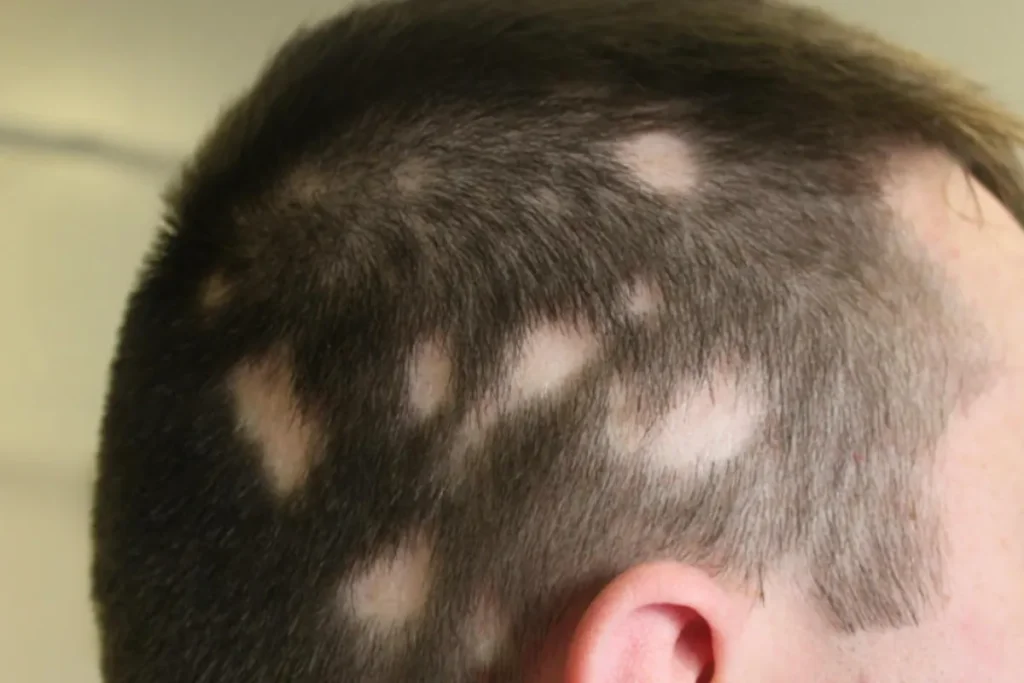
Seeing hair loss in round or oval patches can be scary. Alopecia areata is an autoimmune disease that leads to hair loss. It often happens on the scalp but can occur anywhere.
Knowing the early signs is key to spotting this condition. If you’re losing hair without scarring, rash, or redness, it’s important to understand why. Learning about alopecia areata is the first step to dealing with it.
Key Takeaways
Recognize the primary symptoms of alopecia areata, including round or oval patches of hair loss.
Understand that hair loss can occur on the scalp or anywhere on the body.
Identify the condition by the absence of scarring, rash, or redness.
Seek expert evaluation from a dermatologist for proper diagnosis.
Explore modern treatment options available for managing the condition.
Understanding Alopecia Areata: An Autoimmune Hair Loss Condition

Alopecia areata affects people of all ages. It’s an autoimmune disease where the body attacks hair follicles. This leads to hair loss. It doesn’t pick favorites by age or gender, but females are slightly more likely to get it.
What Is Alopecia Areata?
Alopecia areata is an autoimmune disease. The immune system attacks hair follicles. This causes hair to stop growing and fall out.
It leads to smooth, round patches of hair loss. Often, there are no other symptoms. Knowing about this condition is important for those with unexplained hair loss.
Key aspects of alopecia areata include:
Autoimmune origin
Unpredictable hair loss patterns
Potential for recurrence
Prevalence and Risk Factors
About 0.1 to 0.2 percent of people have alopecia areata. It’s a 1 to 2 percent lifetime risk. It happens equally in males and females, but females are more likely to have it overall.
Risk factors include family history, other autoimmune diseases, and certain genes.
Knowing these risk factors helps in early detection and management.
Age of Onset and Demographics
Alopecia areata can start at any age. It often begins in early childhood, late teens, or young adulthood. Knowing who is most affected helps understand its prevalence and possible causes.
Experts say, “Alopecia areata can greatly affect a person’s life. Early diagnosis and treatment are key.”
The first signs of alopecia areata can be hard to spot. Awareness and education are key to catching it early. By knowing the signs, people can get medical help quickly. This can lead to better results.
Primary Symptoms and Signs of Alopecia Areata
Alopecia areata often starts with clear signs. Knowing these symptoms early helps manage the condition better.
Smooth Round or Oval Patches of Hair Loss
One key sign is smooth, round, or oval patches of hair loss on the scalp. These patches can be scary if they show up suddenly. The hair loss happens quickly, usually in a few weeks.
Exclamation Point Hairs: A Distinctive Sign
Exclamation point hairs are another sign. They are short, broken hairs at the edges of bald spots. These hairs get narrower at the base and wider at the tip, looking like an exclamation mark.
Nail Changes and Their Significance
People with alopecia areata might see nail changes too. This includes tiny dents or pits in fingernails or toenails. These changes can signal the condition early and should not be ignored.
Early Detection: First Signs to Watch For
Knowing the early signs of alopecia areata is key. Look out for smooth bald spots and exclamation point hairs. If you notice unusual hair loss or nail changes, see a healthcare professional. They can help with diagnosis and advice.
Does Alopecia Itch? Sensations Associated with Hair Loss
Hair loss is the main sign of alopecia areata. But, some people also feel other sensations. These can be early signs of the condition.
Pre-Hair Loss Sensations: Tingling, Burning, and Itching
Some people feel itching, tingling, or burning before they lose their hair. For example, they might feel a burning sensation or itching before the hair loss shows. These feelings can be important early signs.
Itching is a common feeling with many scalp problems. It’s key to know if it’s related to alopecia areata. The itching can be mild or strong and may happen before or during hair loss.
Distinguishing Alopecia Areata from Other Scalp Conditions
Alopecia areata is different from other scalp issues because of hair loss and sensations. For instance, eczema or psoriasis can also cause itching. But, smooth round or oval patches of hair loss, along with these feelings, point to alopecia areata.
When Sensations May Indicate Alopecia Areata
It’s important to know when these feelings might mean you have alopecia areata. If you have unexplained itching or tingling on your scalp, and then lose hair, see a doctor. They can diagnose and suggest treatments.
Spotting alopecia areata early can help you get better faster. Knowing the signs and sensations can help you manage your condition better.
Conclusion: Seeking Diagnosis and Next Steps
If you’re wondering how do you know if you have alopecia, a diagnosis starts with a visit to a healthcare provider. They will look at how much hair you’ve lost and check the hair from the affected areas. They might also do a scalp biopsy or blood tests to check for other conditions.
Knowing how to get diagnosed can ease your worries. A healthcare provider will examine you, ask about your symptoms, and look at the areas where you’ve lost hair. For more details on alopecia areata, check out Medical News Today. They have information on symptoms and treatment options.
Learning about alopecia areata is the first step to dealing with it. By getting a professional diagnosis and understanding your condition, you can start managing it. This way, you can regain your confidence in how you look.
FAQ
What are the primary symptoms of alopecia areata?
The main signs include sudden hair loss in round or oval patches. These patches often appear on the scalp and sometimes on other body parts. There’s no scarring, rash, or redness. You might also notice exclamation point hairs and changes in your nails.
How do I know if I have alopecia areata?
Look for smooth, round, or oval patches of hair loss on your scalp. Also, watch for exclamation point hairs and nail changes. If you see these signs, talk to a healthcare provider for a diagnosis.
Does alopecia areata cause itching?
Hair loss is the main symptom, but some people might feel tingling, burning, or itching before losing hair. These feelings can be an early sign. But, it’s important to make sure they’re not from another scalp condition.
What are exclamation point hairs?
Exclamation point hairs are short, broken hairs at the edges of bald spots. They’re a key sign of alopecia areata.
Can alopecia areata occur at any age?
Yes, it can happen at any age. But, it often starts in early childhood, late teens, or young adulthood. Knowing this can help understand the condition better.
How is alopecia areata diagnosed?
A healthcare provider will examine you, ask about your health history, and might do tests. These could include a scalp biopsy or blood tests. They help rule out other conditions and confirm alopecia areata.
Are there any nail changes associated with alopecia areata?
Yes, some people with alopecia areata notice nail changes. These can include tiny dents or brittleness. They might be an early sign of the condition.
Can alopecia areata be distinguished from other scalp conditions?
Yes, by knowing the specific symptoms of alopecia areata. Look for smooth round patches of hair loss and exclamation point hairs. These signs help tell it apart from conditions like eczema or psoriasis. Understanding these differences helps get the right treatment.
References
National Center for Biotechnology Information. Evidence-Based Medical Insight. Retrieved from https://www.ncbi.nlm.nih.gov/pmc/articles/PMC12010142/

